
Three photographs to start the match
- Roll and label. Photograph the entire label, including any suffix, length unit, lot number and certification markings. If the stock came from a cut length, include the original packing slip if available.
- Flat section and cut end. Lay an undamaged offcut flat. Show both faces, the identifying edge, a complete colour or marking sequence and a square cross-section. Include a scale in the same plane. Keep one untouched sample for comparison.
- Where the cable goes. Show the termination, connector marking or machine feed. State whether you plan to keep the existing connector, applicator and board. A bare cable used with an IDC socket has an additional contact-fit requirement.
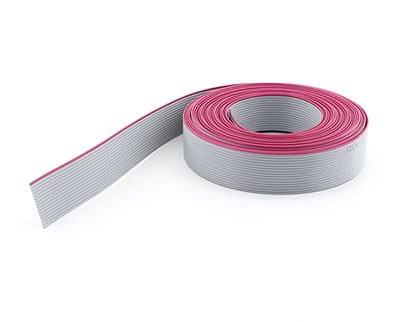
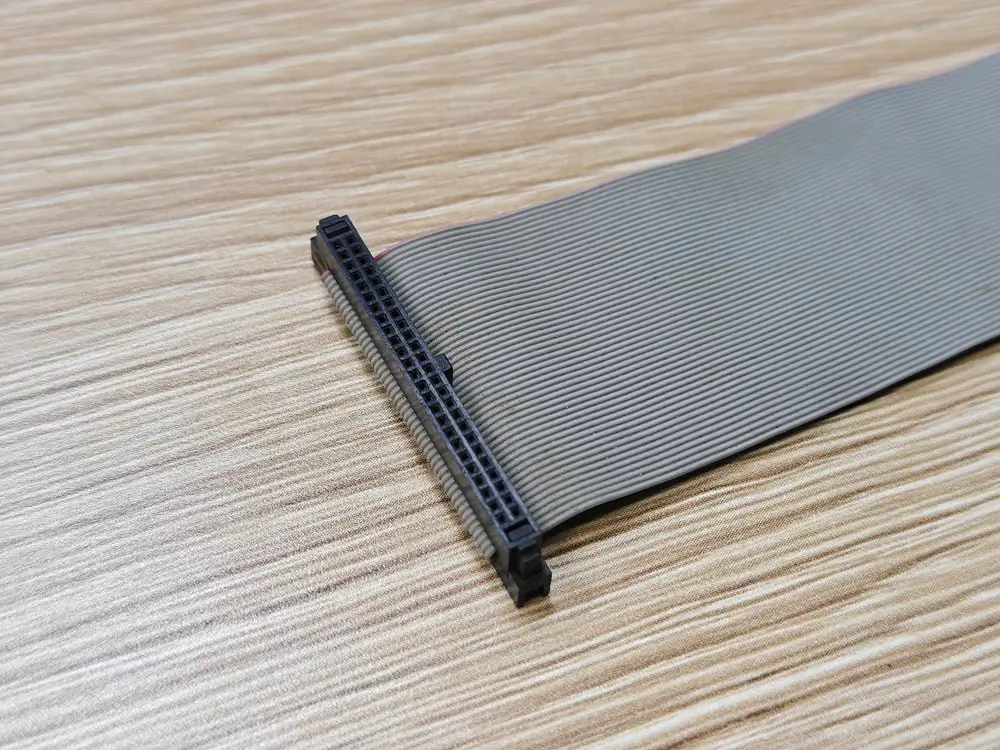
What the old cable can tell you
| Evidence | Record on the request | What remains open |
|---|---|---|
| Conductor count and span | Count conductors. Measure centre-to-centre across several intervals and record how many intervals you measured. | A 20-conductor cable has 19 intervals between the outside conductor centres. Overall width includes the two edges. |
| Width and profile | Measure overall width across the edges on an undamaged section. Record the measuring method, units and the space available in the machine. | One measured sample does not establish the production tolerance or the maximum width. |
| Strands and insulation | Copy any AWG, strand notation or style marking from traceable paperwork. Photograph the exposed end if already available. | A photograph cannot establish the insulation compound, voltage rating, conductor gauge or approved material. |
| Original reel | Record the labelled metres or feet, reel quantity and minimum uninterrupted length the cutting line needs. | The original put-up, splice policy and evidence required at delivery must be agreed for the new order. |
Worked example: a grey 20-conductor offcut
Suppose a buyer measures about 19 mm across 19 intervals and about 20 mm across the edges. A 1.0 mm cable is a reasonable starting point. Drawing 28 includes a 28 AWG, 20-conductor UL2651 row with a width of 20.0 ±0.3 mm and a 76.2 m roll. Drawing 36 also has a 20-conductor row of that width and roll length under UL2678. Those measurements alone leave two candidates.
Ask for the required material style and connector reference. If an old purchase order calls for UL2651, keep that requirement on the request and ask the buyer to authorize any proposed change. For a tight opening, compare its usable clearance with the drawing maximum of 20.3 mm, allowing the equipment designer to specify handling clearance. Compare the two original drawing rows.
Send a replacement request the supplier can act on
Attach the photos, the quantity of rolls and the delivery destination. Separate the features that must remain identical from those you will review on a sample. If your production line already uses an approved cable, name the person or document that can release an alternative.