
Cable assembly & connector guides
Zeakka Blog
Find practical guidance for connector selection, cable specifications, purchasing and quality checks. Use the worksheets to prepare your project information.
Downloadable worksheets
Choose a task. Each page explains the fields and links to the editable workbook.
Browse all 10 worksheets
Identify & compare connectors
Prepare a specification
Record checks & changes
Find a guide for your task
Filter by task, search by topic, or combine both.
112 guides · All tasks
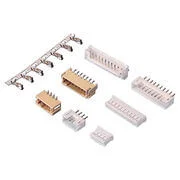
JST 2.0 mm Connectors: Choose Between PH, PA, PHD and PUD
A shared 2.0 mm pitch is not a shared interface. Compare rows, retention, exact headers and wiring before choosing a family.
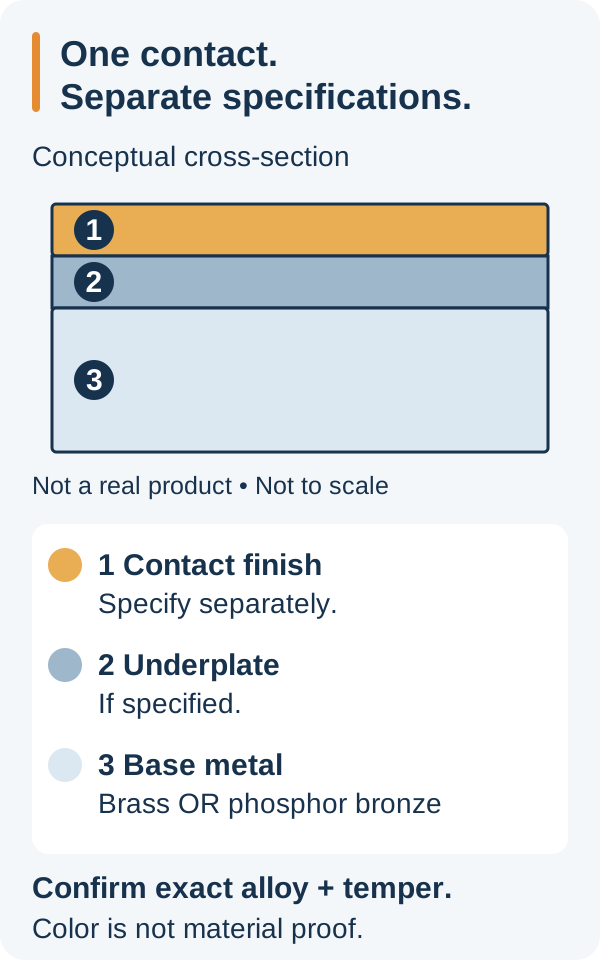
Brass vs Phosphor Bronze Connector Contacts: What Buyers Should Compare
Compare the exact alloy, temper, contact design and service conditions before accepting a brass or phosphor bronze terminal substitution.
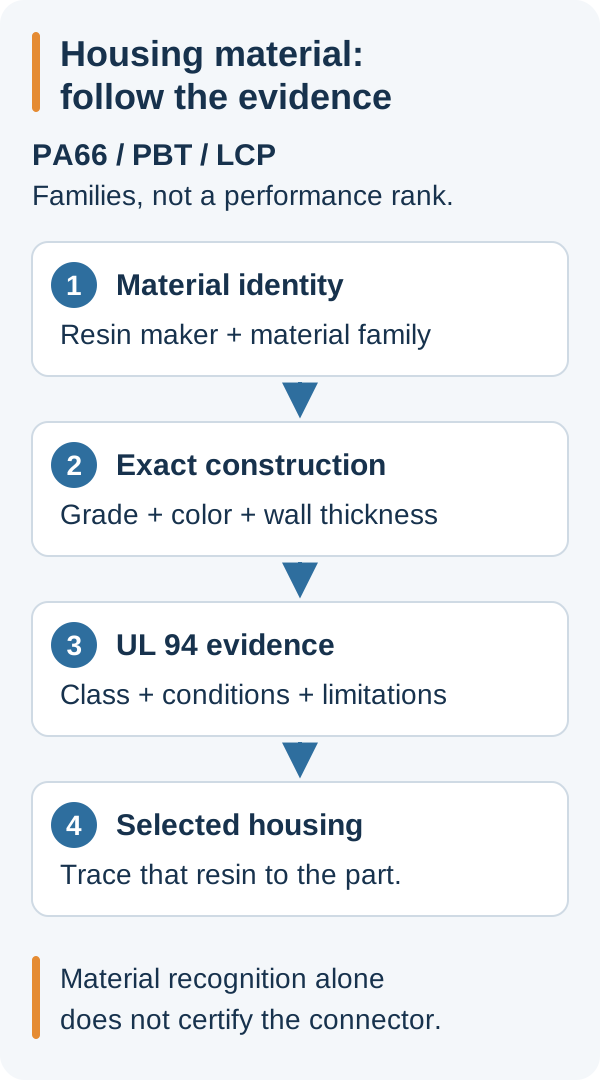
Connector Housing Materials: PA66, PBT, LCP and UL 94
Specify the resin grade and service conditions, then check UL 94 evidence against the relevant thickness and color instead of relying on a polymer name.
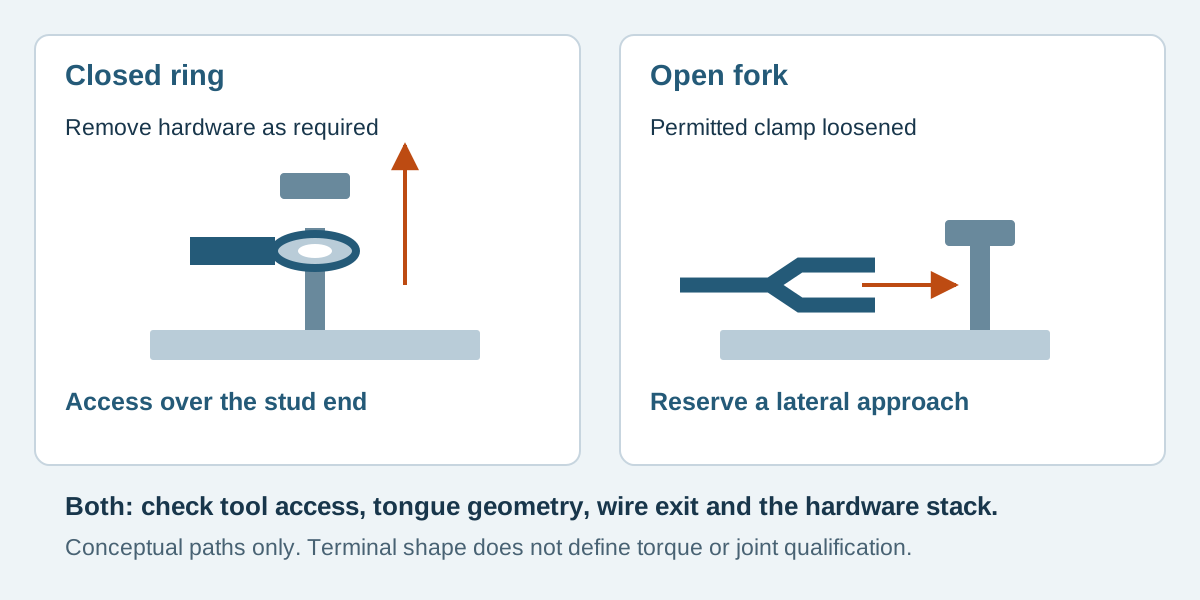
Ring vs Fork Terminals: Specify the Installed Connection
Choose the tongue with its receiving hardware and service space. A shared wire range does not make ring and fork terminals interchangeable.
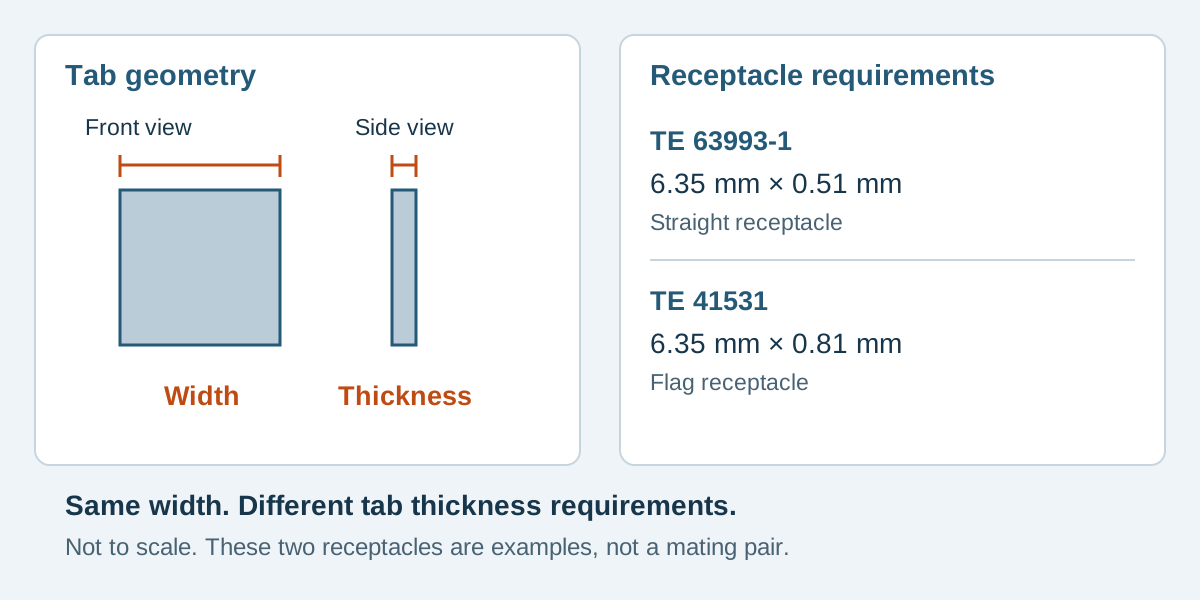
Quick-Disconnect Tabs: Specify Both Width and Thickness
Two receptacles can share a 6.35 mm tab width while requiring different thicknesses. Keep both mating sides and the installed envelope in the specification.
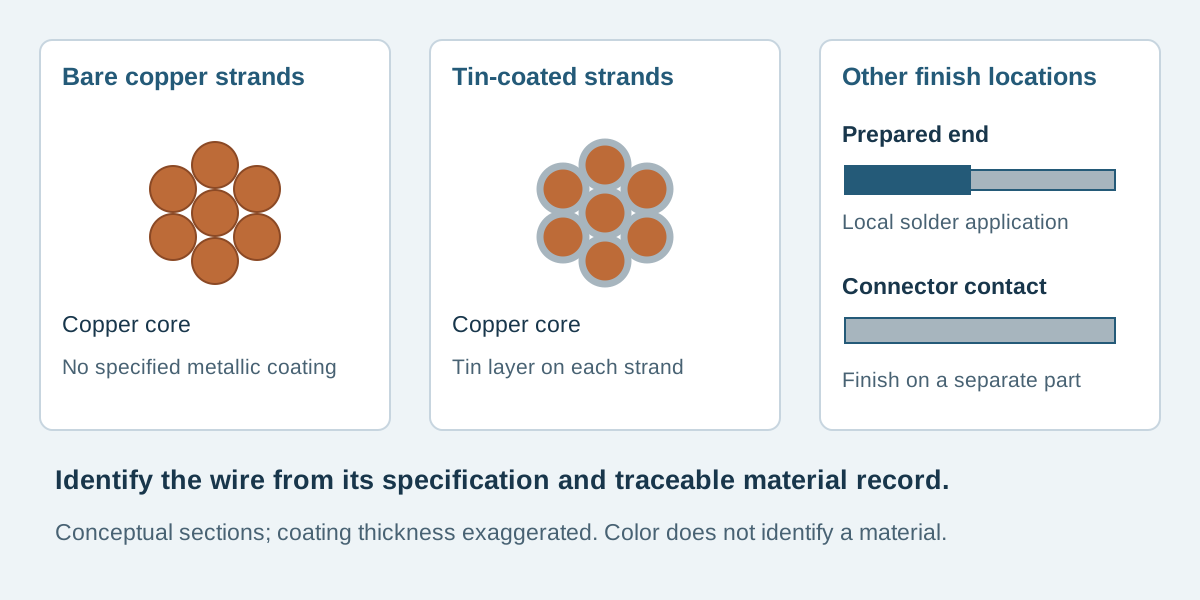
Bare vs Tinned Copper Strands in Cable Assemblies
Conductor coating, delivered end preparation and contact plating are separate decisions. Use the complete wire record to review a proposed material change.
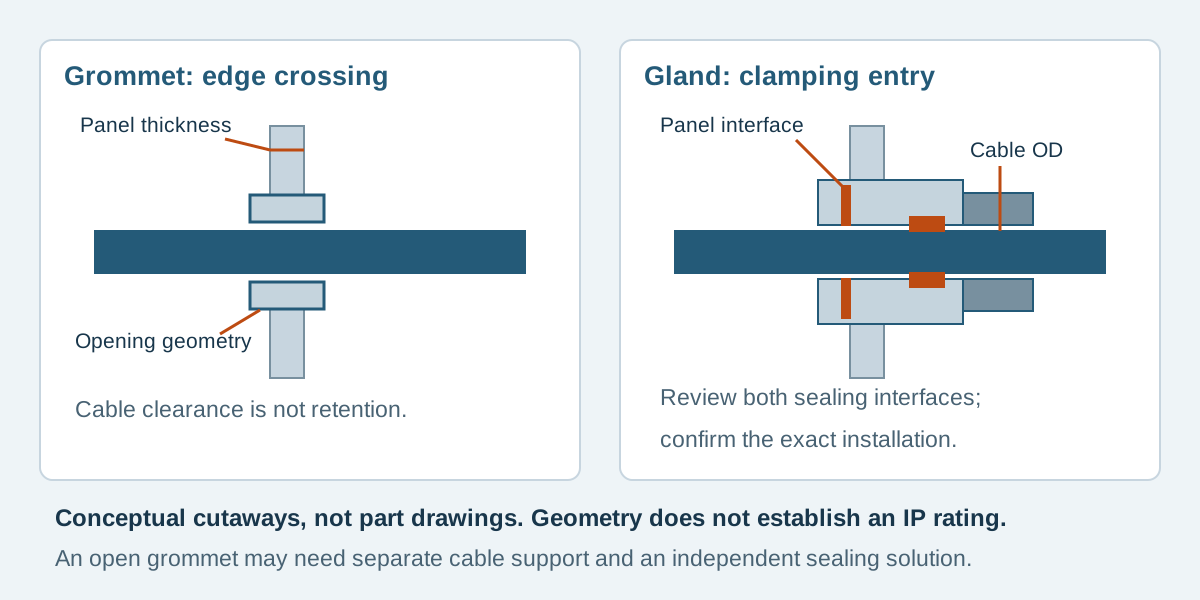
Cable Glands vs Grommets: Defining the Panel Entry
Define the panel interface before choosing entry hardware. Check the cable, hole, thickness and installation sequence, with separate retention and sealing requirements.
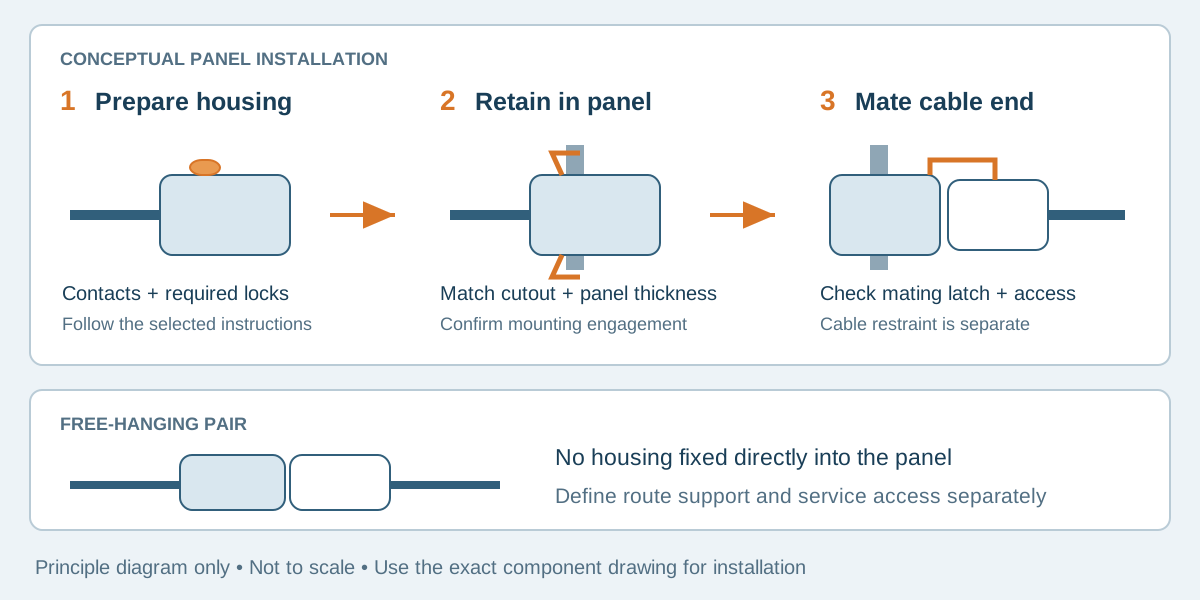
Panel-Mount vs Free-Hanging Connectors: Specify the Installation
Choose where the disconnect is held, then define the opening, panel thickness, assembly order and access needed to install and service it.
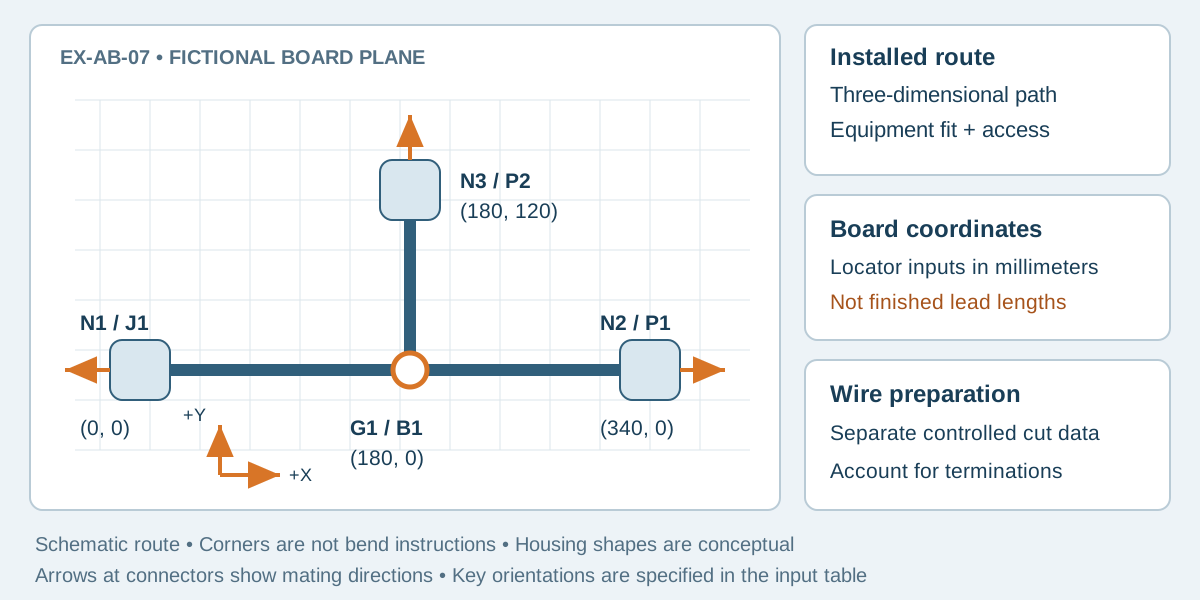
Wire Harness Assembly Boards: Turning a Layout into Repeatable Fixture Inputs
A repeatable harness board needs more than a full-size outline. Define the locating datums, branch identities, connector orientation and checks that connect it to the installed route.
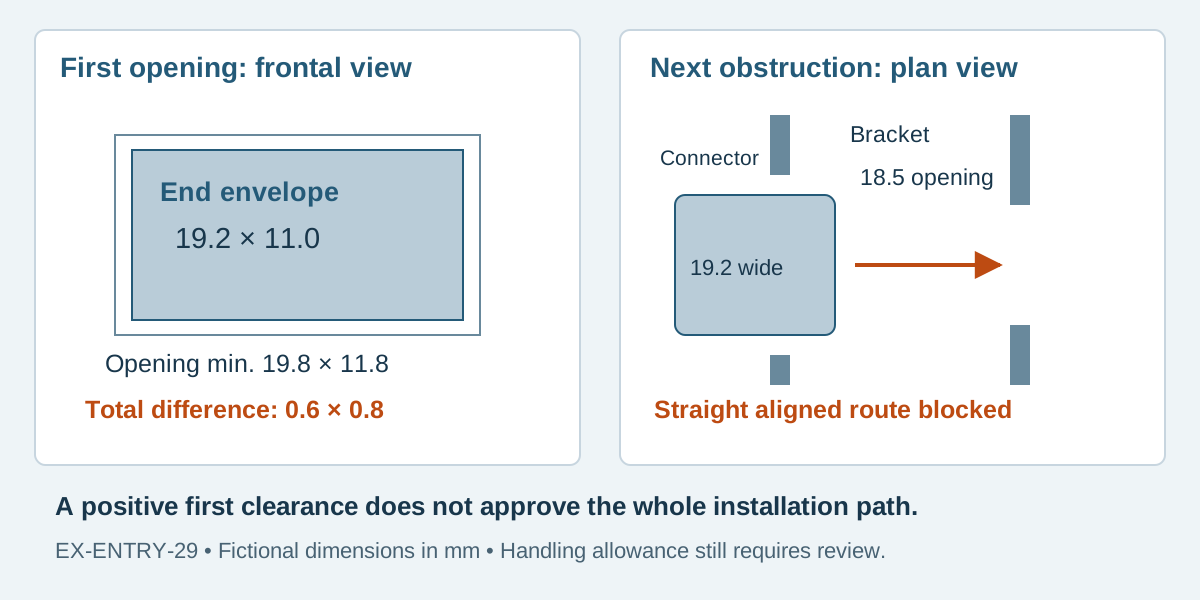
Routing Pre-Terminated Harnesses Through Enclosure Openings
A cable diameter does not describe the connector that must pass through the panel. Review the complete passage before releasing the harness.
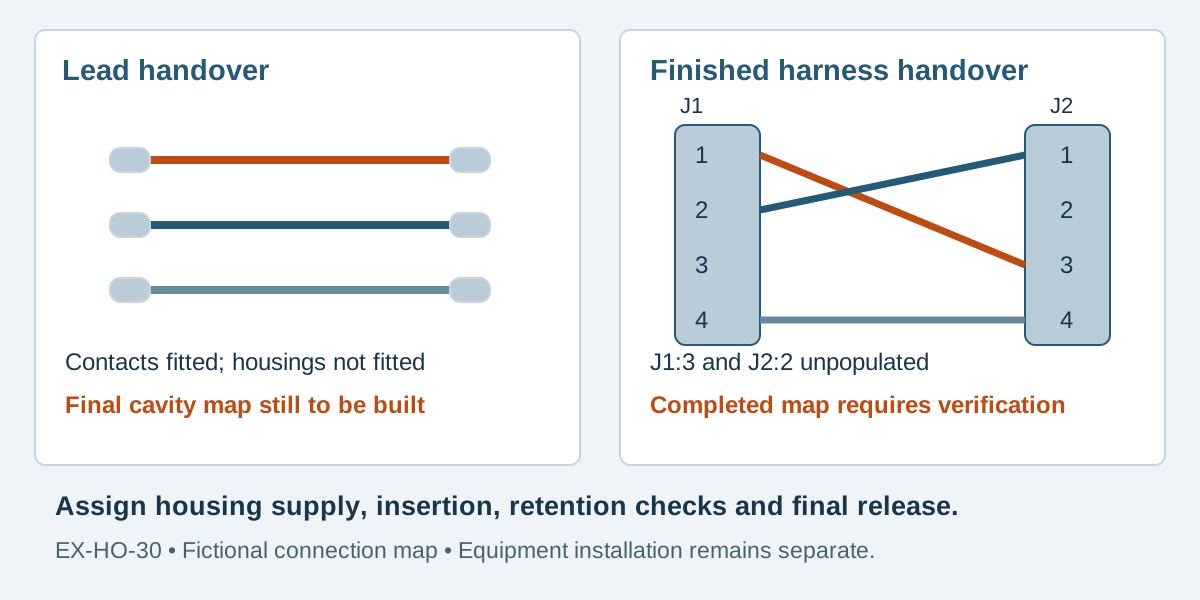
Pre-Crimped Leads vs Finished Cable Assemblies: Define the Handover
The crimp may already be complete while the wiring assembly is still unfinished. Define who turns individual leads into the approved connection map.
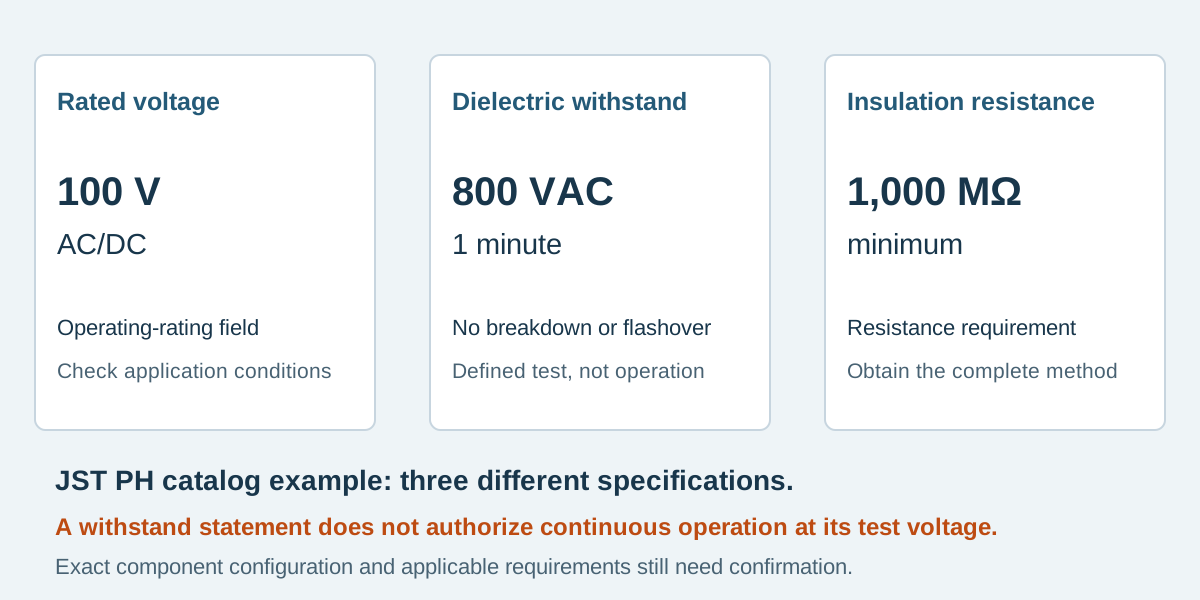
Reading Connector Voltage Ratings and Dielectric Test Specifications
An 800 VAC withstand statement is not permission to operate a connector at 800 VAC. Keep operating requirements and test requirements separate.
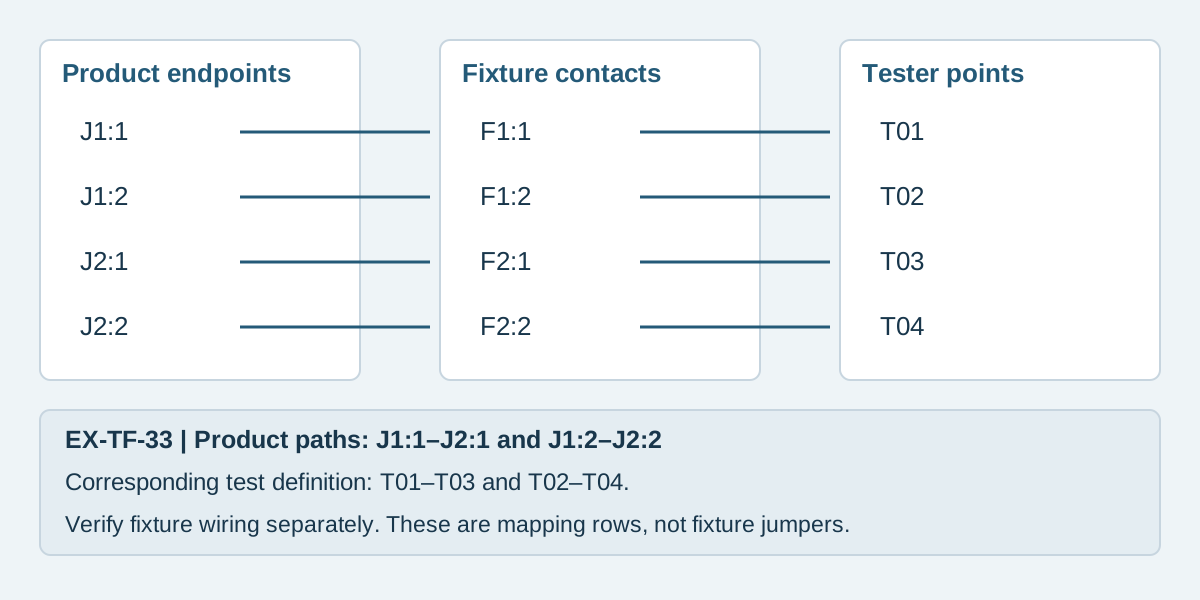
Cable Assembly Test Fixtures: Mating Parts, Connection Maps and Wear
A good assembly can be judged incorrectly by a wrong or worn interface. Define the fixture as a controlled part of the test setup.
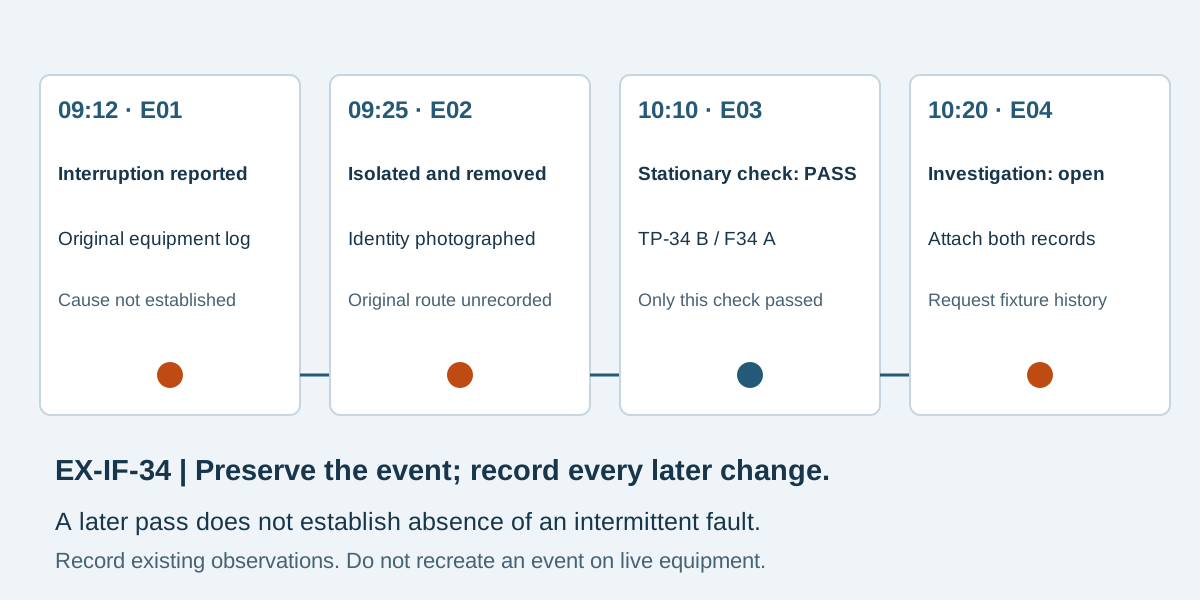
Intermittent Open Circuits in Cable Assemblies: Recording the Conditions
A later pass does not erase an earlier event. Record what changed, what was measured and what remains unverified before requesting technical review.
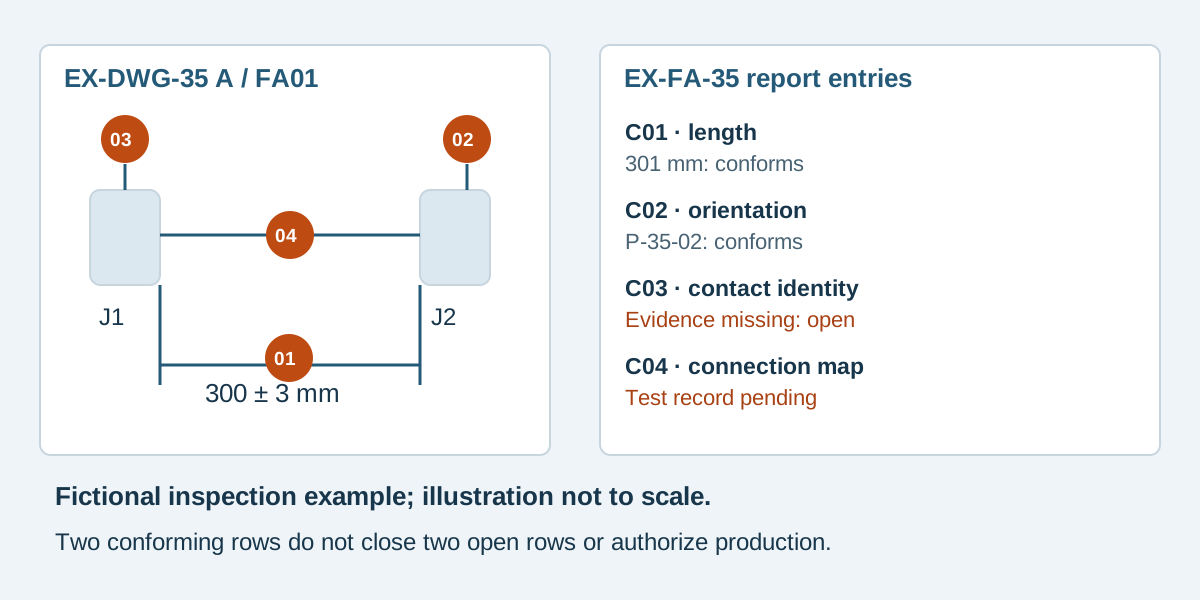
Cable Assembly First Article Inspection: Linking Drawing Items to Results
Make the first article report traceable to numbered requirements. A report should show what was checked, how it was checked and what remains open.
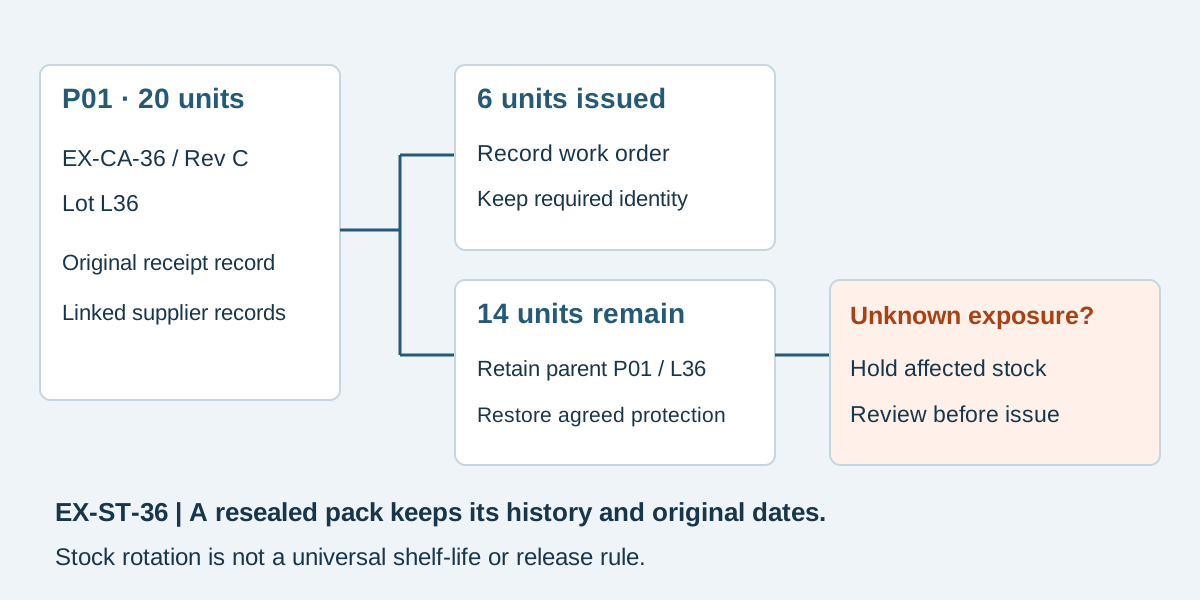
Storing Cable Assemblies Before Installation
Preserve the assembly identity and protection between receiving and installation. Storage age alone cannot define whether a cable is ready for use.
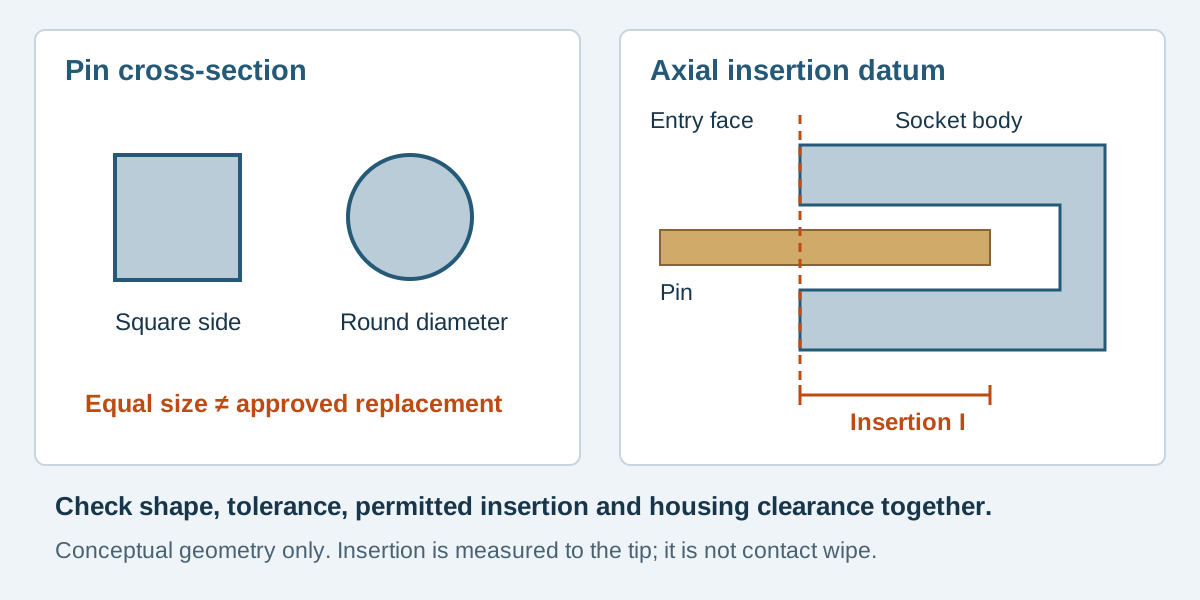
Female Header Compatibility: Pin Size, Insertion Depth and Housing Clearance
Matching pitch does not establish that a socket accepts the proposed pin. Review the contact interface before approving the connector pair.

Customer-Supplied Parts for Cable Assemblies: Receipt, Usage and Reconciliation
Sending the right quantity is only the start. Keep received, usable, consumed, held and returned parts distinguishable throughout the assembly order.
Connector Cleaning and Lubrication: Define the Approved Process
A request to clean or lubricate a connector needs a defined purpose and an approved process. A chemical name alone does not establish compatibility.
When the Cable Purchase Order, Drawing and Quotation Disagree
A newer attachment or an accepted price does not resolve every mismatch. Identify the conflict, assign the decision and align the released order package.
Transferring Cable Assembly Production to a New Supplier
A matching sample is only one transfer input. Establish the build definition, usable process records, first-build evidence and an explicit supply cutover.
Connector End-of-Life Planning for Cable Assembly Buyers
A discontinuation notice affects more than the next connector order. Link the exact affected parts to harness revisions, service demand and an approved transition.
Cable Assembly MOQ vs Component Pack Quantities
A reel of contacts is not a minimum order of finished harnesses. Compare assembly demand, per-unit usage, permitted setup use and the actual sourcing offer.
Forecasts, Blanket Orders and Call-Offs for Cable Assemblies
A forecast, a material decision and a shipment request serve different purposes. Make the action authorized by each message explicit.
Certificate of Conformity vs Test Report for Cable Assemblies
A conformity statement and a test report answer different questions. Check which assembly and shipment each covers, and what evidence the document actually contains.
UL Wire Styles and Recognition: Check the Scope for a Cable Assembly
A UL style identifies a wire construction reference. The manufacturer record, traceability and intended application still need to match the supplied material.
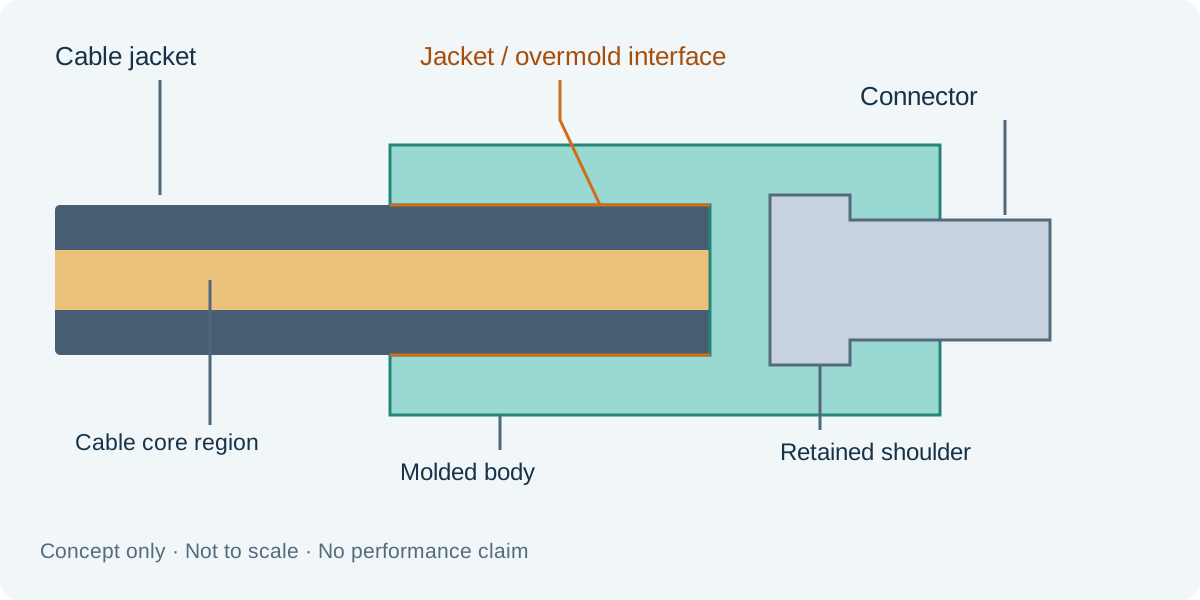
Overmold-to-Jacket Adhesion: What to Confirm Before Sampling
Review exact material grades, interface geometry and sample evidence before approving an overmold-to-jacket bond. Separate adhesion, retention and sealing.
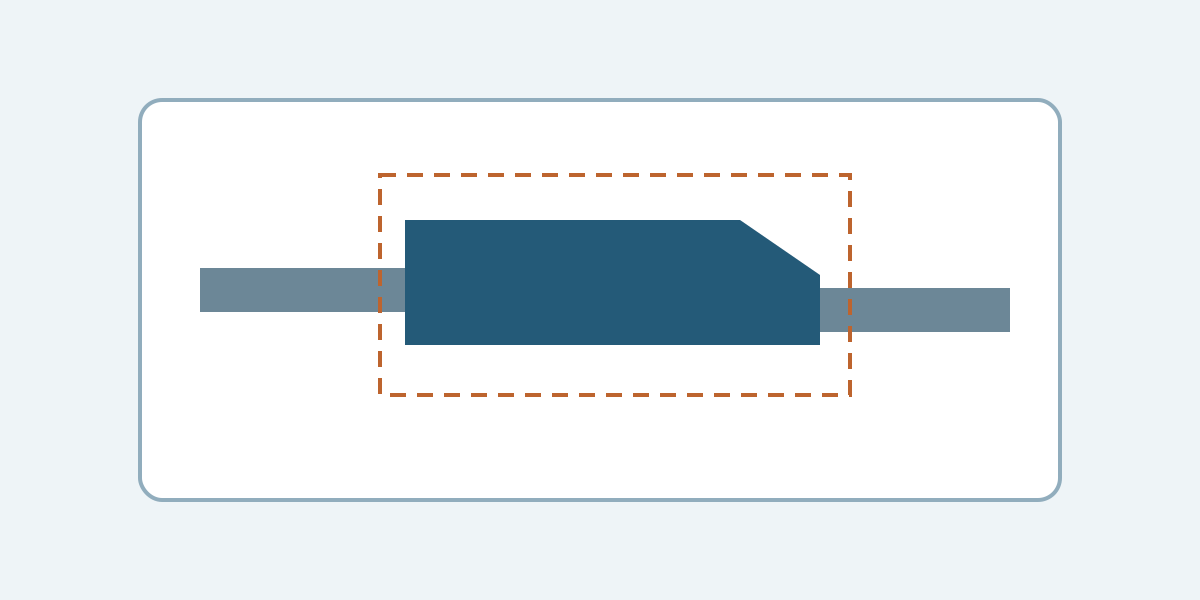
Overmolded Cable Cosmetic Acceptance: Agreeing the Visible Criteria
Define visible zones, viewing conditions and reference samples for overmolded cables. Separate cosmetic decisions from dimensional and functional acceptance.
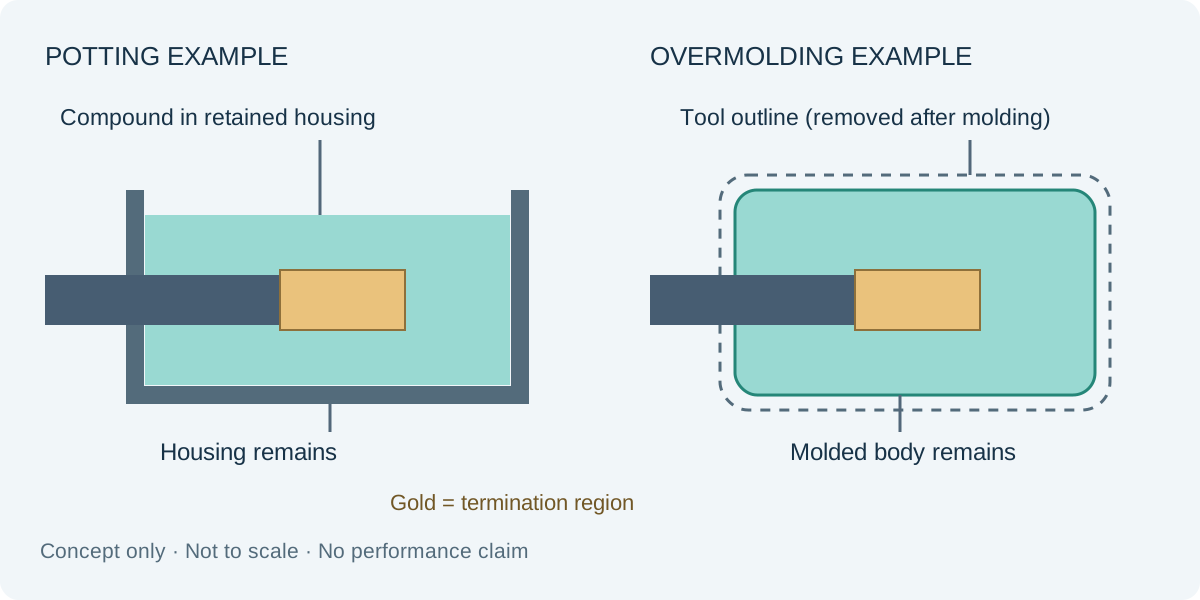
Potting vs Overmolding for Cable Terminations
Compare potting and overmolding using enclosure geometry, process exposure, repair access and assembly evidence. Confirm supplier scope before quotation.
Overmold Tooling Changes: Inserts, Cavities and Cable Exits
Review how cable diameter, exit direction, connector location and molded shape affect tooling interfaces and sample approval before a configuration change.
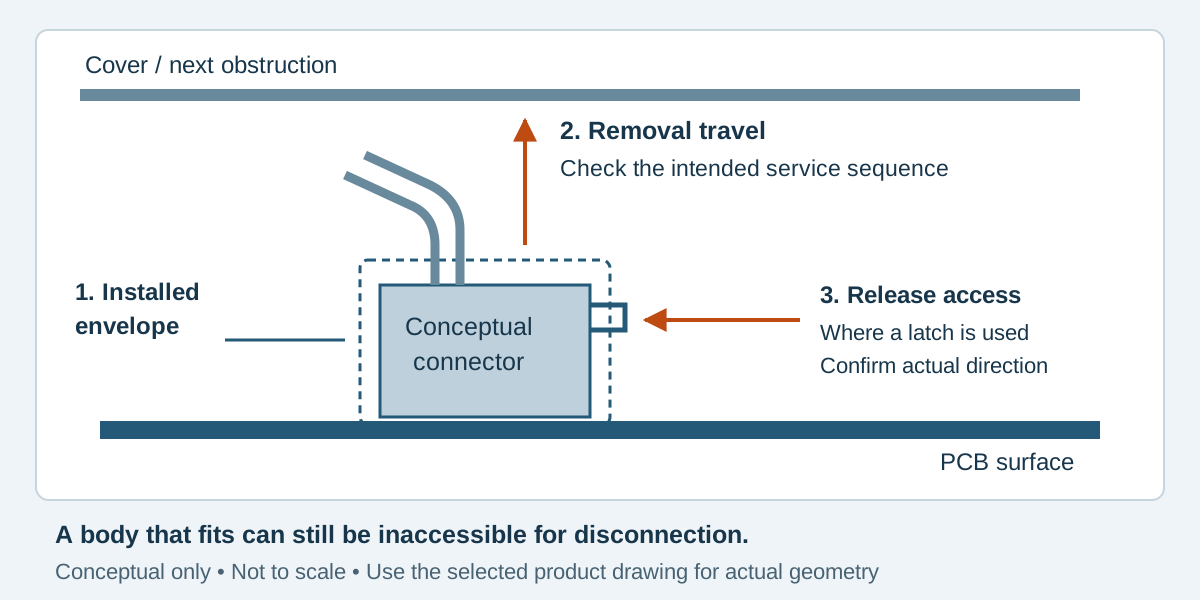
JST PA vs PH: Selecting Around the Board and Retention Requirements
PA and PH share a nominal pitch, but an interface decision needs the complete mating pair, the installation space and a workable retention arrangement.
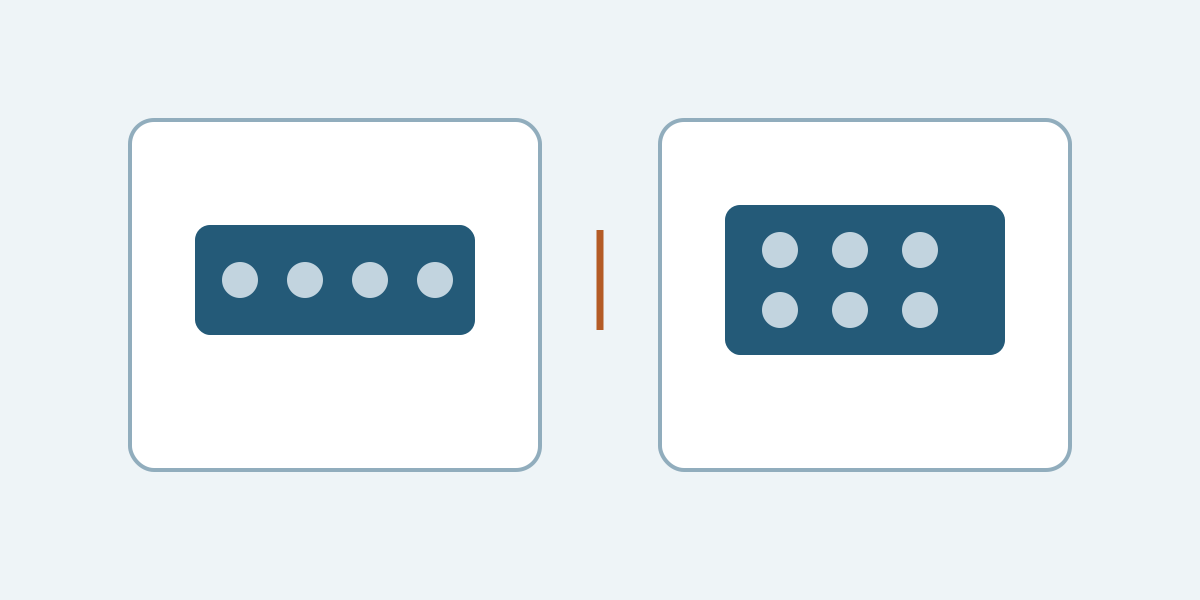
JST PHD vs PH: Dual-Row and Single-Row Layout Decisions
An eight-circuit PHD interface places the connections in two rows. Compare the real housing, wire bundle and connection map with an eight-circuit PH assembly.
Molex SL vs C-Grid III: Checking the Exact Mating System
A 2.54 mm pitch and a familiar Molex name do not define a mating pair. Separate the listed mating family from the exact header, contact and finished cable.
Off-the-Shelf vs Custom Cable Assemblies: When to Review a Custom Build
Compare standard and custom cable assemblies by interface, routing, records, service replacement and quantity, using a complete fictional decision example.
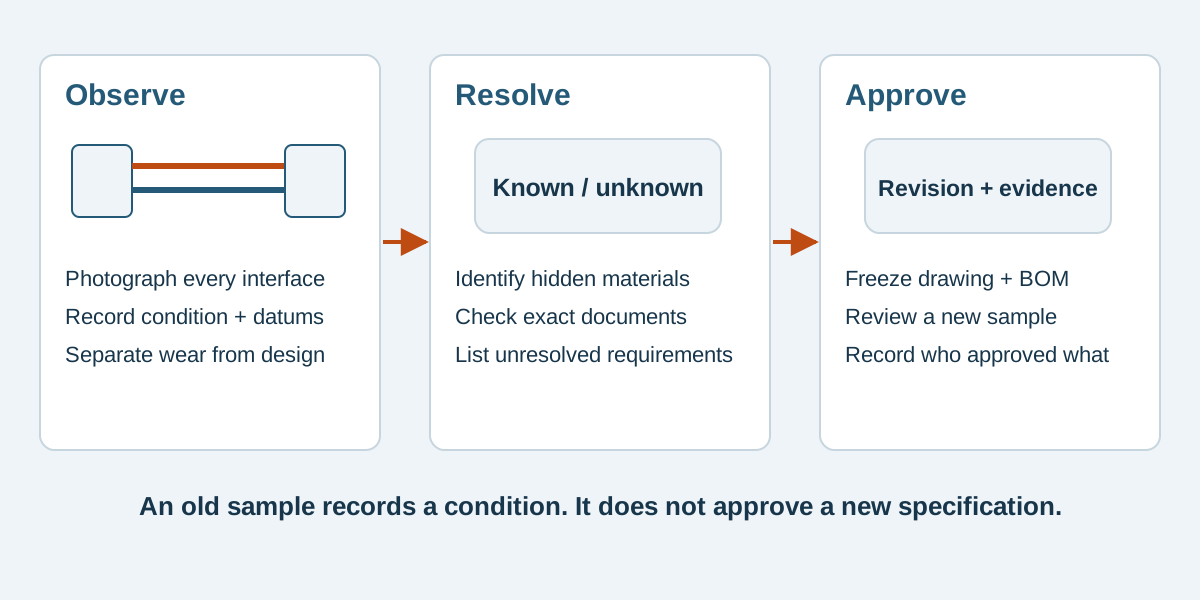
How to Specify a Cable Assembly from a Physical Sample
A reference sample helps explain the assembly, but it cannot reveal every material, tolerance or requirement. Create a controlled record before requesting a build.
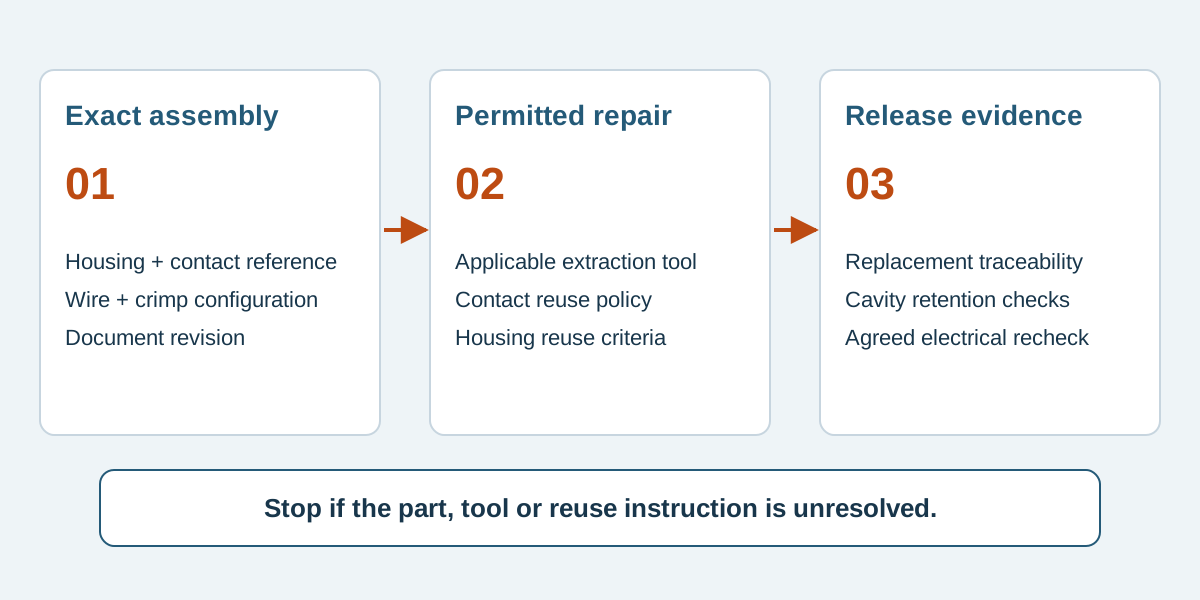
Connector Depinning: Decide What Must Be Replaced
Removing a contact from a housing can change the parts you are allowed to reuse. Identify the exact combination and replacement scope before authorizing rework.
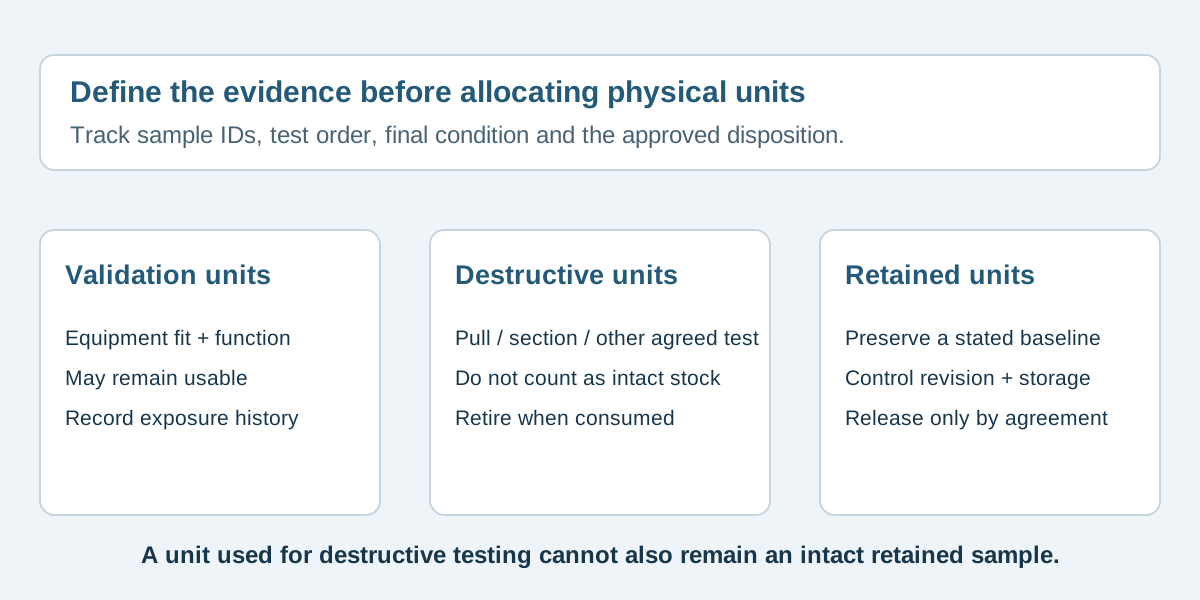
How Many Cable Assembly Samples Should You Request?
Build the sample quantity from named decisions and test needs. Count consumed specimens, mating parts and retained references before confirming the sample order.
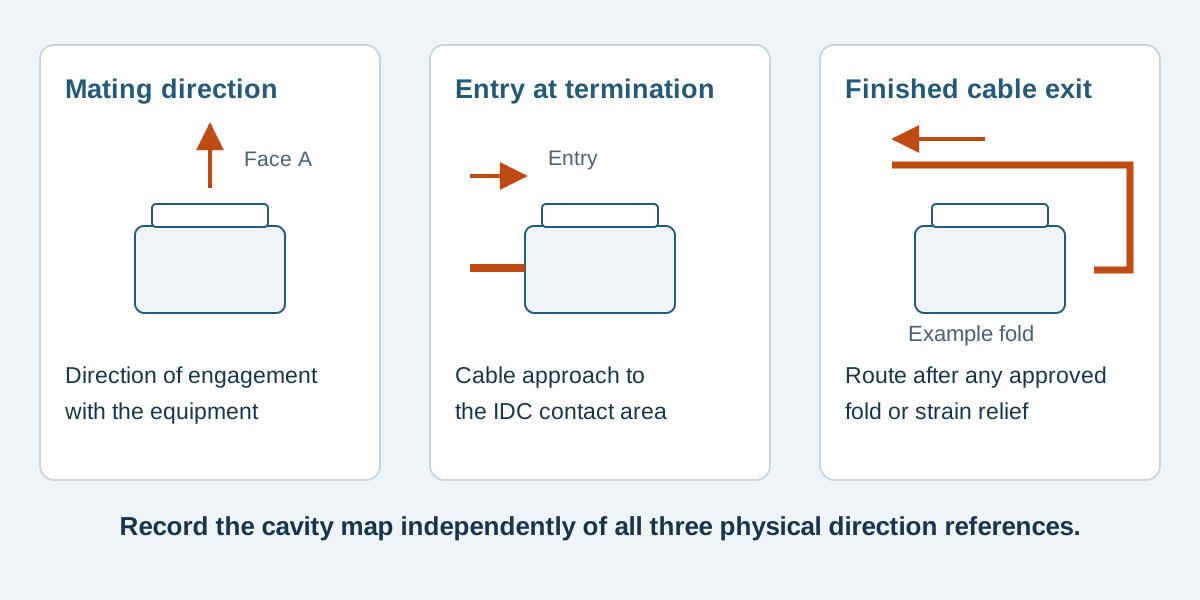
IDC Ribbon Cable Orientation and Cable Exits: Specify the Physical Arrangement
A connector can face the right way and still leave the cable pointing into an enclosure wall. Describe the termination and final routing with separate references.
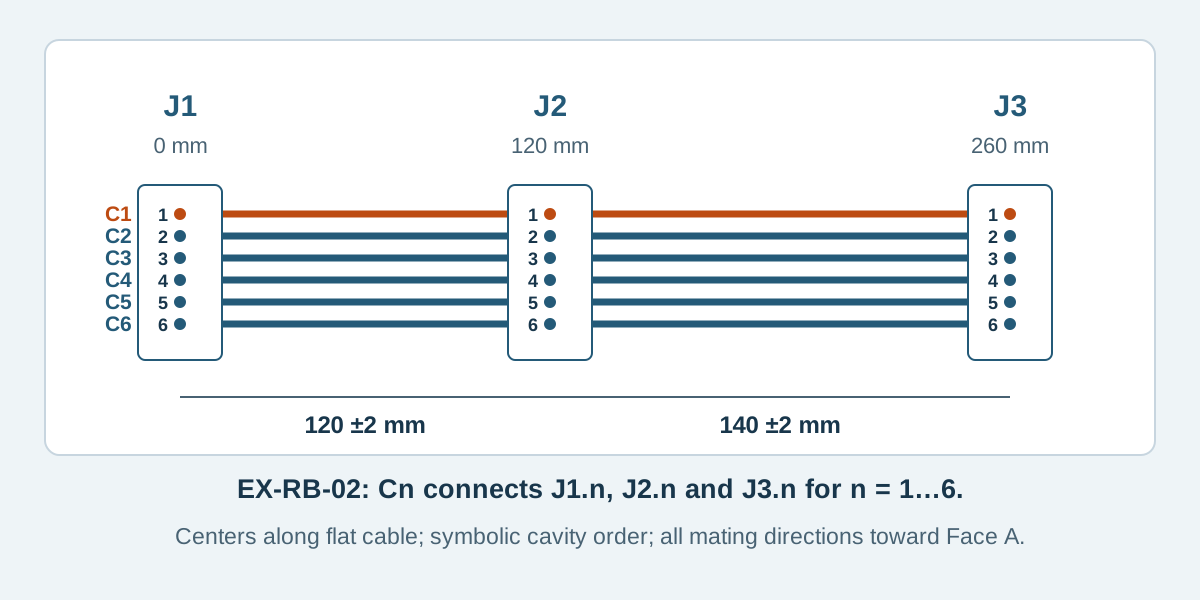
Multi-Connector IDC Ribbon Cables: Specifying the Intermediate Connections
A third connector adds a new termination, a new position datum and more electrical test points. Define all three before asking suppliers to quote the cable.
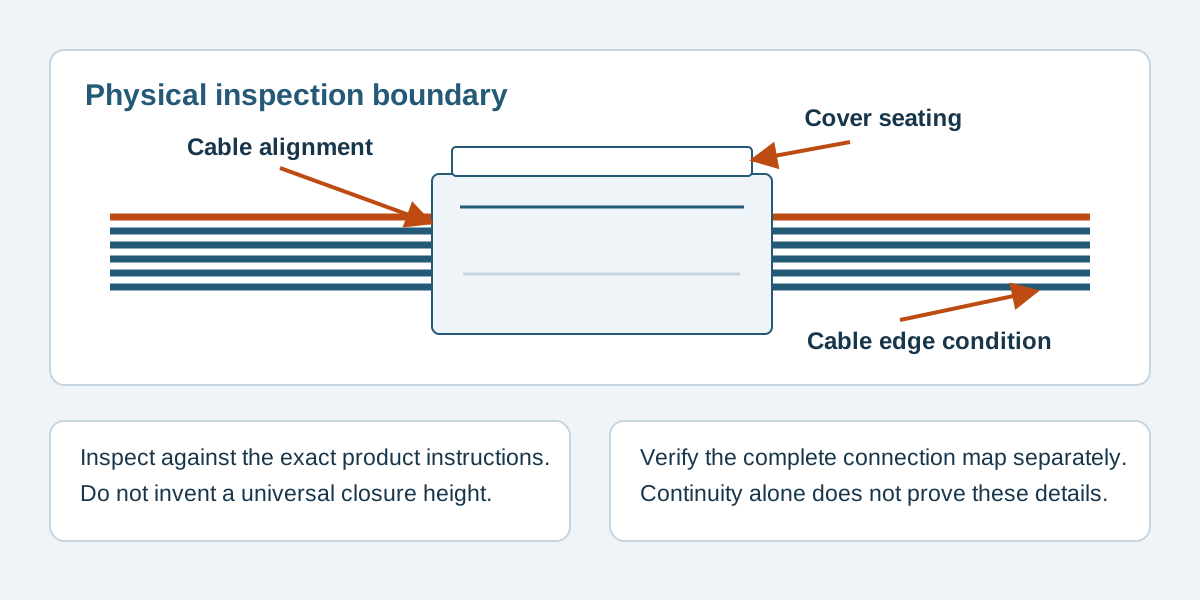
IDC Ribbon Cable Inspection: Wiring Tests and Visual Checks
Check the complete wiring map and the physical IDC termination separately. Define test limits, include middle contacts and preserve unresolved inspection results.
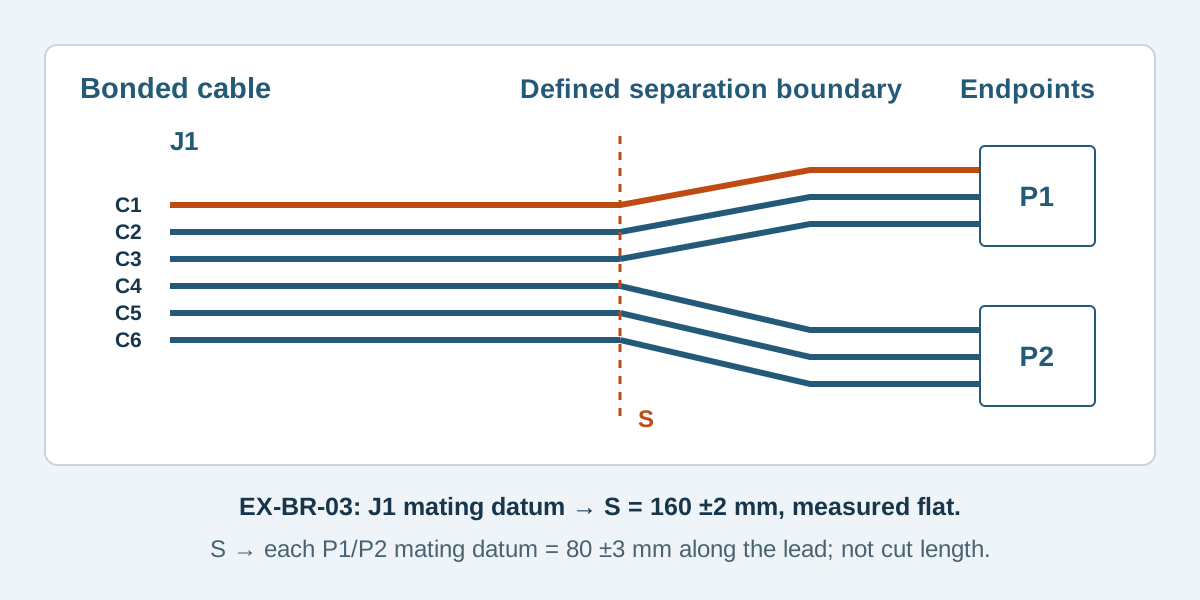
Ribbon Cable Breakouts: Specifying the Separated Ends
A ribbon breakout changes the construction at a defined location. Specify the separable cable, every conductor destination and the actual downstream termination.
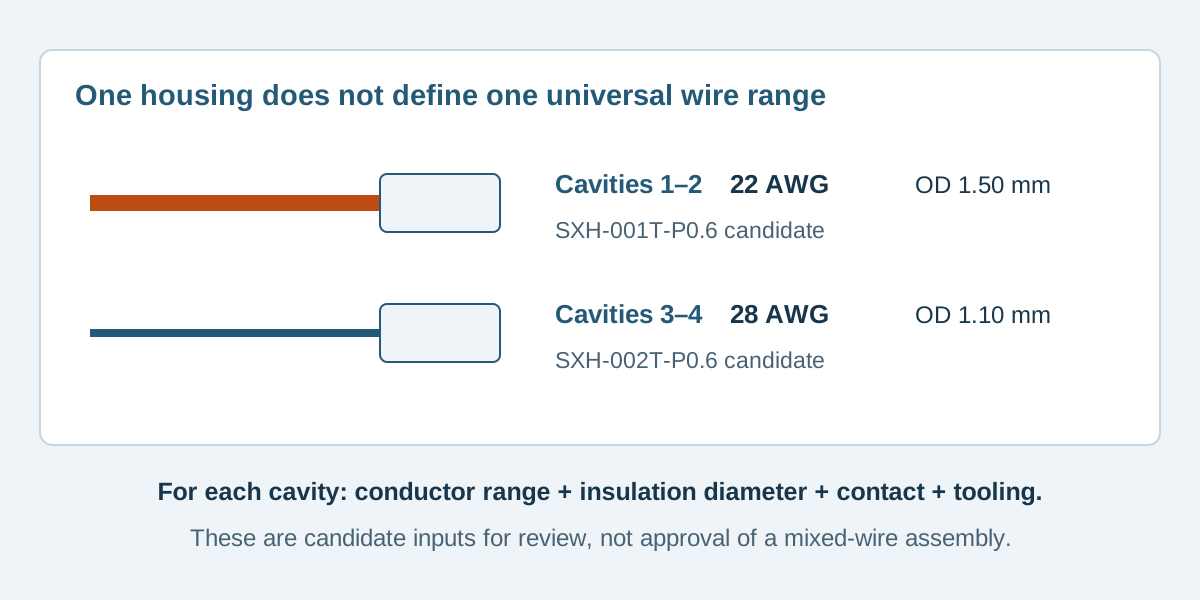
Mixed Wire Gauges in One Connector Housing: A Cavity Review
One housing may involve more than one contact-wire combination. Build a cavity-level selection record instead of applying one family wire range to every circuit.
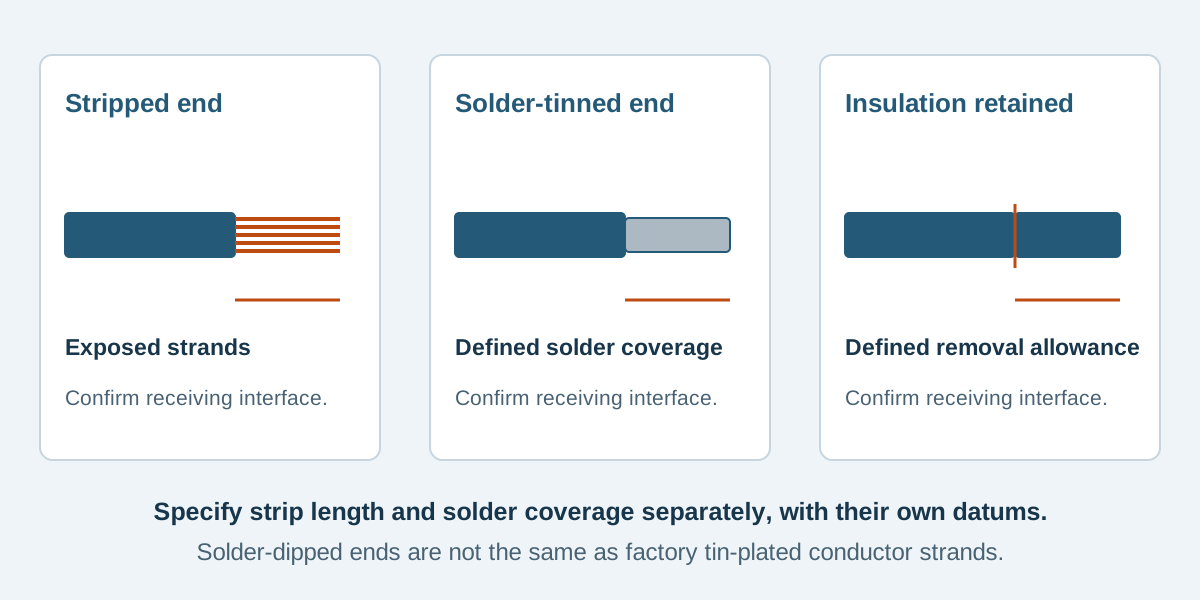
Stripped, Retained-Insulation and Tinned Wire Ends: Define the Finish
Prepared wire ends need more than a note saying bare or tinned. Define what is exposed, which insulation remains and what the receiving connection permits.
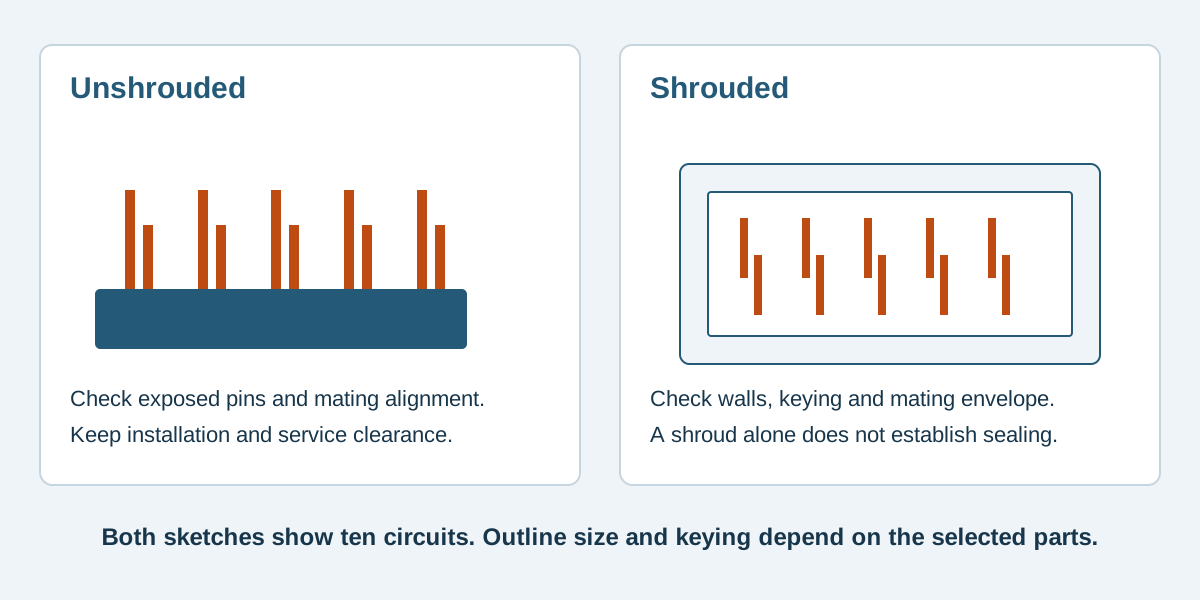
Shrouded vs Unshrouded PCB Headers: Guidance, Protection and Access
A shroud adds geometry around the pins. Compare the actual guidance and polarization features against the space, handling and service access your assembly needs.
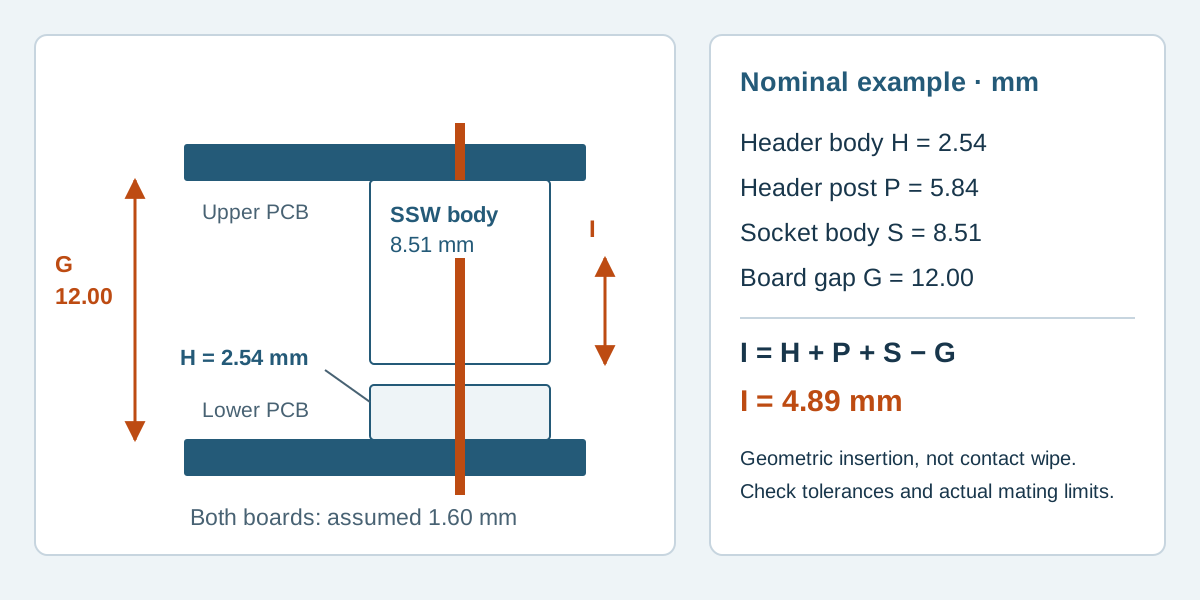
Pin Header Mating Length, Tail Length and Stack Height: Check the Complete Chain
Exposed post length is not contact engagement length. Build a dimension chain between the two PCB seating surfaces before selecting a header and socket.
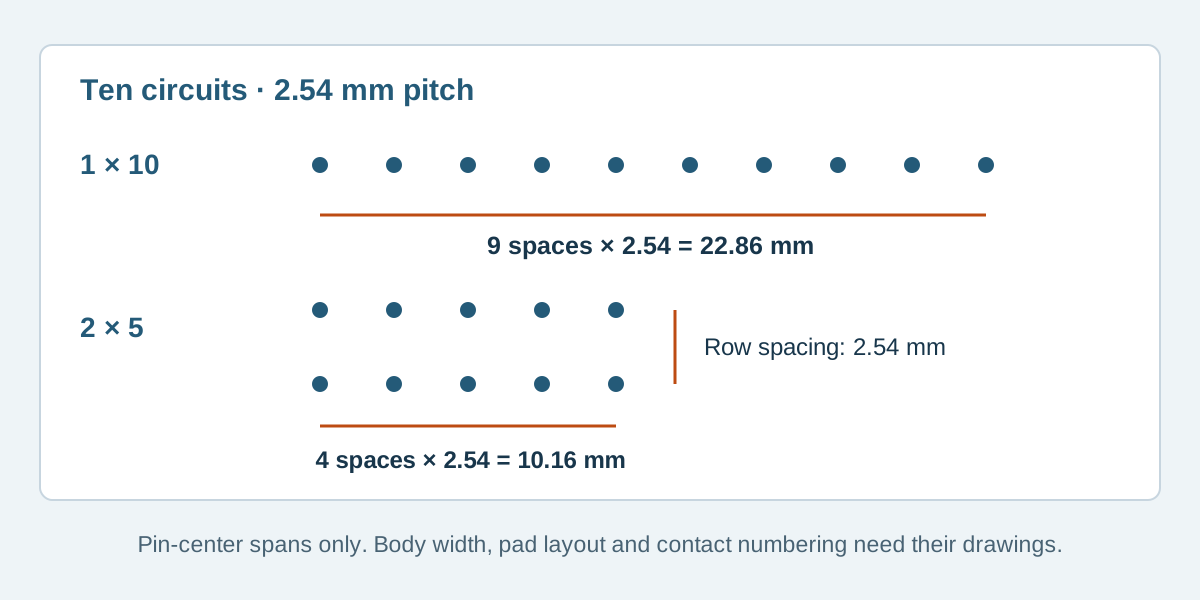
Single-Row vs Dual-Row Headers: Compare the Installed Layout at Equal Circuit Count
Two rows can shorten the contact field while increasing its width. Compare the complete mating layout and circuit assignment before changing a connector footprint.
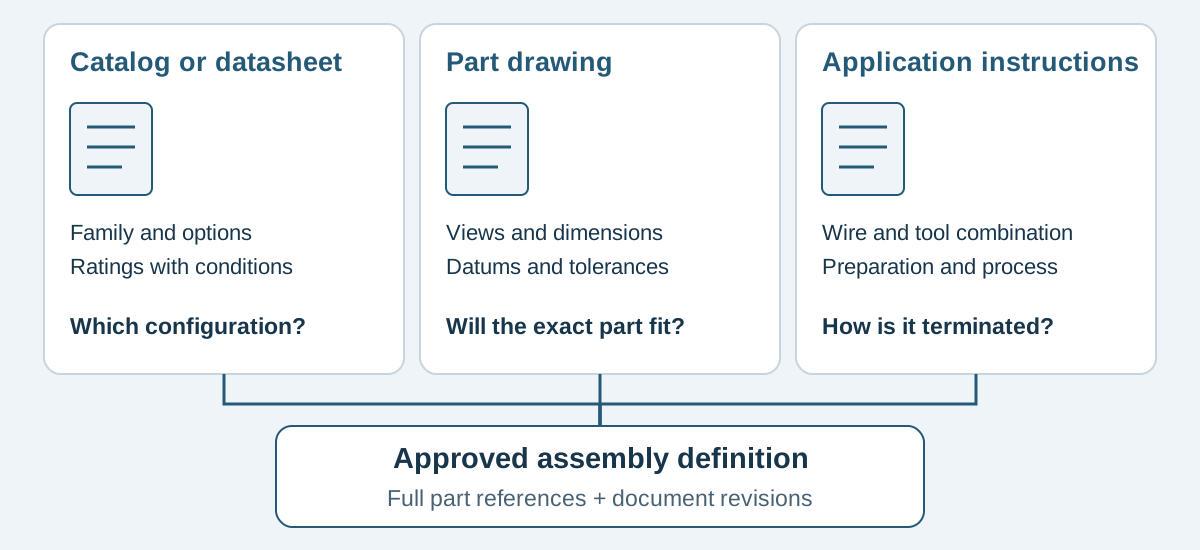
Connector Datasheets, Drawings and Application Specifications
A series datasheet, component drawing and application specification answer different questions. Build a controlled document set before approving a cable assembly.
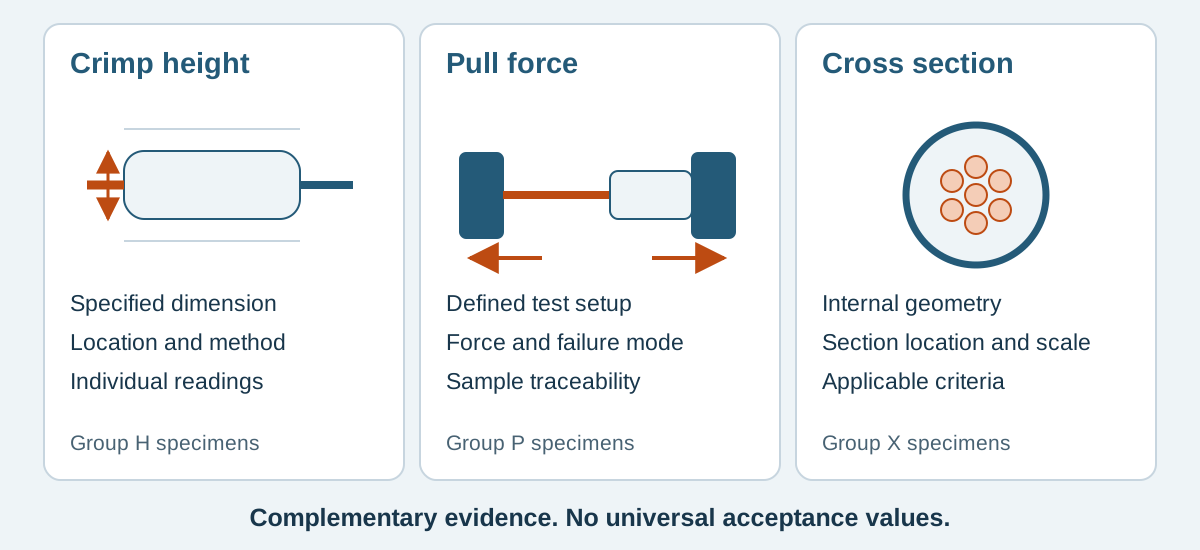
Crimp Height, Pull Force and Cross Section Evidence
Height readings, pull-force results and section images provide different evidence. A useful report links each result to the same defined terminal, wire, process and acceptance document.
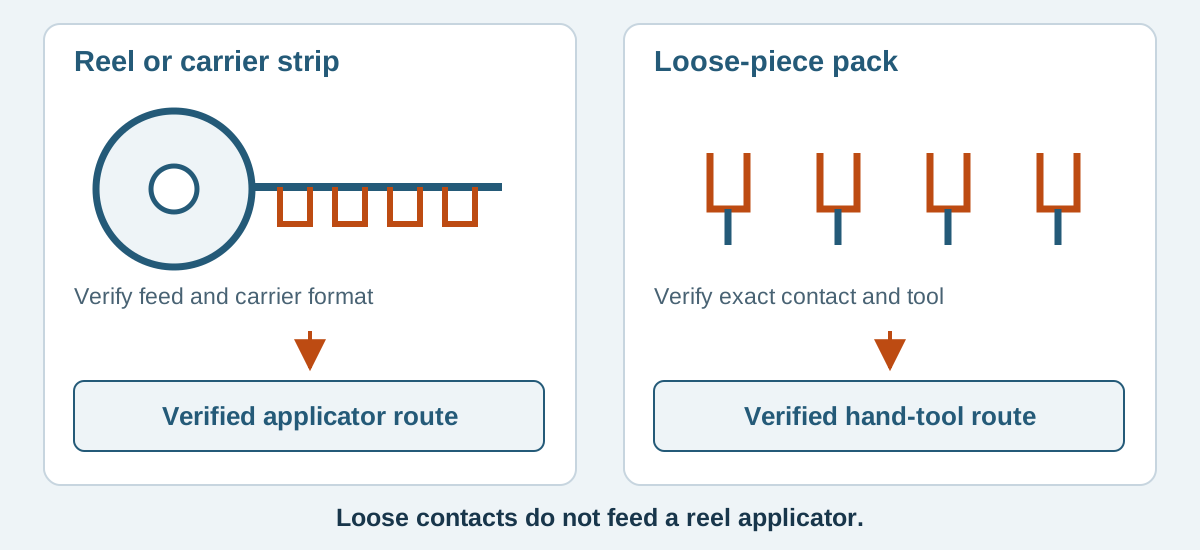
Reel vs Loose Piece Crimp Contacts
Contact packaging affects how parts reach the tool. Check the complete ordering reference and processing method before moving from hand-built samples to production.
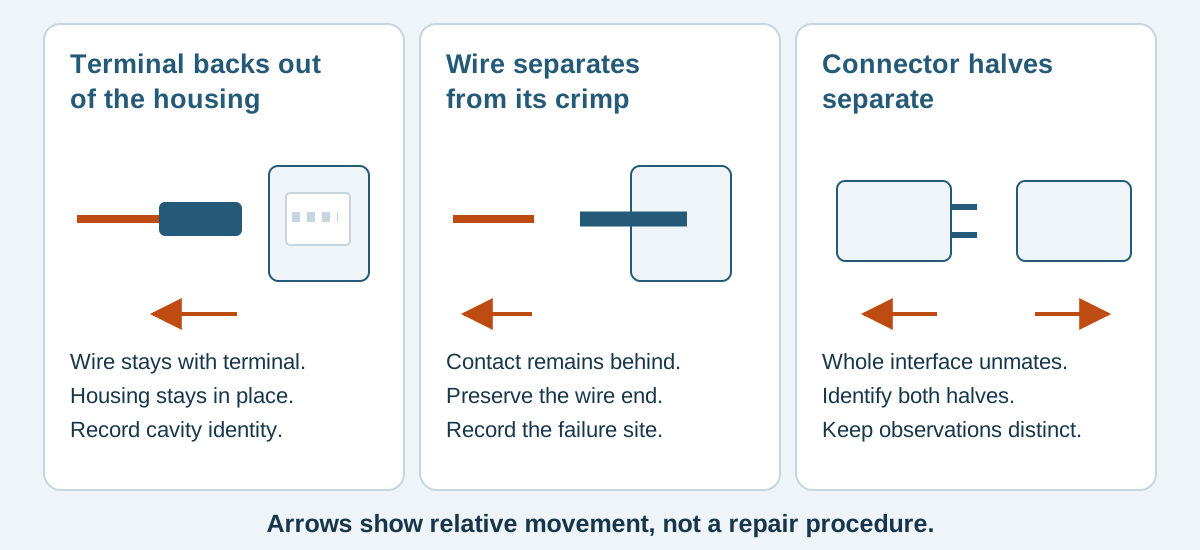
Connector Terminal Backout: What to Check Before Replacing a Harness
A loose wire can indicate three different separation points. Identify what moved, preserve the failed condition and prepare evidence for a useful supplier review.
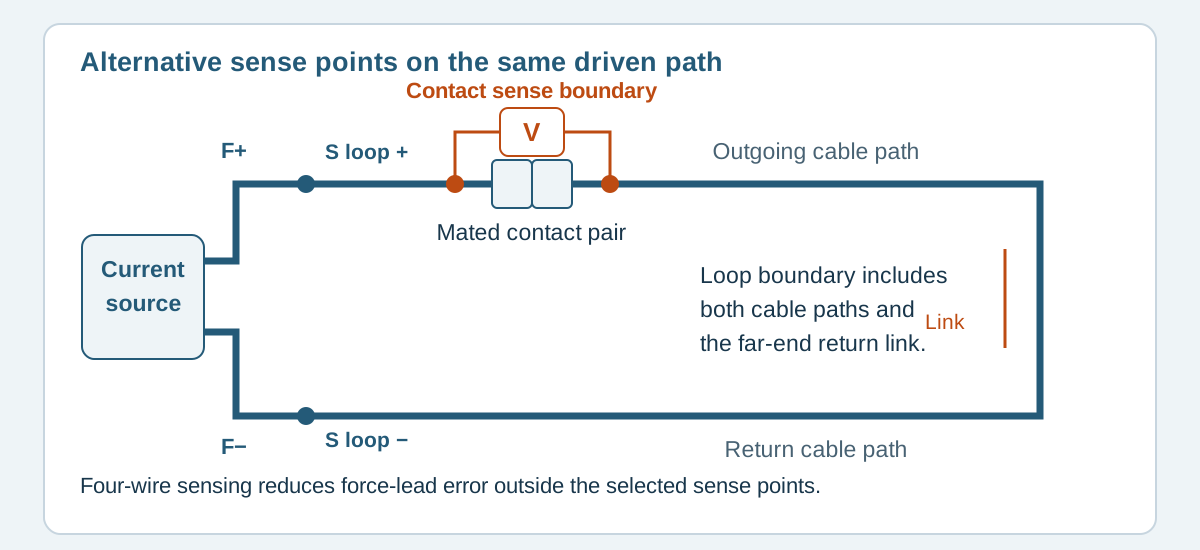
Contact Resistance vs Cable Loop Resistance: Defining the Measurement Boundary
A resistance value is meaningful only with its measurement boundary. Define what the sense points include before comparing a connector interface with a complete cable loop.
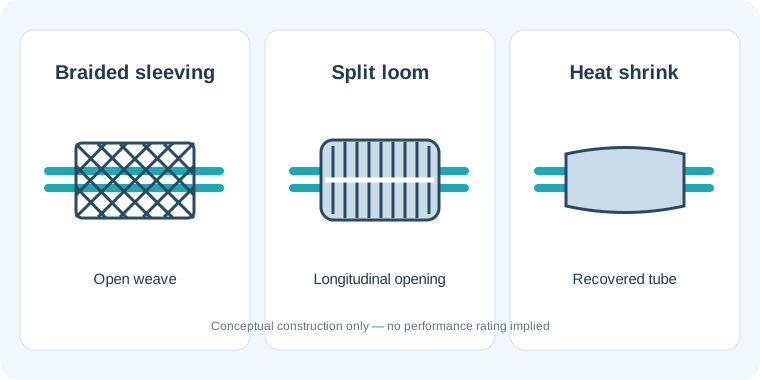
Wire Harness Protection: Braided Sleeving, Split Loom and Heat Shrink
Compare added harness protection by installation sequence, branch access, sleeve ends and agreed application requirements.
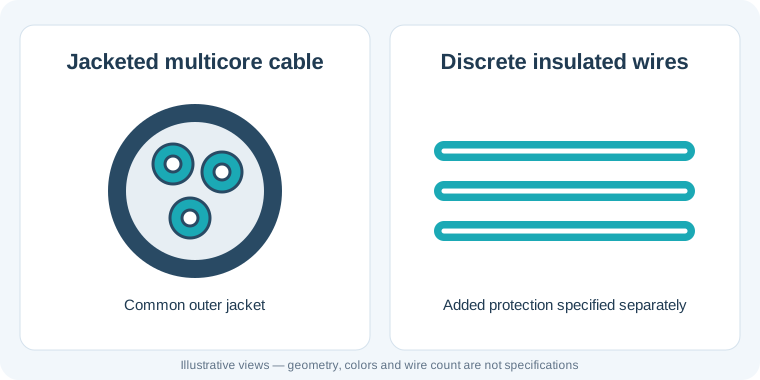
Multicore Cable vs Discrete-Wire Harnesses: Choosing the Construction
Compare jacketed multicore cable and discrete insulated wires by branching, termination fit and installed assembly requirements.
Cable Assembly Unit Price vs Tooling and Setup Charges: Reading a Quotation
Separate unit price, one-time charges, repeat-order assumptions and included scope when reviewing a cable assembly quotation.
Custom Cable Assembly Lead Time: What Must Be Confirmed Before Scheduling
Confirm drawing release, material availability, sample approval and delivery milestones before relying on a cable assembly schedule.
Cable Assembly Kits vs Individual Harnesses: Choosing the Purchasing Unit
Define a kit BOM, quantities, completeness checks and replacement scope when deciding how to purchase multiple cable assemblies.
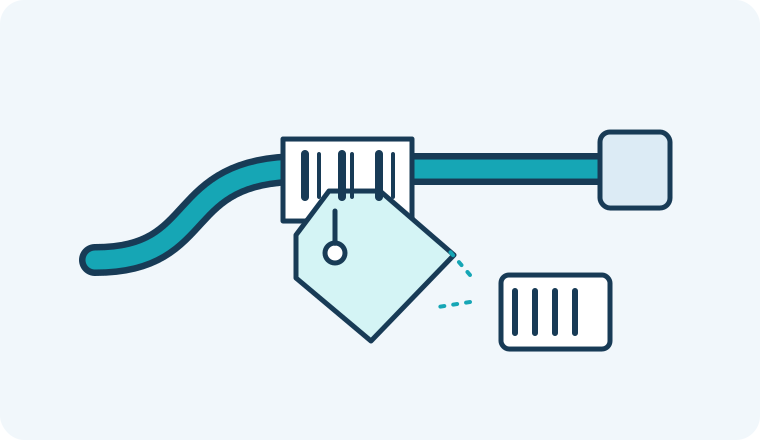
Cable Assembly Labels and Traceability: What to Specify in an RFQ
Specify assembly revisions, lot and serial identifiers, label placement and the records needed for a cable assembly.
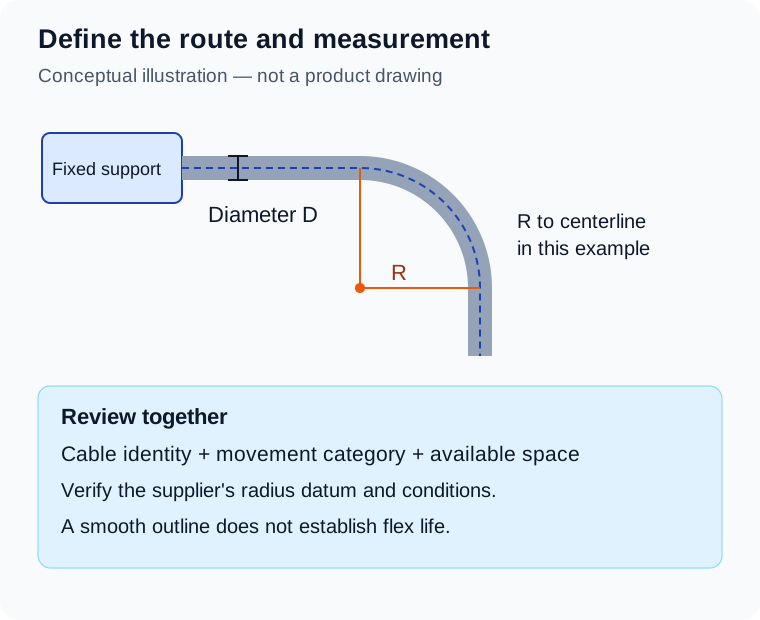
Cable Bend Radius: Fixed Routing vs Repeated Motion
Review cable bend radius for fixed routing, occasional movement and repeated motion using the exact cable and installed route.
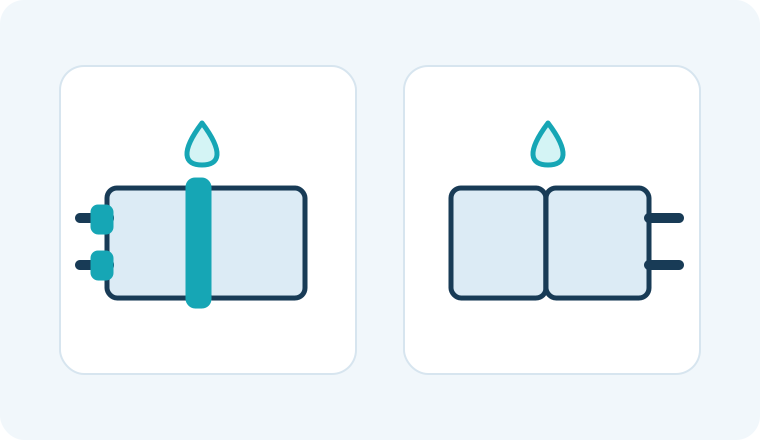
Sealed vs Unsealed Connectors: Defining Cable Assembly Protection
Define mating interfaces, wire seals, unused cavities and installed protection before specifying a sealed cable connection.
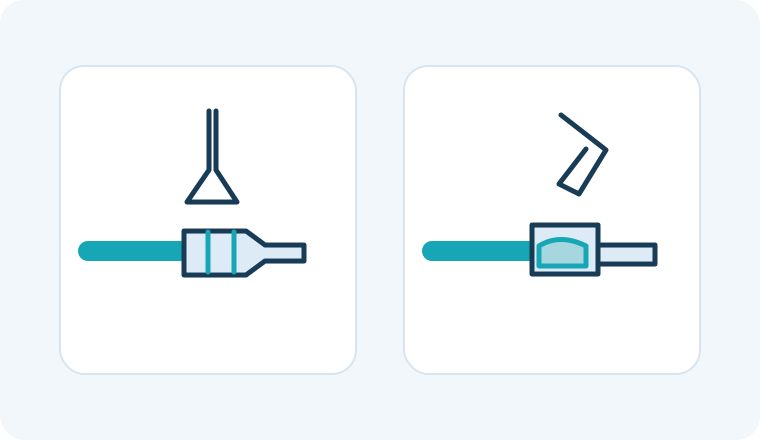
Crimp vs Solder Terminations for Cable Assemblies
Compare component-supported crimp and solder terminations, wire preparation, mechanical support and inspection requirements.
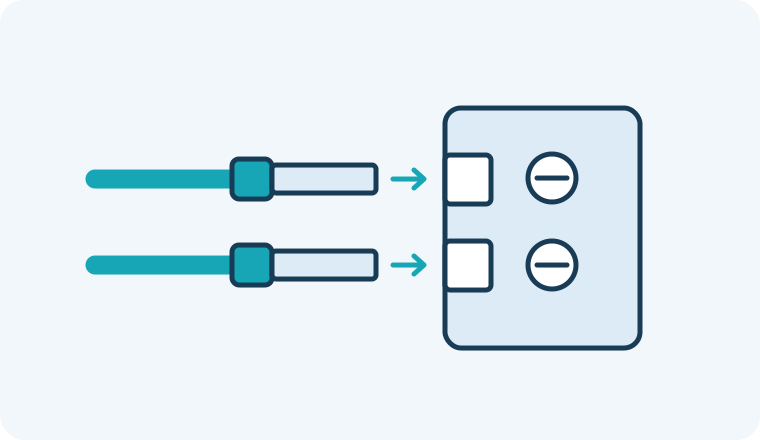
Wire Ferrules for Cable Assemblies: Specifying Terminal-Block Connections
Specify wire ferrules with the intended terminal block, conductor, sleeve dimensions, tooling and sample approval.
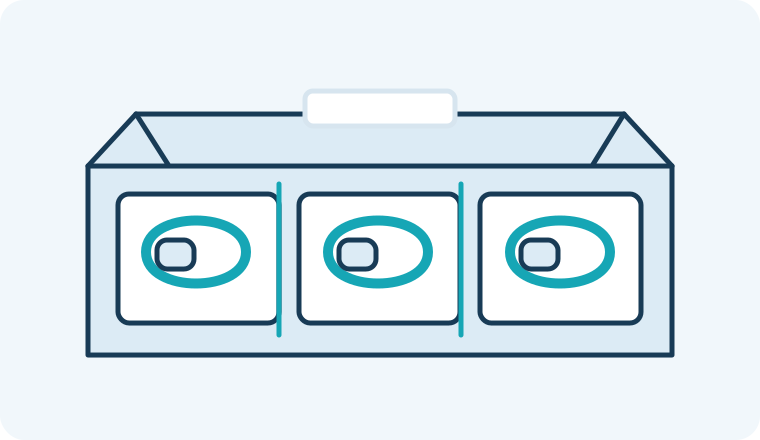
Cable Assembly Packaging: Protecting Parts and Preparing for Receiving
Specify cable assembly protection, pack identification, quantities and receiving checks before quotation.
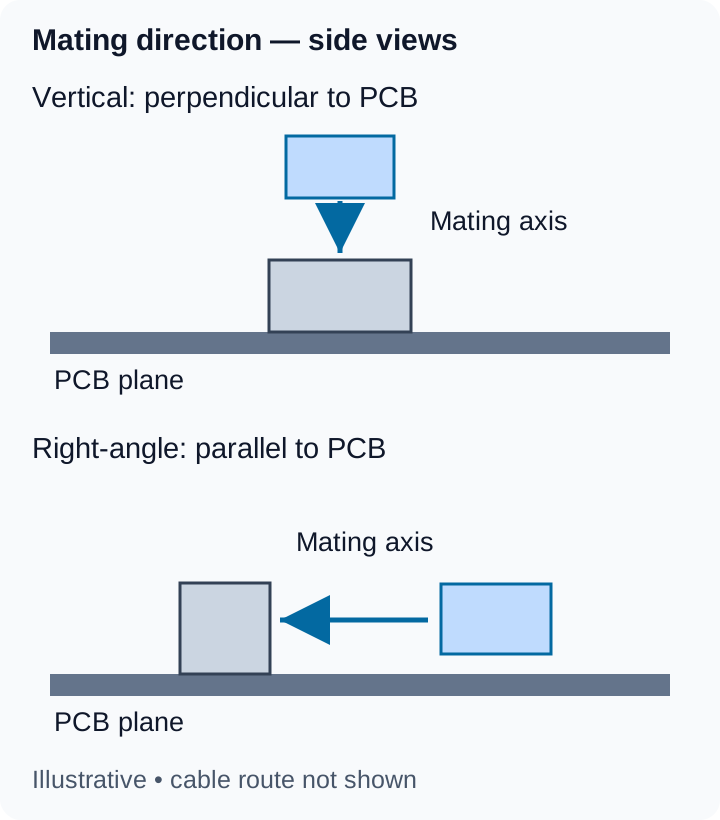
Vertical vs Right-Angle PCB Headers: Choosing Mating Direction and Cable Clearance
Choose the mating direction relative to the PCB, then check approach clearance, release access and cable routing.
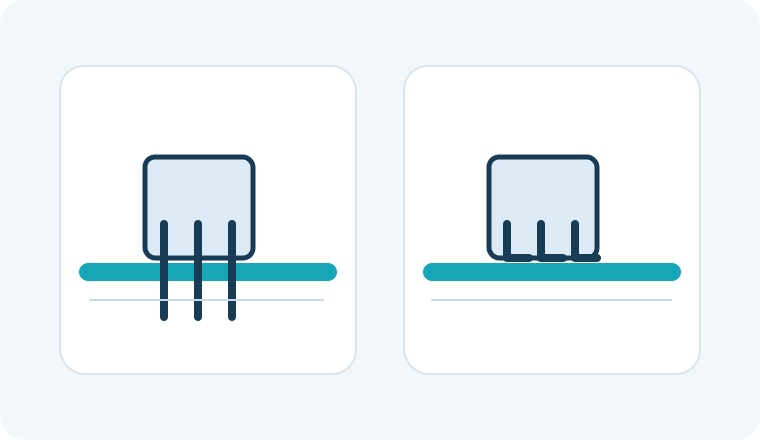
Through-Hole vs SMT Connector Headers: Choosing PCB Attachment and Assembly
Compare PCB attachment, footprints and mechanical support without treating soldering method as a universal strength rating.
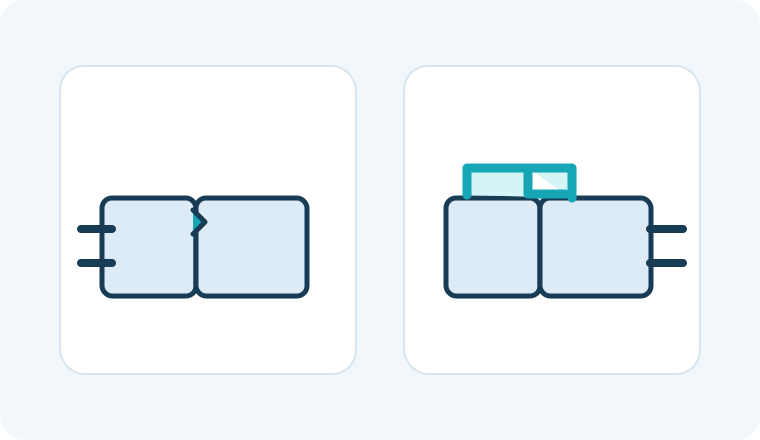
Friction Lock vs Positive Lock Connectors: Choosing Mating Retention
Separate friction retention and positive latches, and define engagement and release requirements for the actual mating pair.
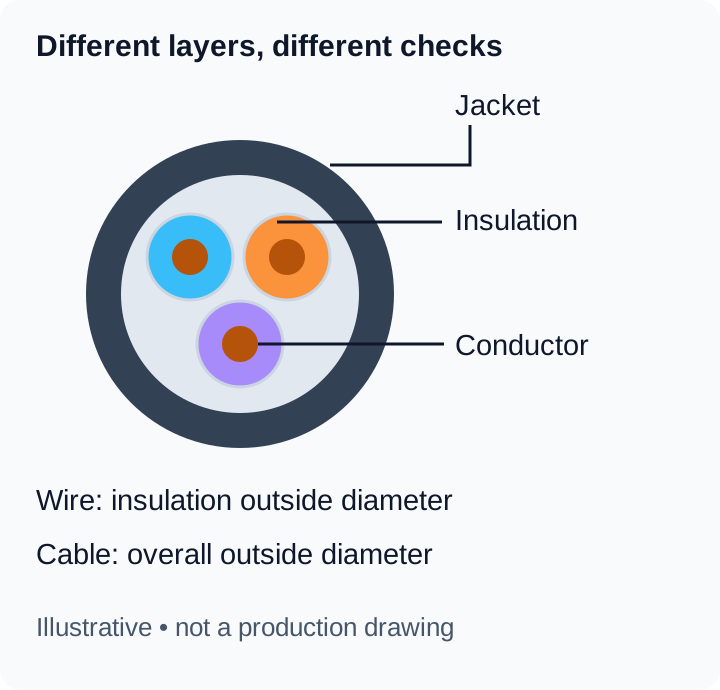
Wire Insulation vs Cable Jacket: Choosing Materials for a Cable Assembly
Separate conductor insulation, overall cable jackets and local protection when specifying a cable assembly.
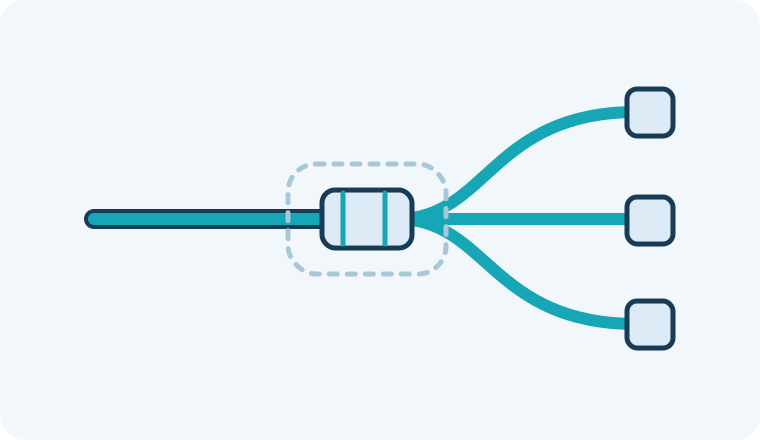
Splices in Multi-Branch Wire Harnesses: Defining the Electrical Junction
Define electrical splice nodes, conductor combinations and review conditions independently from physical harness branches.
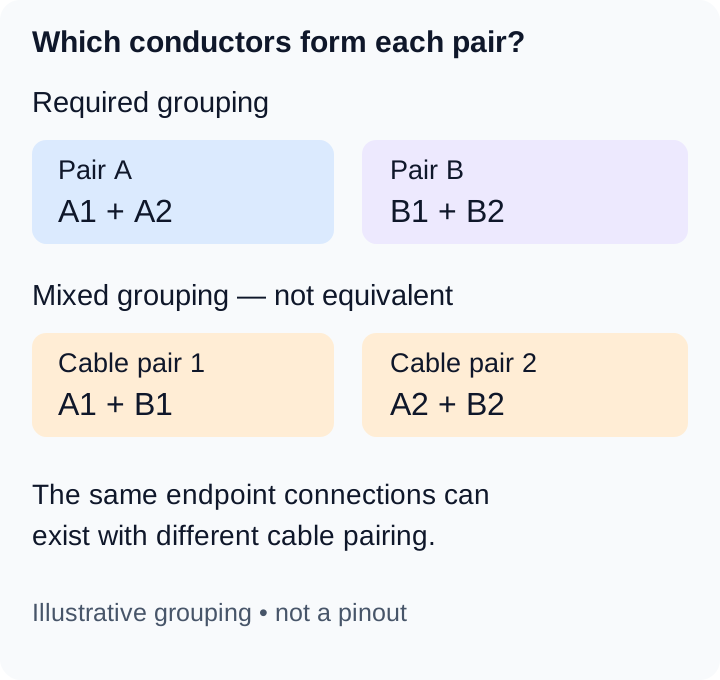
Twisted Pair vs Parallel Wires: Specifying Pairing in a Cable Assembly
Specify pair identity, end connections and routing requirements without assuming signal or EMC performance.
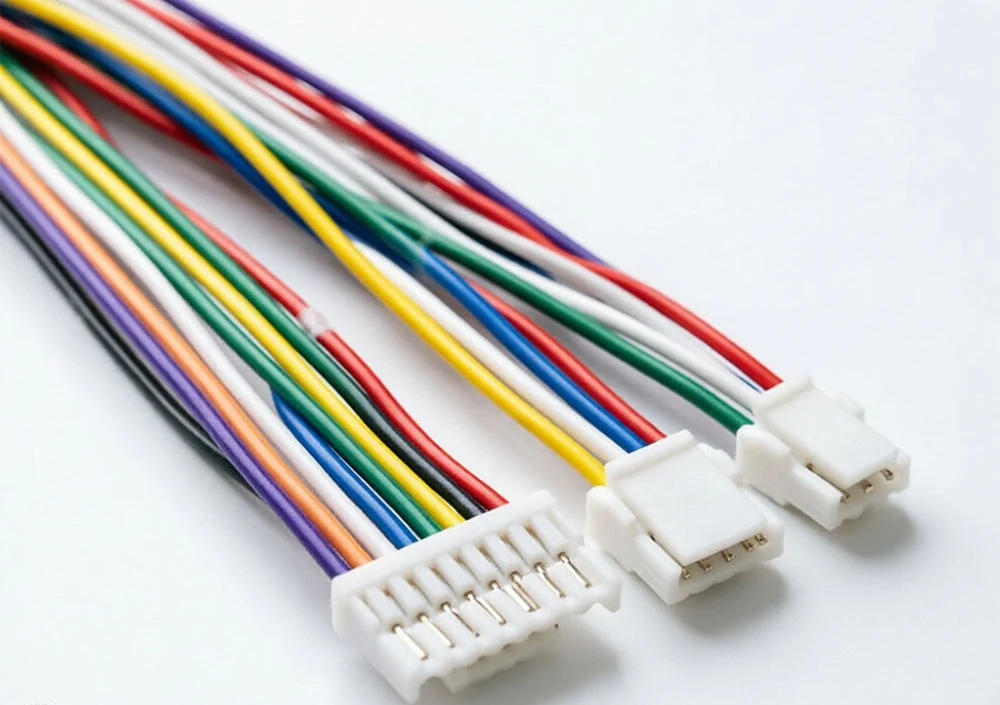
JST GH vs Molex PicoBlade: Choosing Between Two 1.25 mm Systems
Compare GH and PicoBlade retention, exact contacts and wire ranges before choosing a 1.25 mm cable interface.
JST EH vs XH: Choosing Between Two 2.5 mm Connector Systems
Compare original EH and XH connector dimensions, wire termination and installation requirements beyond their shared 2.5 mm pitch.
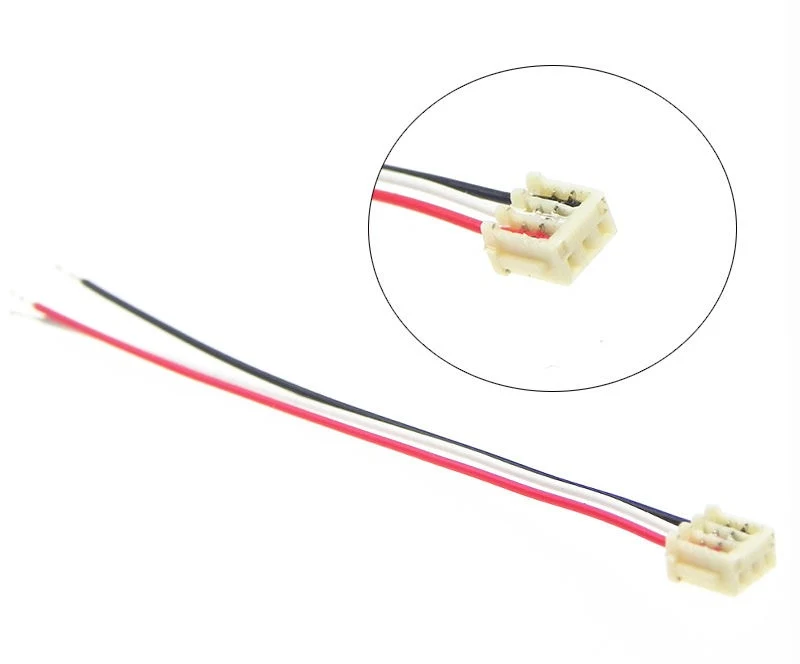
JST SH vs SR: Crimp or IDC for a 1.0 mm Connection?
Understand SH crimp and SR insulation-displacement termination, specified headers and wire constraints before selecting a 1.0 mm connection.
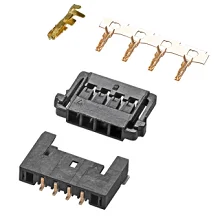
Molex PicoBlade vs Pico-Lock: Pitch, Profile and Retention
Compare specific PicoBlade and 1.50 mm Pico-Lock configurations, with mated height, retention, wire fit and current limitations.
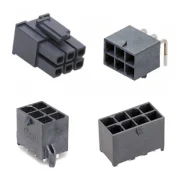
Molex Mini-Fit Jr. vs Mega-Fit: Choosing a Power Cable Interface
Compare Mini-Fit Jr. and Mega-Fit connection requirements, exact terminal choices and current-rating conditions.
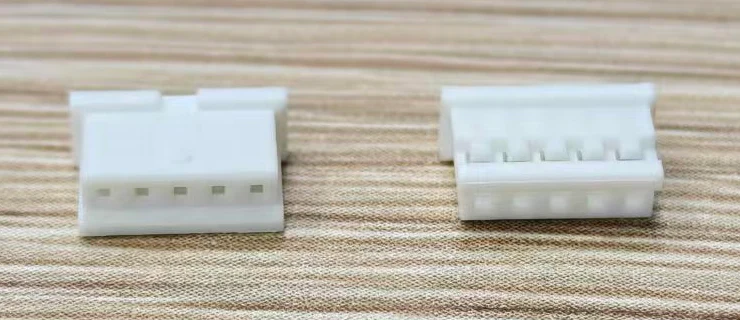
Molex Pico-SPOX vs Sherlock: Compact Size, Locking and Design Continuity
Compare Pico-SPOX and Sherlock interfaces, termination requirements and part-specific lifecycle considerations.
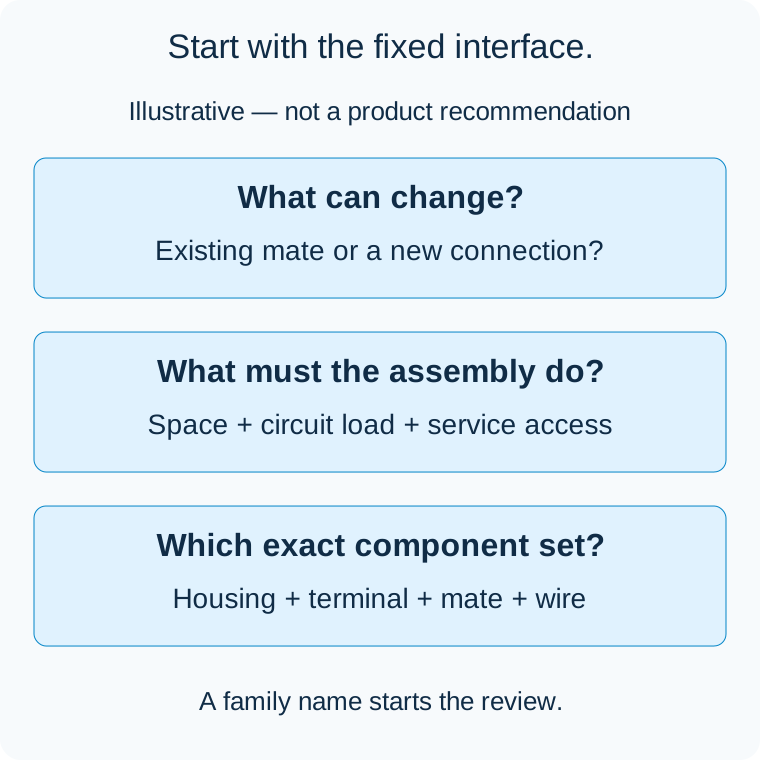
Common Molex Connector Types Compared: PicoBlade, Pico-Lock, Pico-SPOX, Micro-Fit, Mini-Fit Jr. and Mega-Fit
Compare six Molex connector families as selection starting points, with interface, space, variant and sourcing considerations.
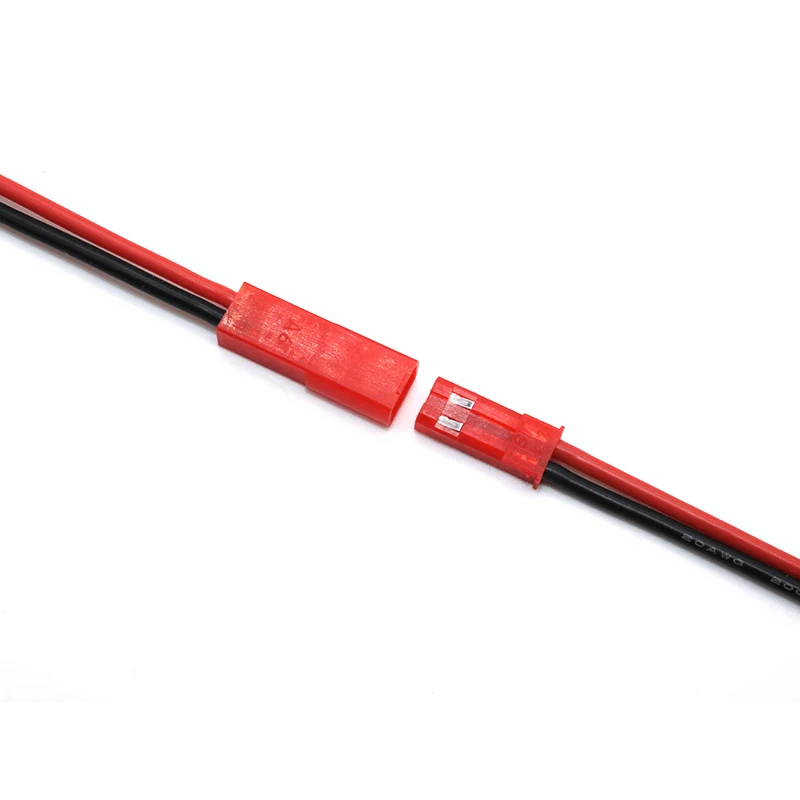
JST SM vs RCY: Choosing a Wire-to-Wire Connector
Compare JST SM and RCY wire-to-wire connector arrangements, circuit counts, retention and wire-specific catalog conditions.
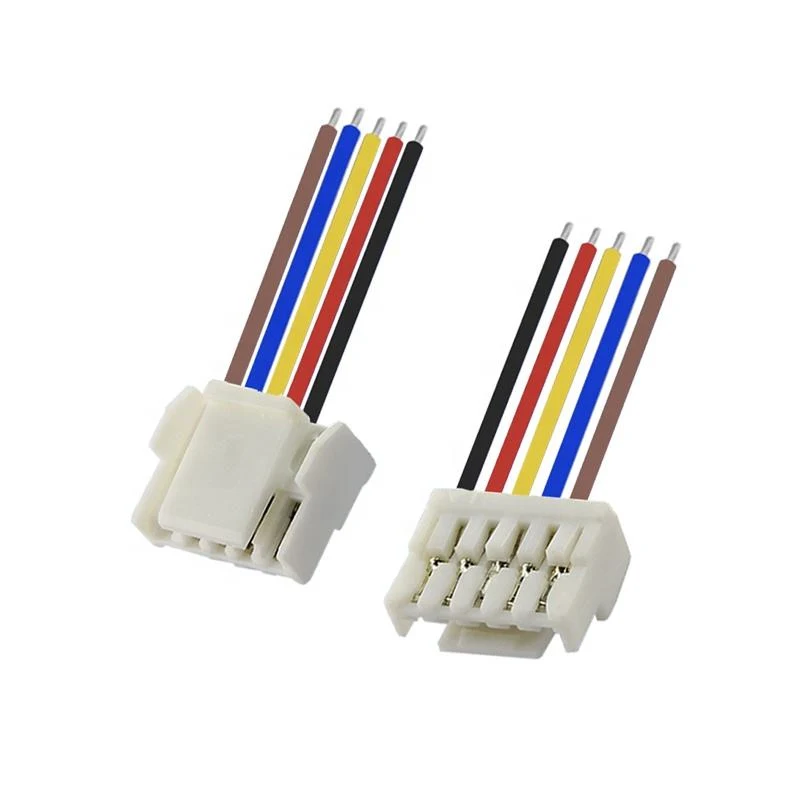
Wire-to-Board vs Wire-to-Wire Connectors: Choosing the Connection Layout
Choose where a cable should disconnect: at the PCB or between cable sections, with installation, service and routing tradeoffs.
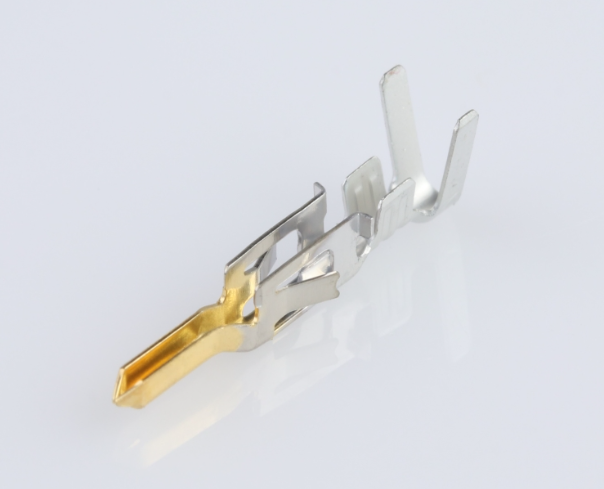
Tin vs Gold-Plated Connector Contacts: How to Choose
Specify mating-area and termination-area finishes, approved contact pairs and exact-part evidence when choosing tin or gold plating.
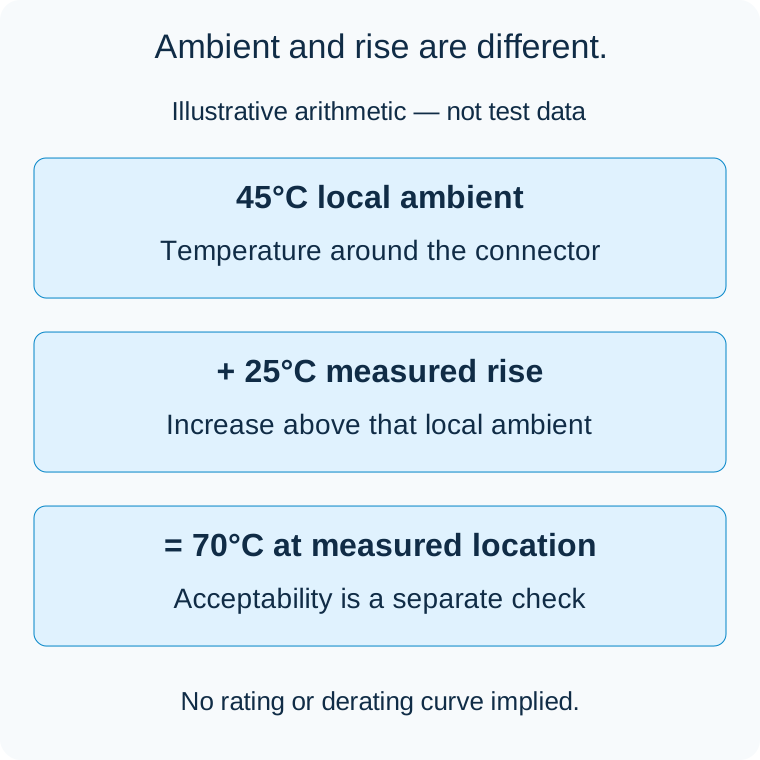
Connector Current Ratings Explained: Wire Size, Circuit Loading and Temperature Rise
Read connector current ratings with wire size, circuit configuration, ambient temperature and temperature-rise conditions.
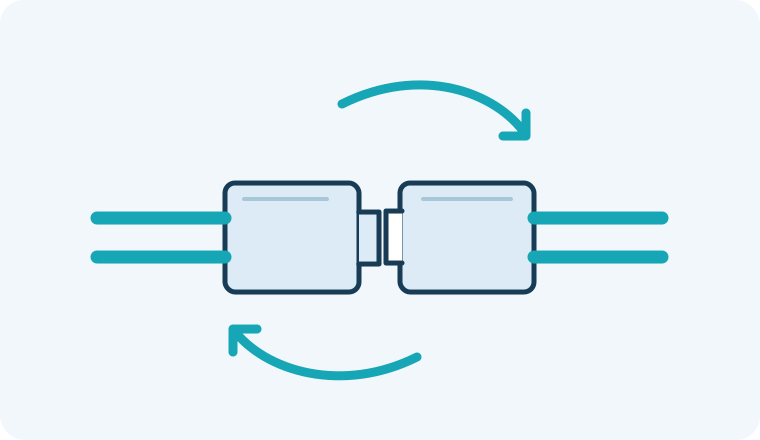
Connector Mating Cycles Explained: Choosing for Assembly and Maintenance
Interpret connector mating-cycle specifications for assembly, maintenance and frequent connection without turning them into lifetime guarantees.
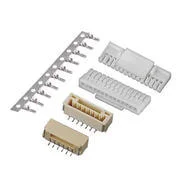
Connector Housings, Terminals and Headers Explained
Identify connector housings, wire contacts and PCB headers, then define the complete component set for a cable assembly.

Connector Polarization vs Keying: Preventing the Wrong Connection
Separate connector orientation, mechanical keying and visual identification when reviewing protection against mis-mating.
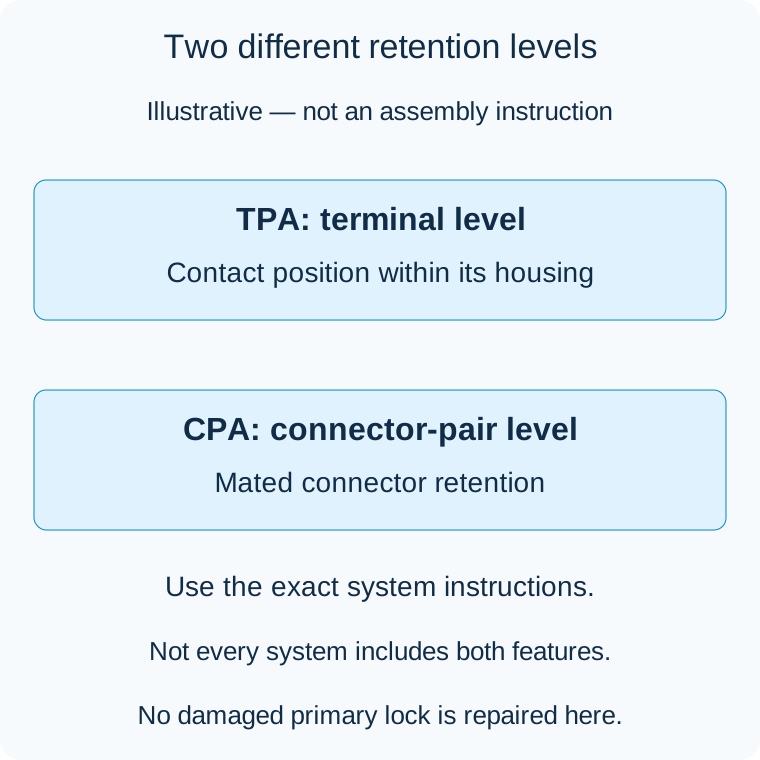
TPA vs CPA: Two Different Connector Retention Checks
Compare terminal position assurance and connector position assurance, with system-specific assembly and inspection requirements.

Cable Assembly Testing Explained: Continuity, Short Circuits and Pull Force
Define continuity, short-circuit and pull-force checks, including limits, sampling and the difference between crimp strength and retention.
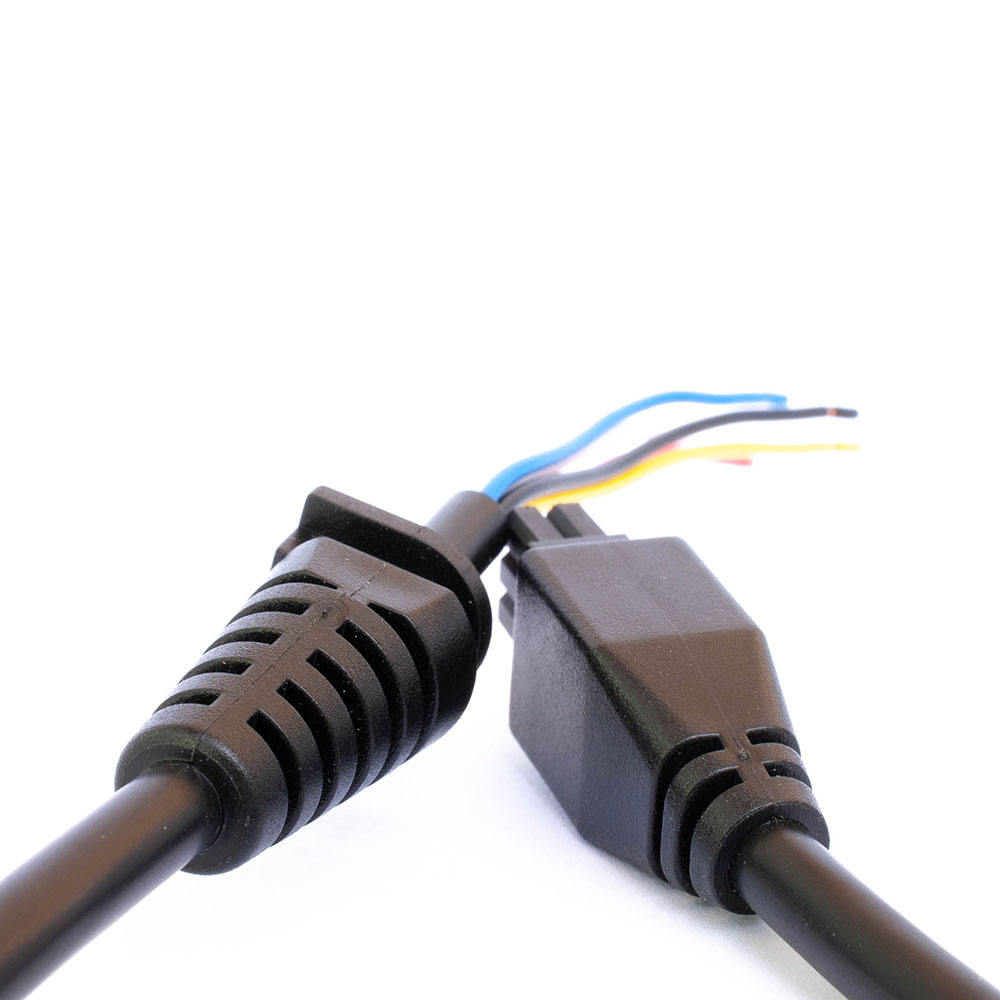
Cable Assembly Strain Relief: Overmolding, Heat Shrink and Mechanical Clamps
Compare overmolding, heat shrink and mechanical clamps by load path, movement, installation space, service access and sealing requirements.
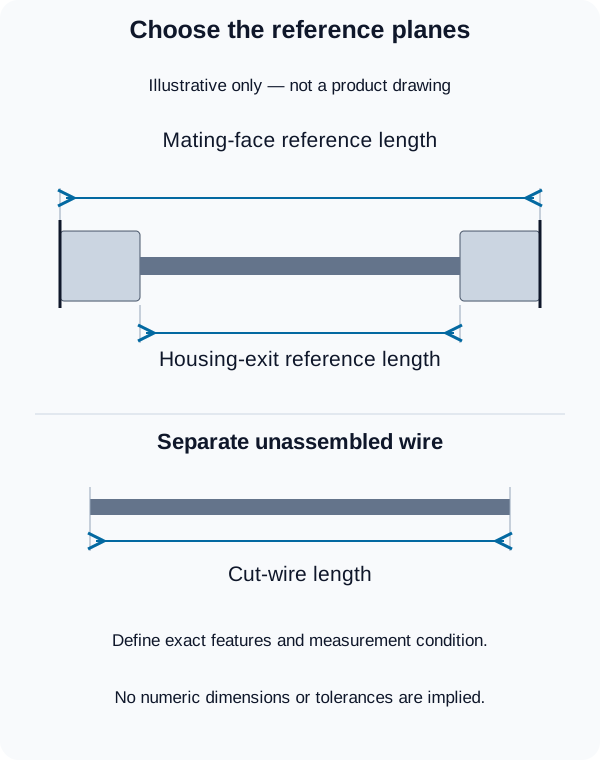
How to Specify Cable Assembly Length and Tolerances
Specify cable assembly length with clear endpoints, branch dimensions, measurement conditions and agreed tolerances.
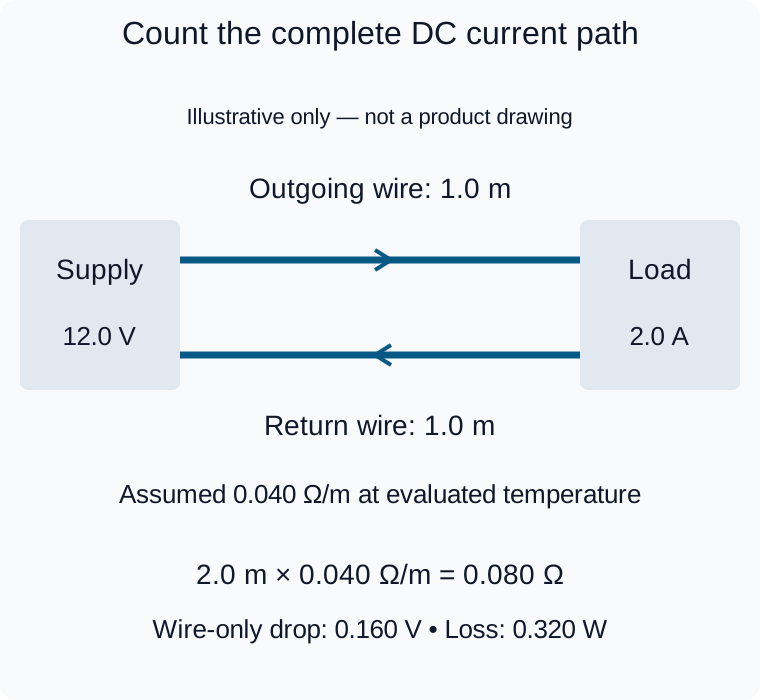
Choosing Wire Gauge for Cable Assemblies: AWG, Voltage Drop and Connector Limits
Select wire using the complete current path, voltage margin, installed thermal conditions and exact terminal fit.
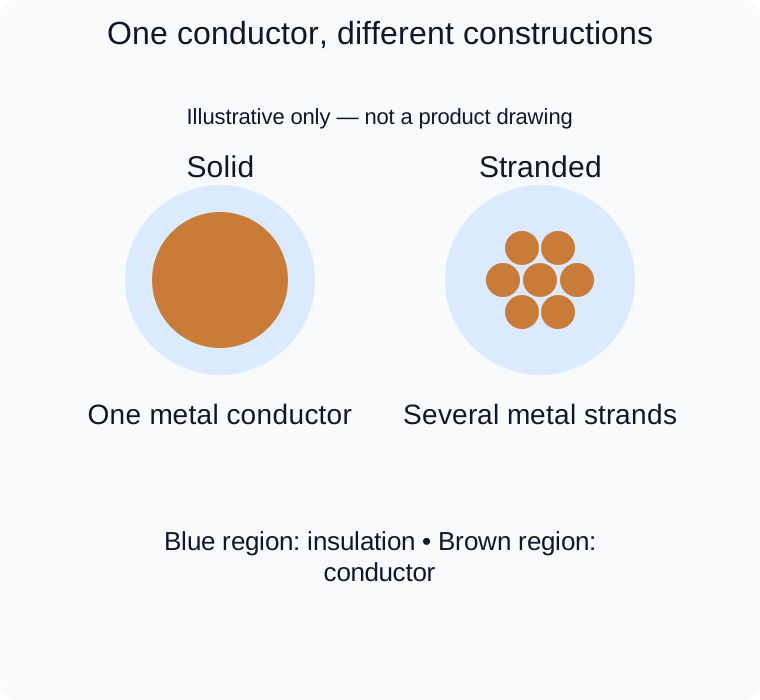
Solid vs Stranded Wire for Cable Assemblies
Compare conductor construction, installation movement and exact crimp or IDC compatibility before selecting a wire.
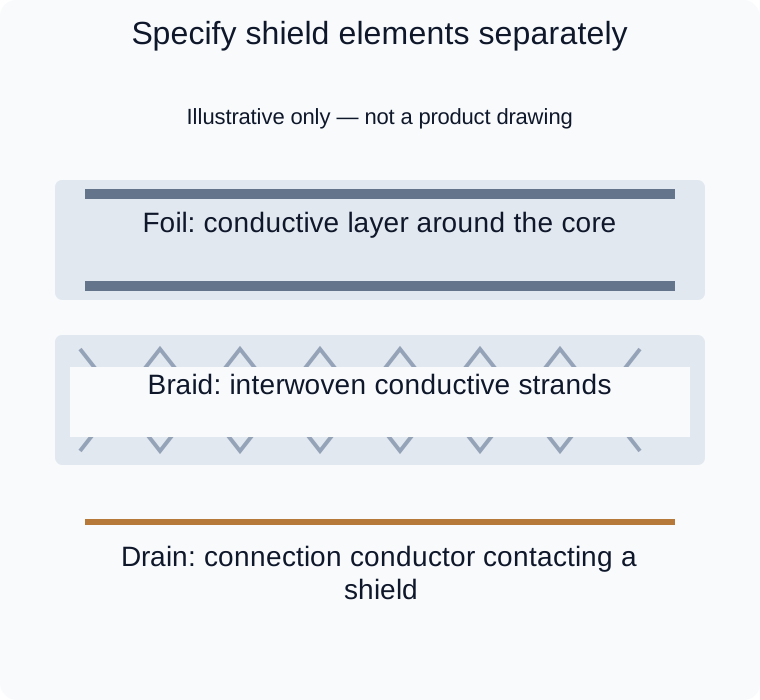
Shielded Cable Assemblies: Foil, Braid and Shield Termination
Distinguish foil, braid, drain wires and shield endpoints when reviewing a shielded cable assembly.
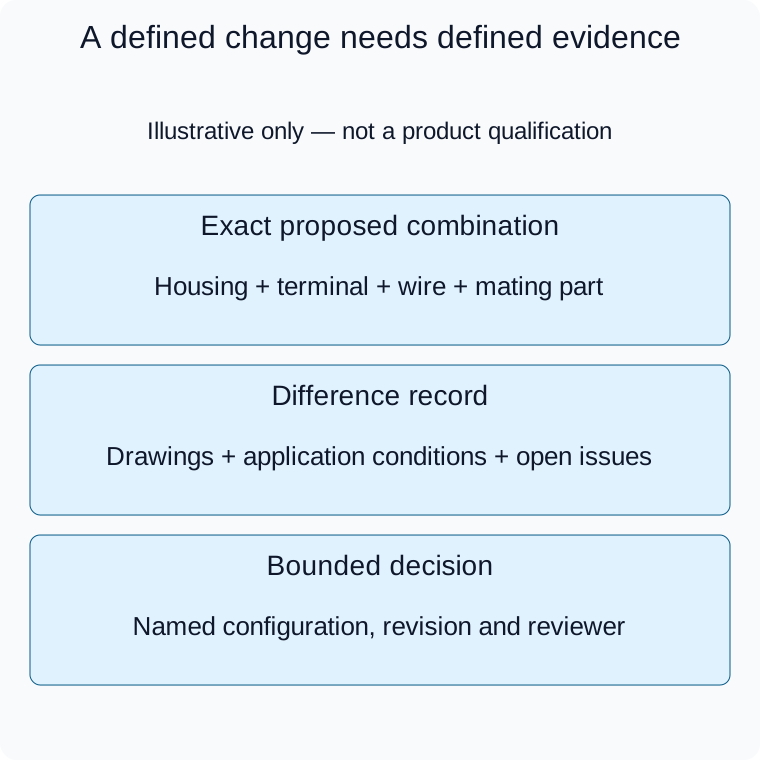
How to Verify JST and Molex Connector Alternatives
Review exact mating parts, drawings, terminals and application evidence before approving a JST or Molex connector alternative.
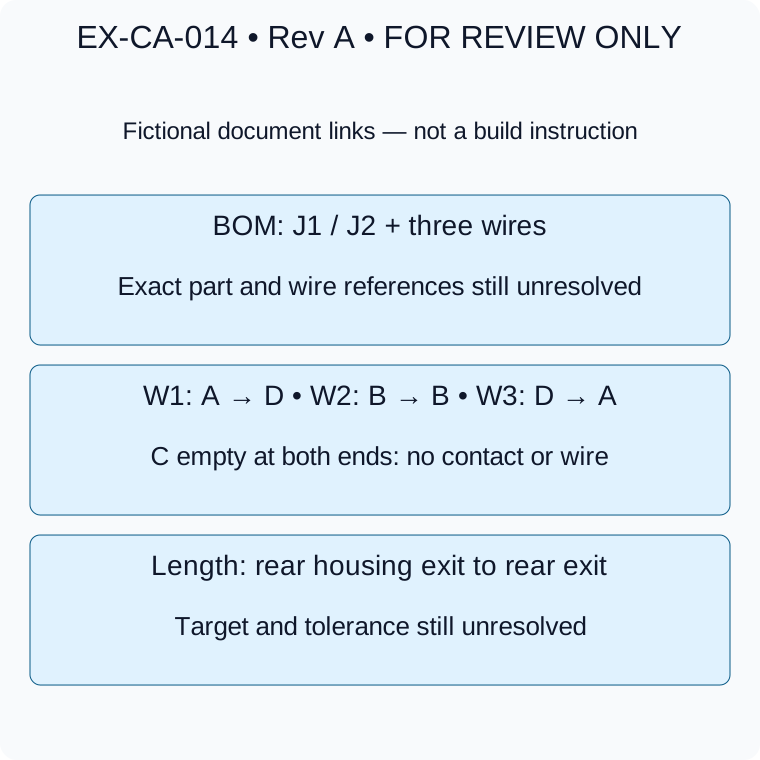
How to Prepare a Cable Assembly Drawing
Connect the BOM, circuit map, connector views, dimensions and document revision in a reviewable cable assembly drawing.

Cable Assembly Engineering Changes: When to Reapprove Samples
Assess which evidence and samples need review when a cable assembly component, route or mating arrangement changes.
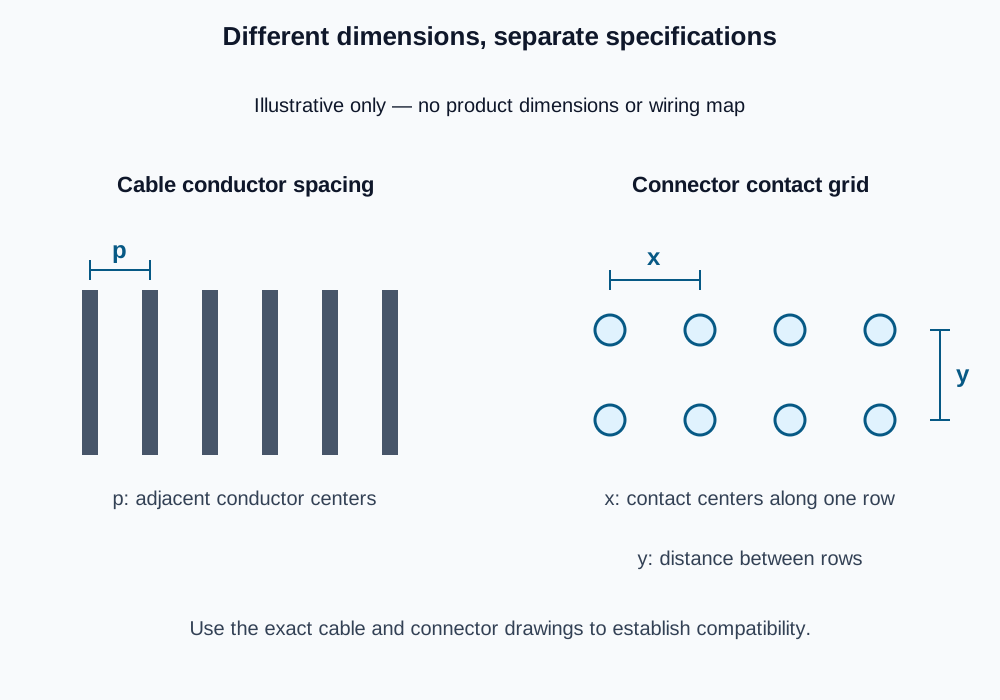
Ribbon Cable Pitch Explained: Conductor Spacing vs Connector Pitch
Understand ribbon conductor spacing, connector contact pitch and row spacing. Specify both cable and connector dimensions before ordering an assembly.
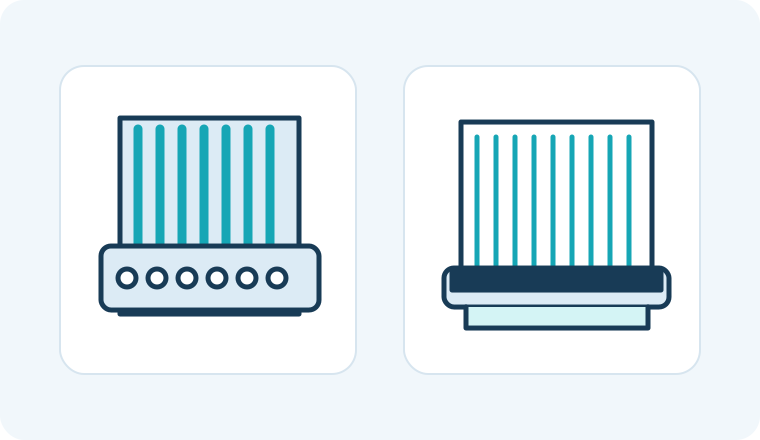
IDC Ribbon Cable vs FFC and FPC: Choosing the Right Interconnect
Compare insulated-wire ribbon assemblies, FFC and FPC by construction, connector fit and purchasing requirements without assuming interchangeability.
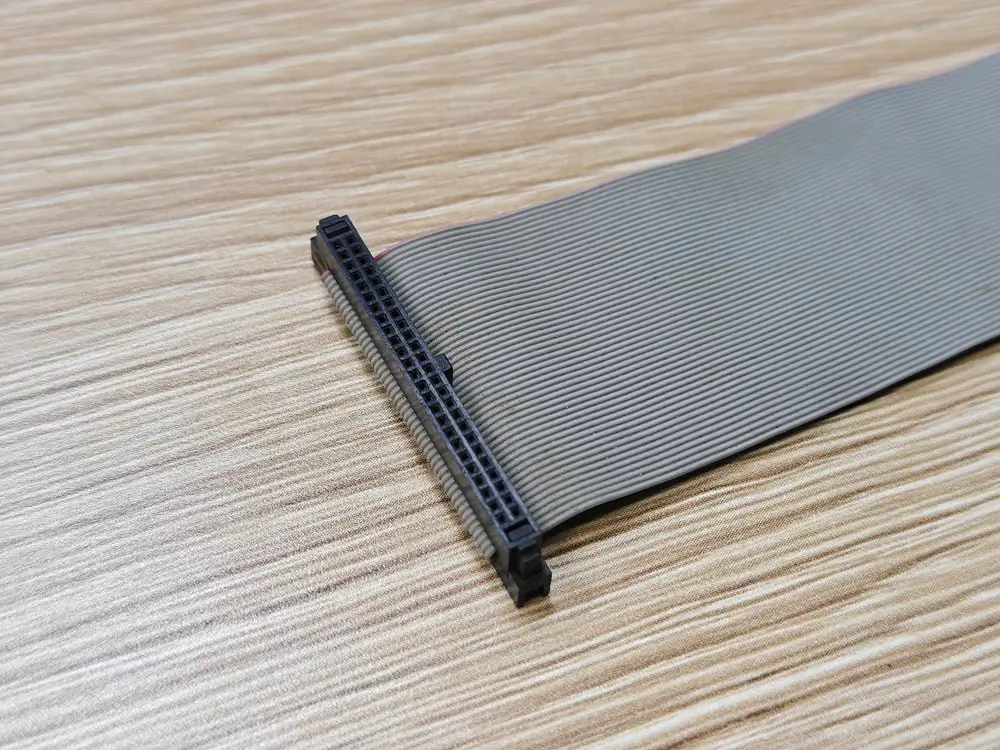
IDC vs Crimp Termination for Ribbon Cable Assemblies
Compare IDC and crimp termination for ribbon cable projects: permitted wire construction, routing, tooling and purchasing scope.
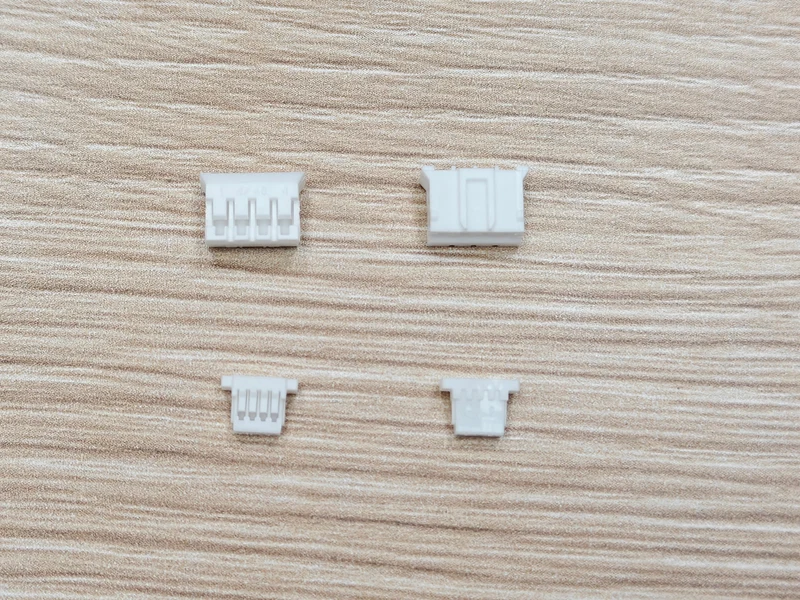
JST PH vs SH: Is a Smaller Connector Right for Your Harness?
Compare JST PH and SH by pitch, wire and insulation fit, mounting options and electrical limits before specifying a replacement or custom harness.
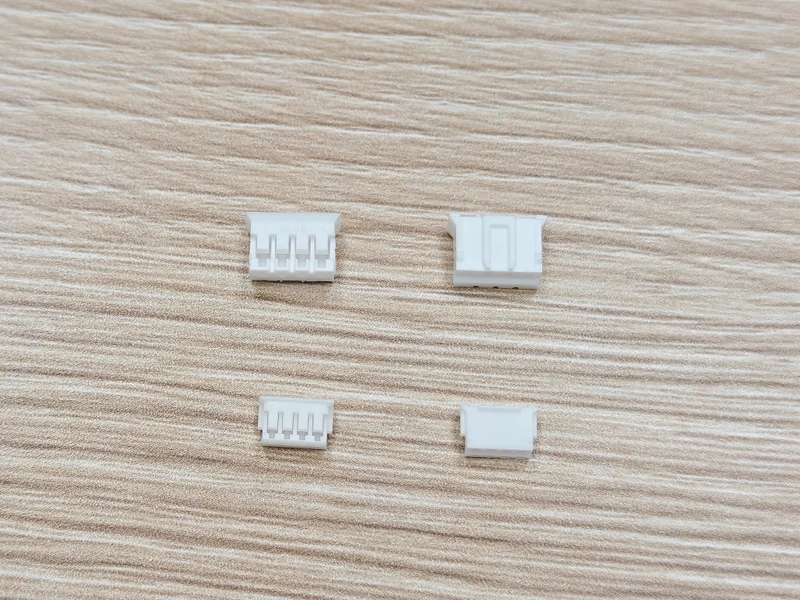
JST ZH vs PH: Choosing a Smaller Wire-to-Board Interface
Compare JST ZH and PH connector interfaces, wire ranges and board mounting options, with practical checks for replacement parts and cable assembly RFQs.
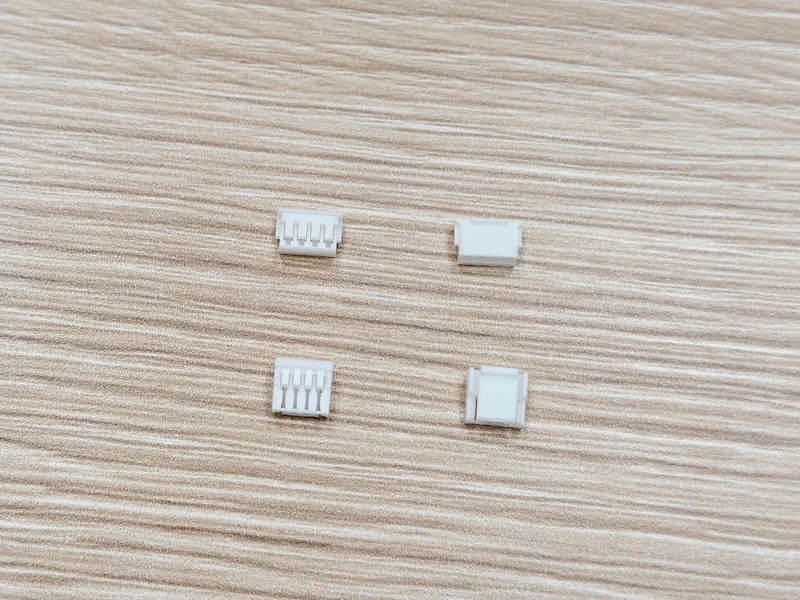
JST GH vs ZH: Identify the Interface Before Ordering a Cable
Compare JST GH and ZH pitch, terminal wire ranges, retention and board options. Identify the mating interface and prepare a custom cable RFQ.
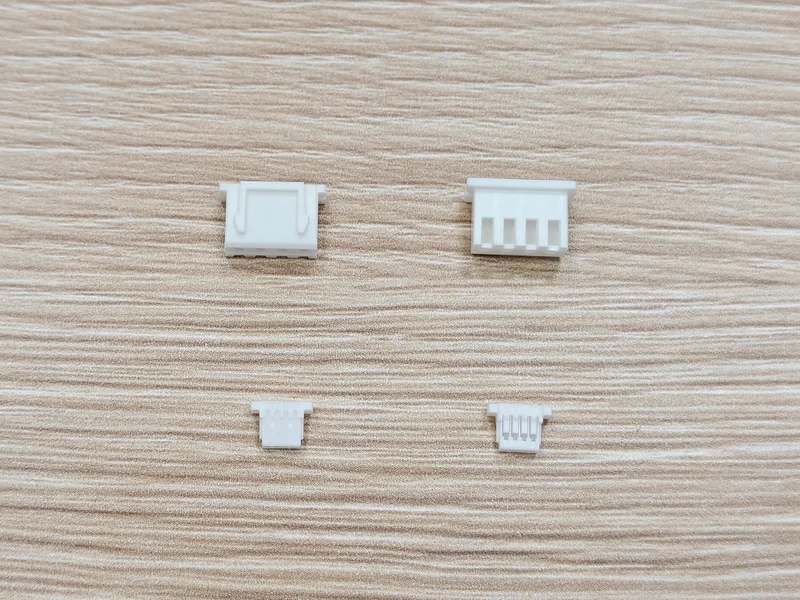
JST XH vs SH: What Changes When You Choose a Smaller Connector?
Compare JST XH and SH connector pitch, wire requirements and conditional ratings before changing an interface or ordering a custom cable.
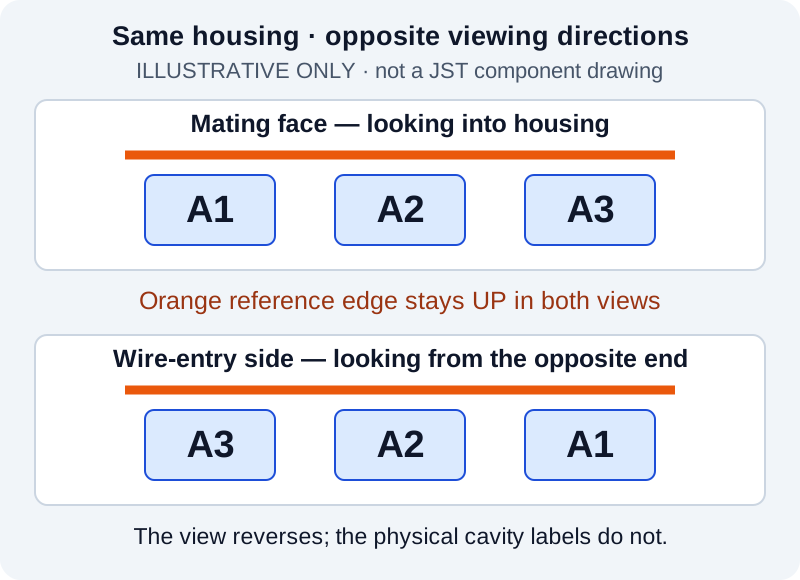
JST Cable Pinout and Polarity: How to Specify the Correct Wiring
Define JST cable wiring with exact mating parts, clear viewing directions and an endpoint map. Avoid reversed polarity and misleading color assumptions.
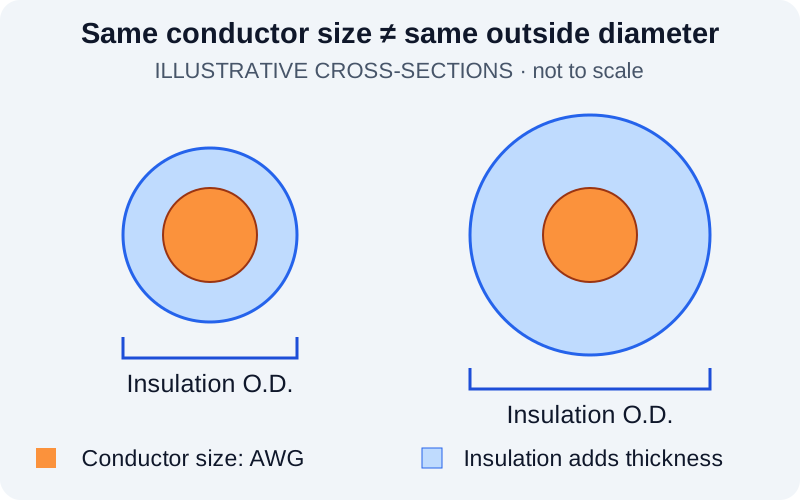
JST Connector Wire Gauge and Current Rating: A Cable Selection Guide
Select wire for a JST cable assembly by checking the exact contact, insulation diameter, load current, voltage drop and operating temperature.
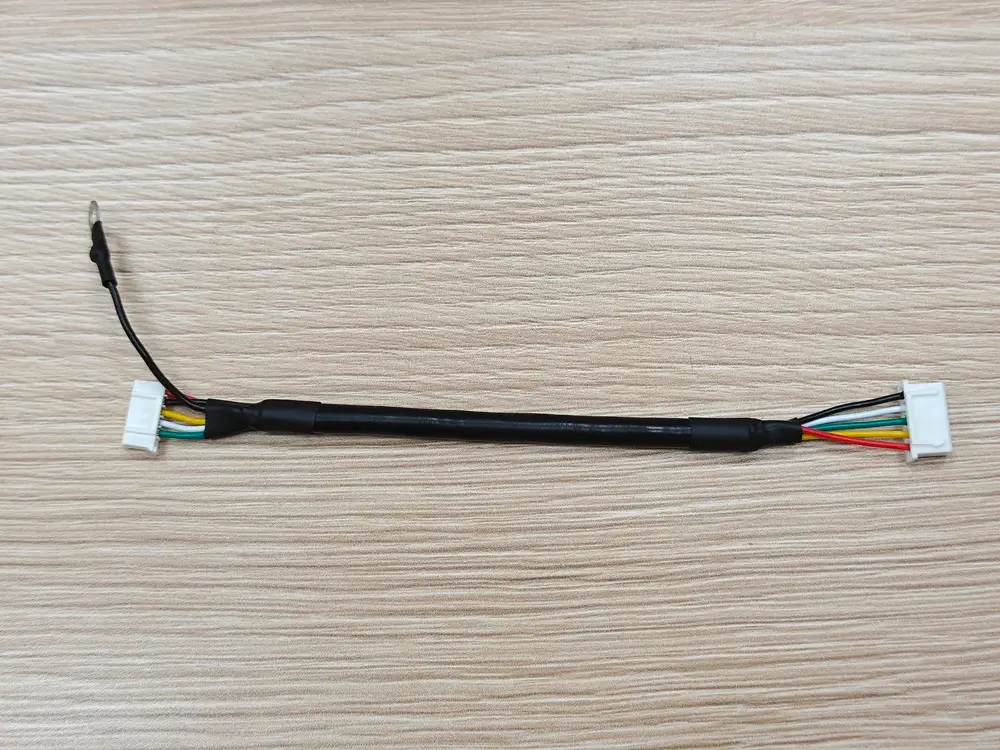
JST Adapter Cables: Specifying Different Connectors at Each End
Specify an adapter cable by matching both interfaces, circuit functions, wire requirements and the complete electrical path.
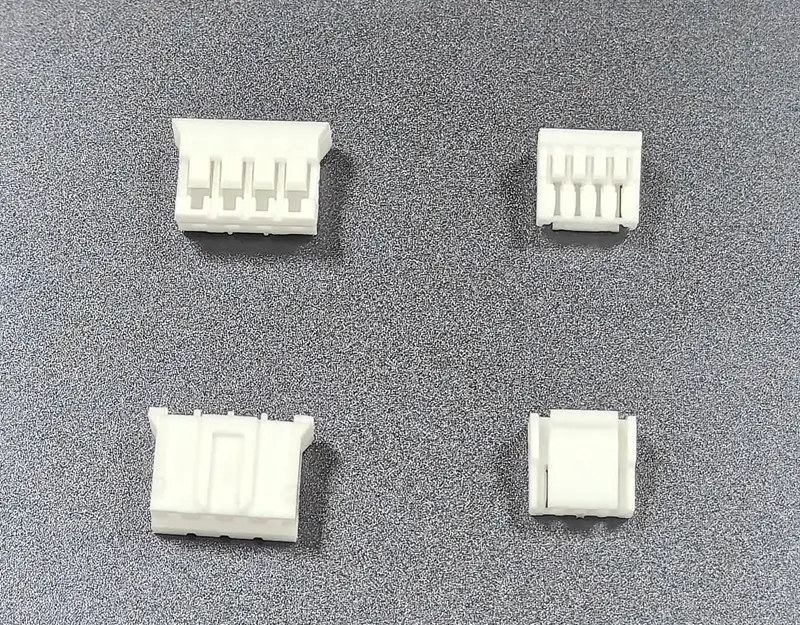
JST GH vs PH: Which Connector Fits Your Cable Assembly?
Compare GH, PH connector interfaces, wire choices and cable assembly requirements. Review alternative connector options and prepare a clear RFQ.
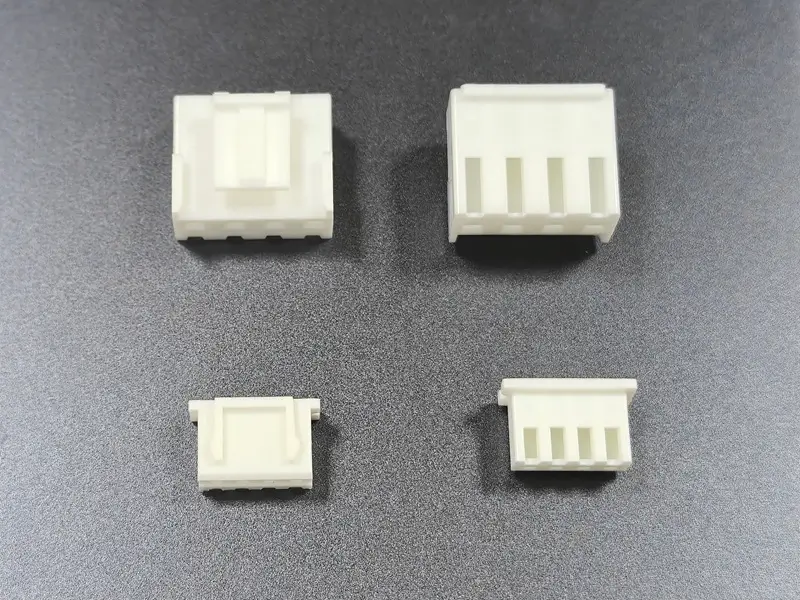
JST XH vs VH: Choosing a Cable Connection for Your Board and Load
Compare XH, VH connector interfaces, wire choices and cable assembly requirements. Review alternative connector options and prepare a clear RFQ.
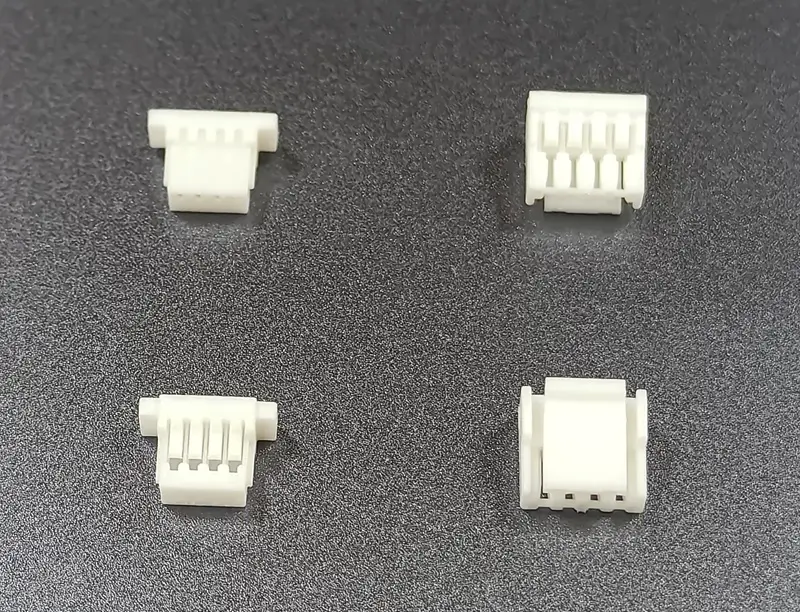
JST GH vs SH: Choosing a Compact Connector for a Custom Cable Assembly
Compare GH, SH connector interfaces, wire choices and cable assembly requirements. Review alternative connector options and prepare a clear RFQ.
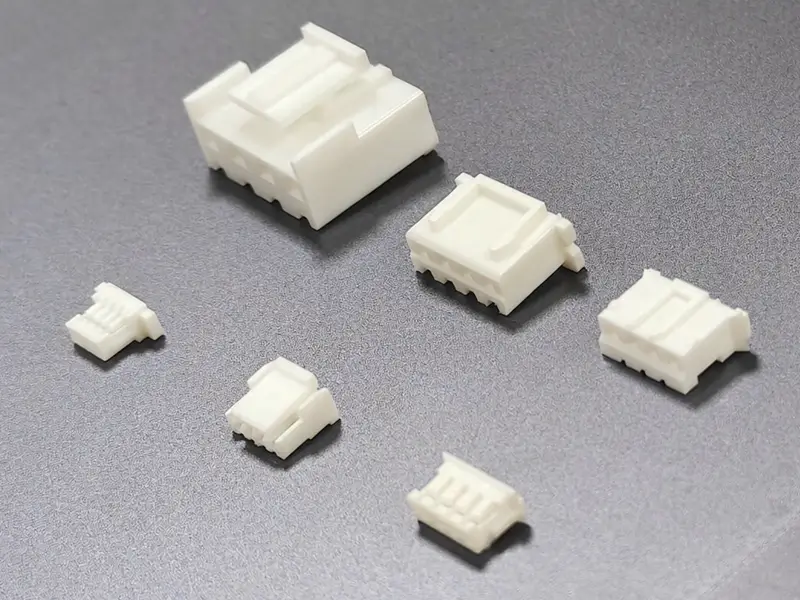
Common JST Connector Types Compared: SH, GH, ZH, PH, XH and VH
Compare SH, GH, ZH, PH, XH, VH connector interfaces, wire choices and cable assembly requirements. Review alternative connector options and prepare a clear RFQ.
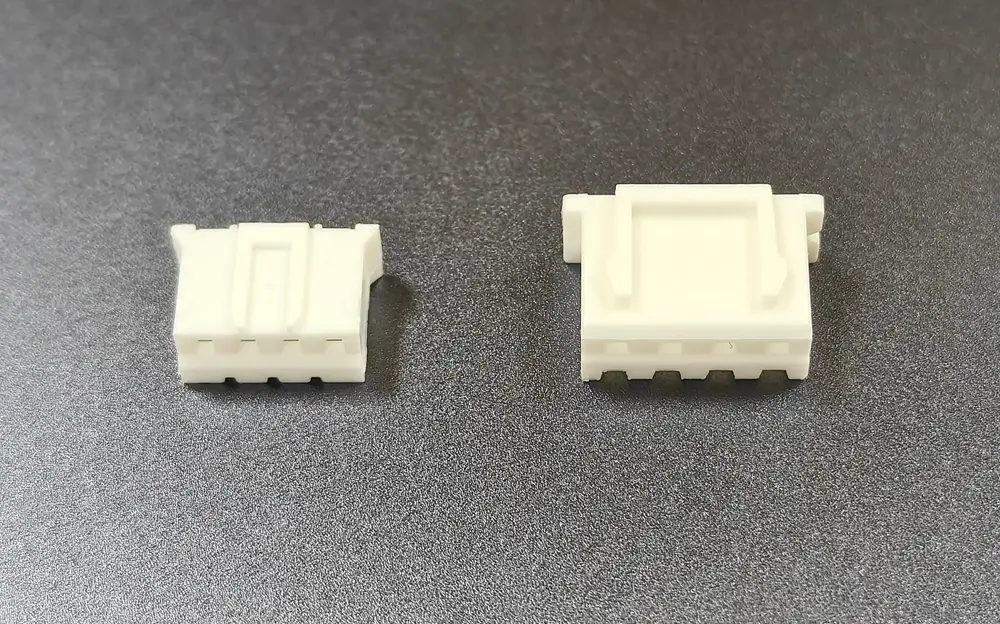
JST PH vs XH: Wire Gauge, Current Ratings and Cable Assembly Selection
Compare JST PH and XH wire ranges, terminal selection, current-rating conditions, pitch and cable assembly requirements before sourcing a custom harness.
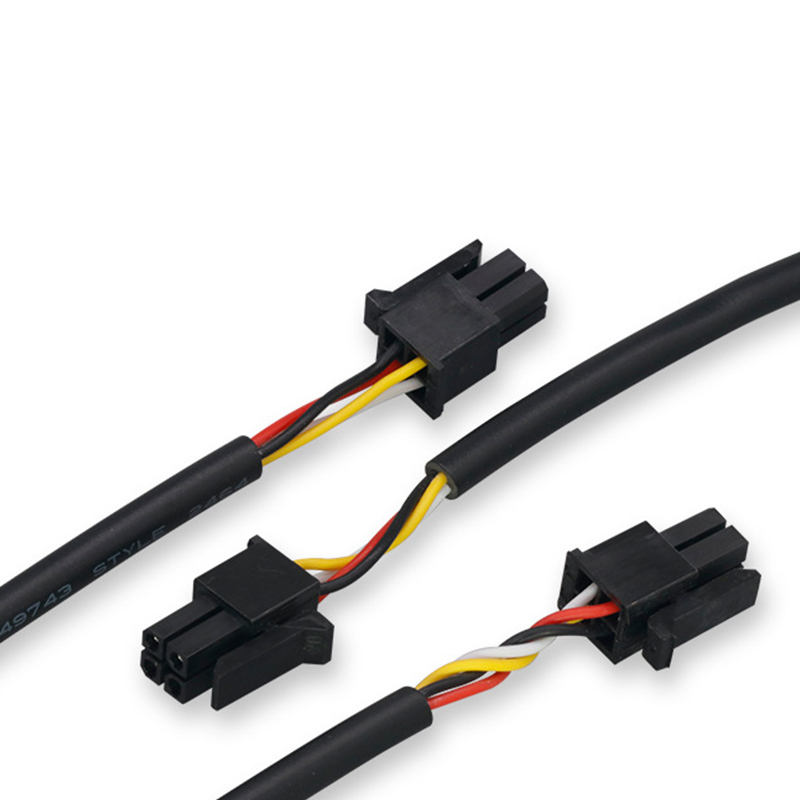
Micro-Fit 3.0 vs Mini-Fit Jr.: Choosing a Custom Cable Assembly
Choose a custom cable assembly by checking the existing interface, mating parts, space, terminal-to-wire fit, current conditions and sourcing basis.
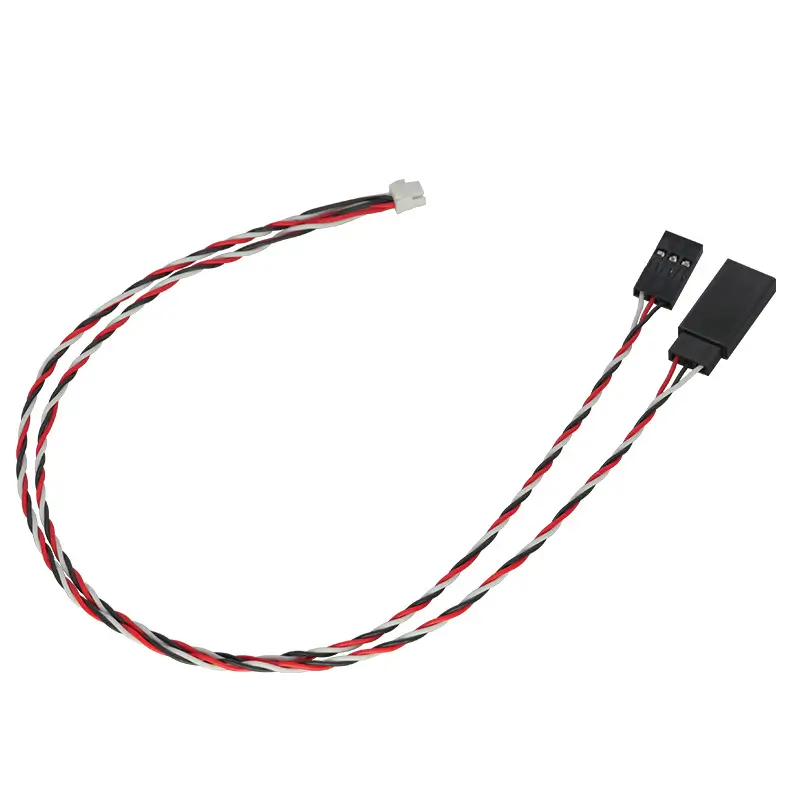
7 Ways to Reduce Custom JST Cable Assembly Cost
Reduce cable-assembly cost by reviewing wire, colors, connector choice, tolerances, secondary operations, strain relief, and packaging.
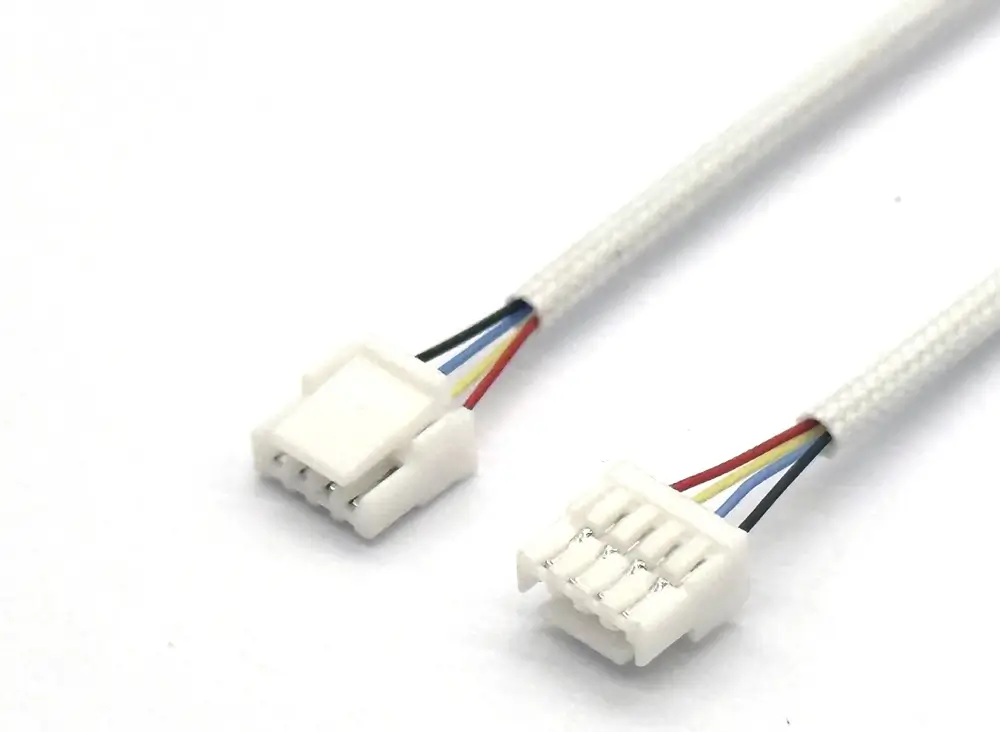
JST-GH Cable Assembly Sourcing Guide for Engineers
Prepare a clearer JST-GH cable RFQ using official series specifications, pinout details, wire requirements, testing, and alternative-part validation.
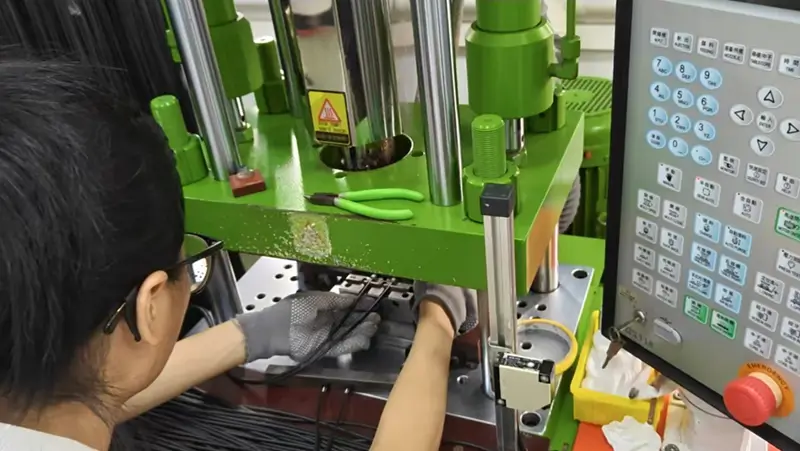
Cable Overmolding Process: 7 Steps and Quality Checks
Understand the seven cable-overmolding steps, common process risks, validation requirements, tooling questions, and quality checks.
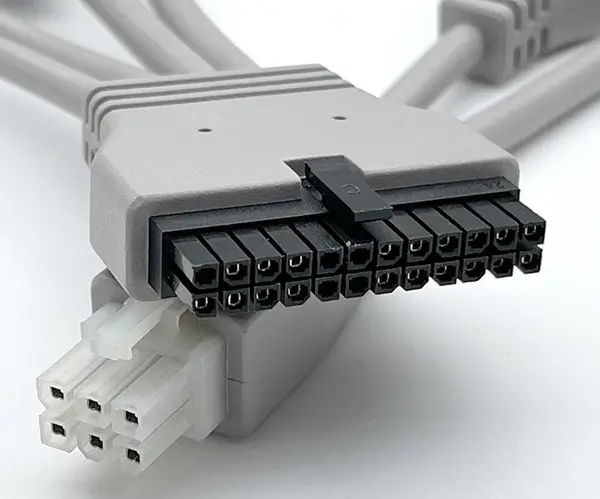
Overmolded Connector Design Guide: Cost, MOQ & RFQ
Learn which specifications control overmolded connector cost, MOQ, tooling, testing, and supplier selection before requesting a quotation.