
Compare identification features on the actual drawings
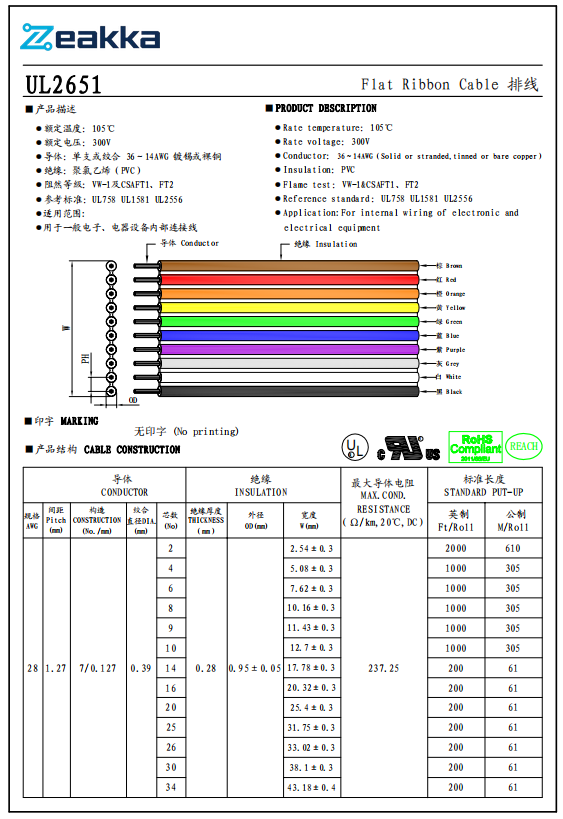
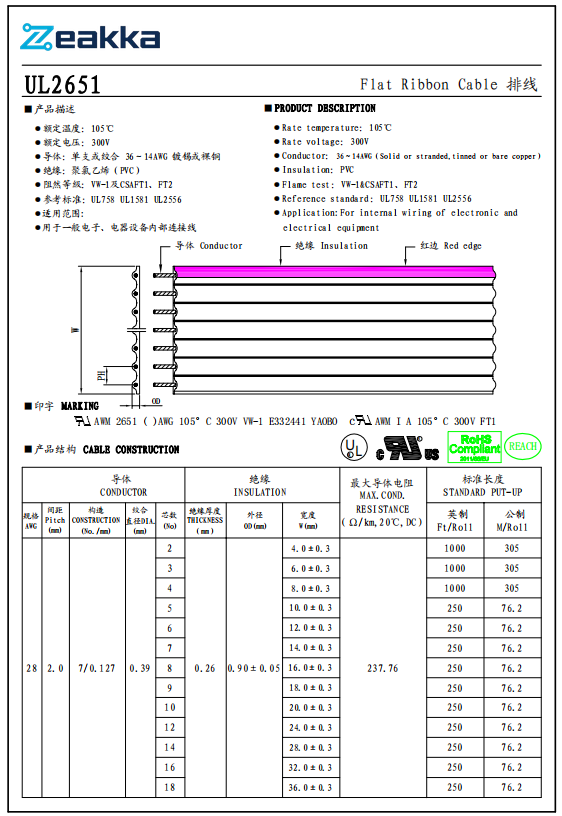
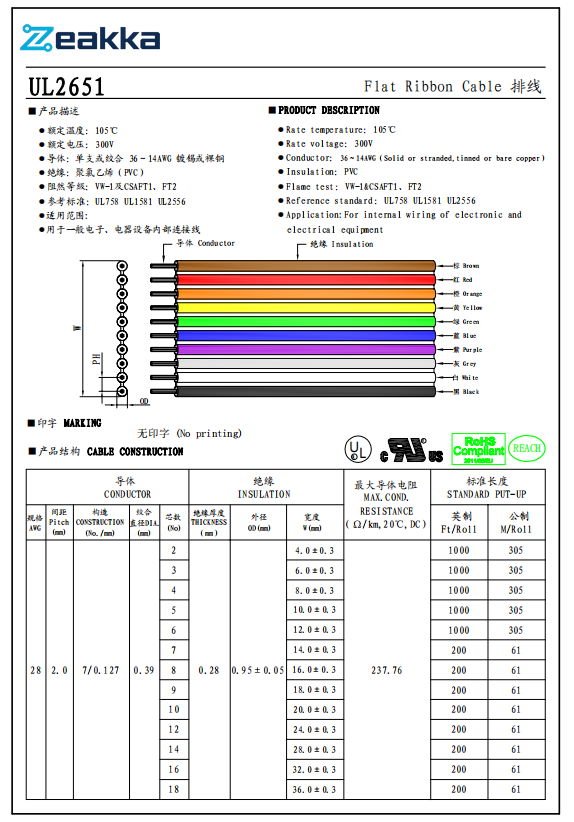
The grey and rainbow examples below both include a 2.0 mm pitch, 28 AWG, 10-conductor UL2651 row. Their cable identification and print requirements differ, so name the drawing and marking in the order.
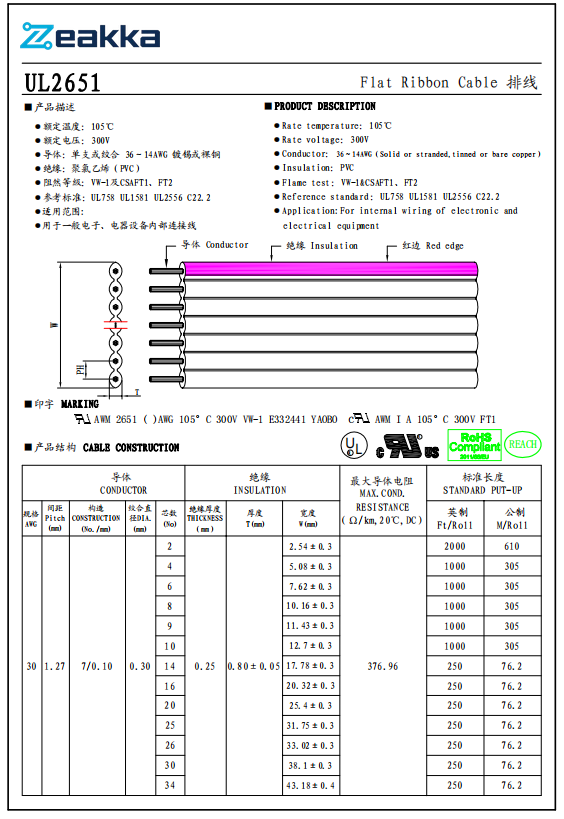
- Grey with a red reference edge. The diagram labels one outside conductor “Red edge” and gives a separate print legend under Marking. If the assembly uses the stripe as its conductor-1 reference, map that conductor to a numbered connector cavity at each end using the specified connector view. See drawing 29.
- Rainbow with no printing. The illustrated sequence runs brown, red, orange, yellow, green, blue, purple, grey, white and black from the top of this particular drawing. Its Marking field reads “No printing”. For the count you are buying, confirm the starting edge, full sequence and any repeats. See drawing 14.
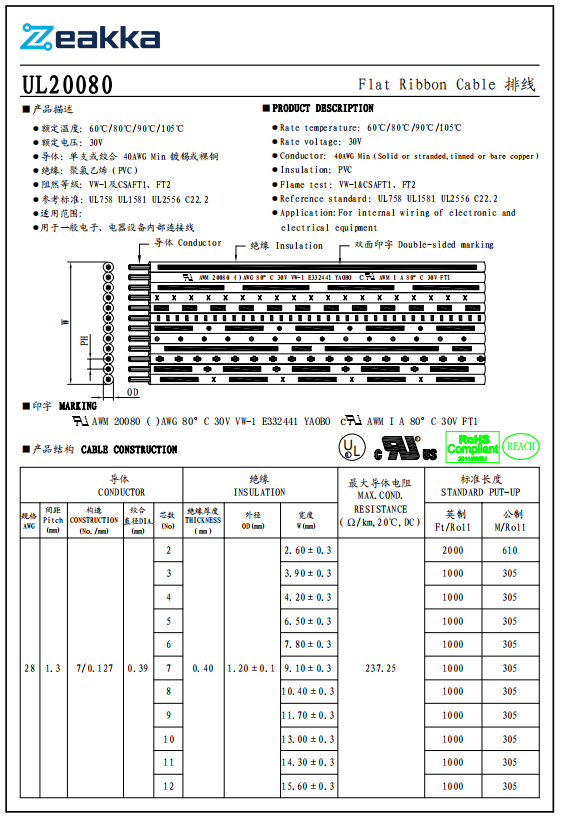
- Patterned, double-sided marking. The UL20080 example calls out double-sided marking and shows bars, crosses and other patterns along individual conductors, with a separate text legend. Agree which pattern and legend must appear on each face of the supplied cable. See drawing 2.
Specify what production needs to see
State the viewing face and which edge to start from. If a colour or pattern repeats, number the conductor positions from that edge. Assign signals, power and ground in the wiring table, then verify that the specified positions reach the right connector cavities on the first assembly.
If cut lengths must retain a readable legend, give the shortest piece length and where the print must be visible after cutting or assembly. Agree the print face, repeat spacing and acceptance sample with the supplier. Where the order requires certification evidence, request the applicable documentation for the manufacturer and exact construction being quoted. Use the cable legend and reel label to match the supplied material to those documents.
Check a cut piece before accepting the marking
Suppose a buyer needs a readable part code on every 60 mm cut. A full legend printed once every 100 mm could leave some cuts without that code. Ask for a proposed print layout and cut samples from different positions in the repeat. If cutting is registered to the print, include the registration allowance; if the cut position varies, agree how the code will remain readable at every permitted position. The example dimensions describe a buyer requirement.
Reference the approved drawing, sequence or print sample in the purchase order so the receiving team has a basis for the incoming marking check.