
JST GH vs Molex PicoBlade: Choosing Between Two 1.25 mm Systems
Table of Contents
JST GH and Molex PicoBlade both use a 1.25 mm contact pitch, but they are different connector systems. A cable described only as “1.25 mm, four positions” does not identify which one will mate with your board. Start with the installed header reference; then choose the matching housing, contacts and wire combination.
For a new design, the useful comparison is the retention mechanism, supported termination, installation envelope and service access. For a replacement cable, keeping the existing board interface usually matters more than finding the smallest nominal housing.
What the shared pitch does and does not tell you
Pitch describes the repeated contact spacing. It does not define the housing walls, contact interface, polarization or latch. Do not force a GH receptacle into a PicoBlade header, transfer contacts between their housings, or accept a single successful insertion as evidence of an approved combination.
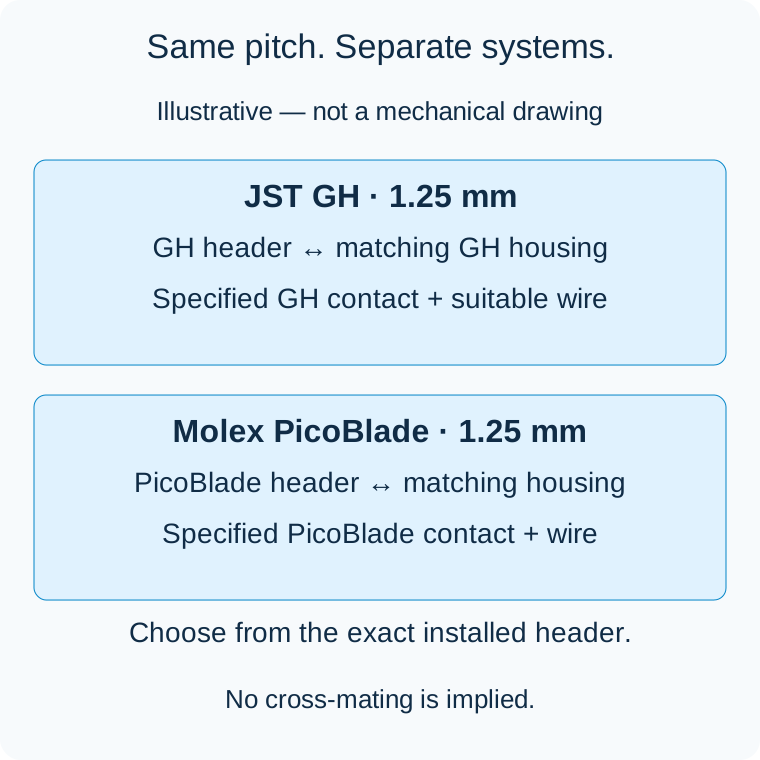
Illustrative selection diagram, not a product photograph or mechanical drawing. The two lanes describe separate systems; they do not show cross-mating.
In a drawing review, record each manufacturer's exact header and cable-side references. In a purchasing discussion, distinguish original parts from supplier-identified alternatives. The connector alternative verification guide explains the evidence needed for an alternative; this comparison helps establish which interface you intend to retain.
Compare the original components, not just the series names
The following entries describe original catalog components. They are not ratings or approval evidence for Zeakka alternative parts or a finished cable assembly.
Scroll sideways to read all columns.
| Decision point | JST GH | Molex PicoBlade examples |
|---|---|---|
| Contact pitch | 1.25 mm | 1.25 mm |
| Cable-side retention | External positive latch | 51021 housing family described as friction lock |
| Contact selection | SSHL-002T-P0.2 | 50058-8000 or 50079-8000, selected for the wire |
| Wire and insulation | AWG 30–26; 0.76–1.00 mm insulation OD for the cited contact | 50058-8000: AWG 32–28, 0.50–1.00 mm OD; 50079-8000: AWG 28–26, 0.50–1.04 mm OD |
| Published electrical figures | 1.0 A with AWG 26; 50 V AC/DC | Cited contact pages list a 1.0 A maximum per contact and 125 V AC RMS/DC |
| Header example | GH catalog includes top-entry and side-entry SMT options | 53398-0471 is a four-circuit vertical SMT example; listed mated height 5.70 mm |
Sources: JST GH catalog, pages 1–3, Molex 51021 series, 50058-8000, 50079-8000 and 53398-0471.
Treat the electrical figures as catalog inputs, not a recommendation to run every wire size at the same current. The Molex part-page maximum is not a wire-by-wire derating table. Review the exact product specification, loaded circuits, wire, ambient conditions and acceptable temperature rise before approving a design. A higher listed voltage alone does not make a connector a better choice for the application.
Retention changes the access you need
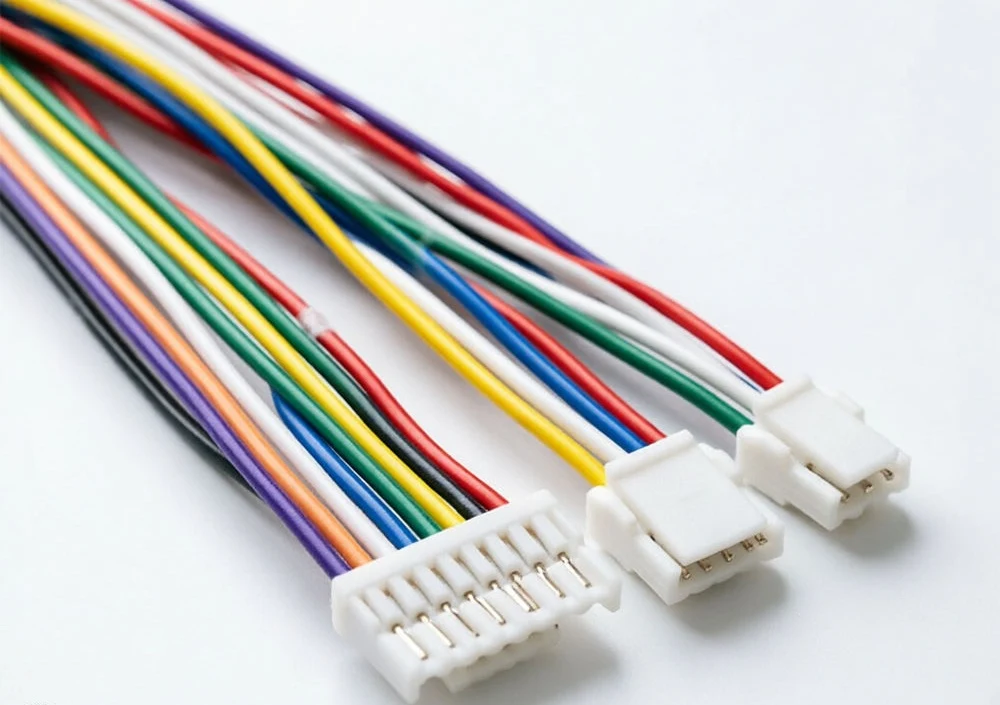
Existing GH alternative cable ends, showing housing and wire-entry details. The image does not establish the exact original contact or header discussed above. View GH alternatives.
GH's external latch makes latch access a design consideration. Leave room to operate it without pulling on the wires or levering against a neighboring component. If the assembly sits under a cover, check the actual removal motion before finalizing the enclosure.
A PicoBlade friction-lock housing does not use the same external latch arrangement. That distinction helps identify what to inspect, but it does not establish a universal vibration ranking. Retention depends on the actual mating combination, mounting and cable loading. An unsupported cable can load either interface even when the connector is correctly assembled.
For an existing product, examine the header drawing and service method together. A proposed family change may require a PCB and enclosure change, not merely a different cable-side housing. Include wire exit and bend space in the envelope; a standalone housing height is not the complete installed space requirement.
A thinner conductor does not settle the contact choice
PicoBlade alternative catalog components. Shown for identification only; original catalog ratings do not rate these pictured alternatives. View PicoBlade alternatives.
The listed PicoBlade contacts cover different wire ranges. A request for AWG 32 therefore points to a different termination review from a request for AWG 26. Do not combine both ranges into a claim that one contact accepts AWG 32–26. The insulation diameter must also fit the selected contact's insulation support.
Similarly, the cited GH contact's conductor range does not authorize every insulation construction in that AWG range. Give the assembler the actual wire specification and outside diameter. Review the applicable crimp tooling and finished termination requirements for that exact contact rather than transferring a setting from another family.
This is especially relevant when replacing a cable with a softer or thinner-jacket wire. Keeping the conductor gauge does not guarantee the same insulation support or routing behavior. The wire gauge and connector limits guide provides the broader electrical and thermal selection context.
Choose the route that matches the project
Existing GH board: identify its exact header and keying variant, retain a documented matching cable interface, and review the required wire and pin assignment. A PicoBlade cable is not a pitch-based substitute.
Existing PicoBlade board: identify the header and the relevant 51021 housing/contact combination. Do not order a generic “JST 1.25” cable and expect the listing to resolve the interface.
New board design: compare the actual header footprints and mated assemblies, latch access, wire exit and suitable termination options. Use exact drawings rather than a family-level “smaller” claim. Neither family name specifies the circuit's pinout or polarity.
For candidate sourcing, browse GH alternative connectors and PicoBlade alternative connectors, or discuss a custom GH cable assembly. These alternatives require their own part-specific review. Zeakka is a trading and sourcing partner; original components can be considered for finished cable assemblies according to exact part numbers and availability, rather than supplied as separate original components. Send the installed header reference and intended circuit mapping with the cable request so the comparison starts from the correct interface.
Related selection guides
Molex PicoBlade vs Pico-Lock: Pitch, Profile and Retention · Connector Housings, Terminals and Headers Explained
Share this article
Help others discover this content