
7 Ways to Reduce Custom JST Cable Assembly Cost
Table of Contents
Cost reduction starts with a complete specification
The fastest way to receive inconsistent cable quotations is to send an incomplete drawing. Different factories will fill the missing details with different connectors, wire, tolerances, tests, and packaging. The prices then look comparable even though the products are not.
Before trying to reduce cost, establish the required electrical, mechanical, environmental, and commercial conditions. Then evaluate which specifications are essential and which can be changed.
This guide presents seven practical cost levers for custom cable assemblies referenced to JST series. Zeakka supplies unbranded compatible alternatives rather than original JST products, so any alternative must be identified and validated.
1.Select wire size from the real requirement
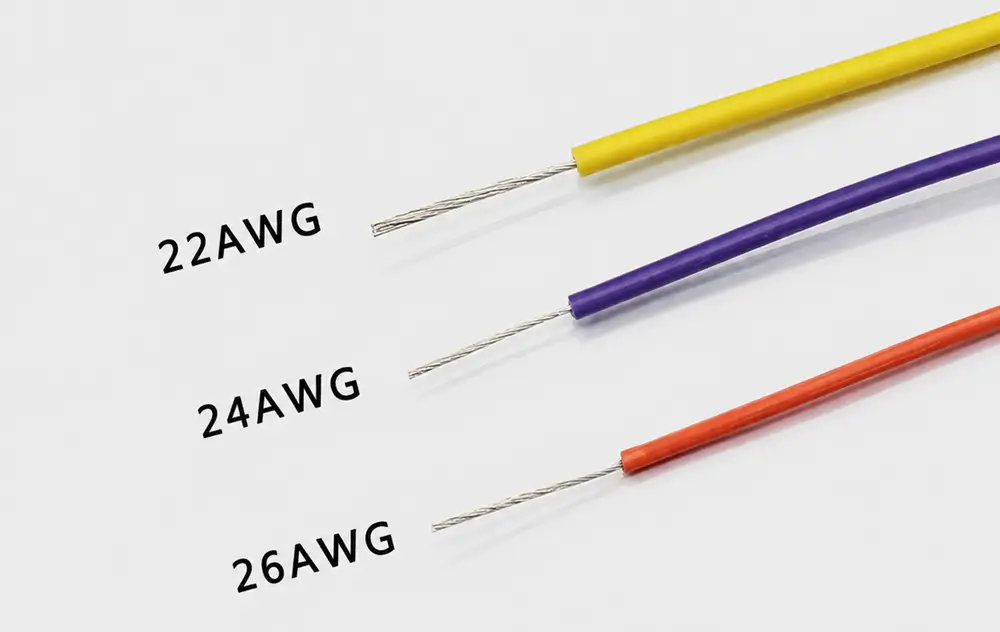
Larger conductors use more copper, may require a different terminal, and can be harder to route in a small housing. Smaller conductors may not meet current, voltage-drop, mechanical, or temperature requirements.
Do not change AWG from a general rule of thumb. Provide the current, voltage, cable length, allowable voltage drop, ambient temperature, bundling, duty cycle, and applicable standard. The customer’s engineer should approve the final electrical specification.
2.Reduce unnecessary wire-color changes
Every additional color can add material purchasing, machine setup, identification, and inventory work. If field service does not require a unique color for every circuit, consider a smaller standard color set combined with labels or a clear pinout drawing.
Do not remove colors that are required for safety, regulations, assembly error prevention, or maintenance.
3.Decide whether original-brand components are necessary
If the product specification requires original JST components, the quotation should use original parts and the purchasing documentation should preserve that requirement. If unbranded compatible alternatives are acceptable, ask for a separate option and evaluate it by drawing and sample.
An alternative may reduce cost or improve availability, but Zeakka does not claim that it has an identical mechanical footprint, electrical performance, material, or service life without evidence. Validate mating, retention, electrical limits, temperature, and device-level performance before approval.
4.Apply realistic length tolerances
Very tight length tolerances can slow cutting, increase inspection, and create rejection risk. Use tolerances that match the routing and enclosure needs. Mark critical branch points or breakout lengths separately instead of applying one tight tolerance to the entire harness.
The factory should quote any unusually tight tolerance explicitly so its cost impact is visible.
5.Simplify pinout and secondary operations where possible
Crossed wires, multiple branches, twisting, shielding, soldering, heat shrink, labels, sleeving, potting, and terminal tinning all add processing steps. Some are essential; others may be inherited from an older drawing without a current requirement.
Review each secondary operation with the engineering team. A simpler harness can be less expensive and easier to inspect, but no function or safety requirement should be removed merely to lower price.
6.Match strain relief to the application
Custom overmolding can provide a defined shape and integrated strain relief, but it adds tooling and molding work. For some internal, static applications, heat shrink, sleeving, a standard boot, or the connector’s existing cable support may be sufficient.
For flexing, pulling, sealing, or exposed applications, specify the required mechanical or environmental test instead of selecting the cheapest protection method by appearance.
7.Simplify packing without increasing damage risk
Individual bags, printed labels, trays, barcodes, and serialization add value when they support receiving or production. They also add cost. If the customer’s line can accept bulk or bundled packing, state the bundle quantity and the protection required for terminals and latches.
Packaging should be simplified only when it still prevents tangling, deformation, contamination, and identification errors during international transport.
Use a like-for-like quotation table
Ask each supplier to state the following items so you can compare quotations correctly:
| Item | What to confirm |
|---|---|
| Connector | Original brand or named unbranded alternative |
| Wire | AWG, insulation, rating, color and markings |
| Length | Finished dimension and tolerance |
| Processes | Crimp, solder, twist, shield, sleeve, label, mold or potting |
| Testing | Tests applied to every harness and sampled checks |
| MOQ | Assembly MOQ plus material purchase constraints |
| Samples | Quantity, charge, preparation time and freight |
| Production | Lead time after sample approval and material confirmation |
| Packing | Unit, bundle, bag, tray, label and carton requirements |
How Zeakka helps compare factories
Zeakka is a trading and sourcing partner with 10+ years of interconnect experience. We do not manufacture the cable ourselves. We review the drawing, identify specification questions, select suitable factories, compare quotations, coordinate samples and revisions, follow production, and help resolve quality issues.
This multi-factory approach is useful when one supplier is strong in small-pitch crimping, another in overmolding, and another in a required wire or connector family. The best factory depends on the drawing and quantity rather than one universal supplier.
Typical custom cable-assembly MOQs are 200–1,000 pieces. Detailed quotations normally take 1–5 business days after the requirements are clear, and typical harness samples are prepared in 3–7 days after material confirmation.
Frequently asked questions
How much will an alternative connector save?
There is no responsible universal percentage. Savings depend on the series, pin count, plating, quantity, packaging, material availability, and required testing. Compare a project-specific original-part quotation with a clearly identified alternative quotation.
Will an alternative connector reduce safety?
Safety cannot be answered from the word “alternative.” Review the supplier data, required certifications, electrical and mechanical limits, mating interface, and device-level validation. Do not transfer the original brand’s approvals to an unbranded part without evidence.
Does using fewer wire colors affect electrical testing?
Continuity testing checks the electrical pin mapping, but wire colors also help people assemble, inspect, service, and troubleshoot equipment. Reduce colors only after considering both automated testing and human use.
Can Zeakka support samples and production?
Yes. We coordinate sample and production orders with the selected factory. The exact MOQ, timing, and sample charge depend on the project.
Request a cost review
Send your current drawing, annual quantity, target changes, and required certifications through the Zeakka RFQ form. We will compare suitable factory options and identify cost questions without changing the approved performance requirements.
JST is a trademark of its respective owner. Zeakka is not affiliated with or authorized by JST.
Share this article
Help others discover this content