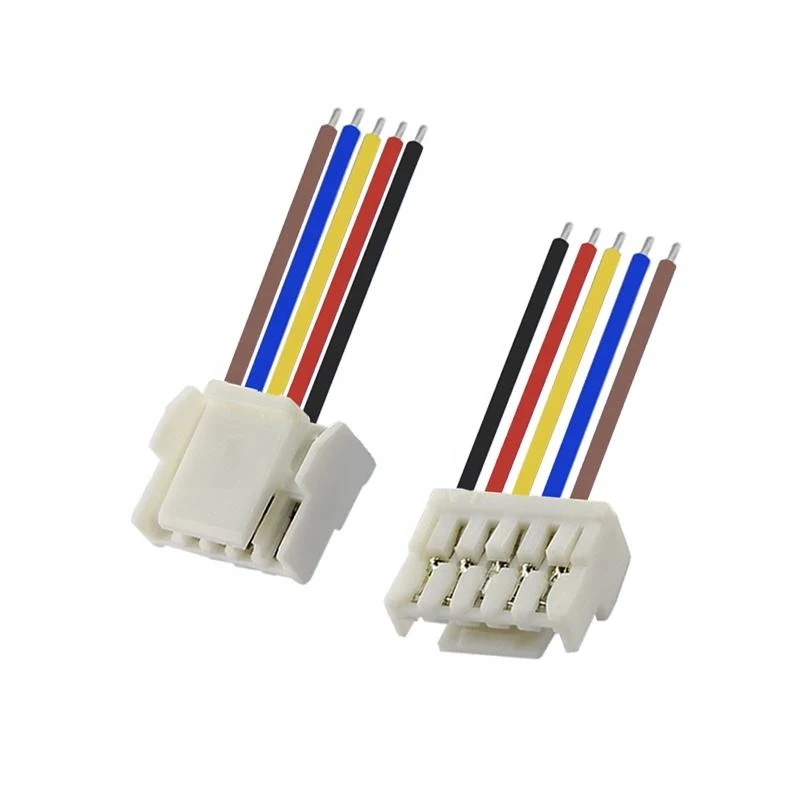
Single-ended leads
A GH end with individual wires at the other end. Define the wire lengths and whether the free ends need stripping, tinning or another agreed wire-end treatment.

1.25 mm pitch · Secure-lock connection
Single-ended leads and double-ended cables—configured around your mating parts, cable length and pinout.
Genuine JST or compatible alternative components for your finished assembly.
Start with a photo or a short description. A drawing is optional.
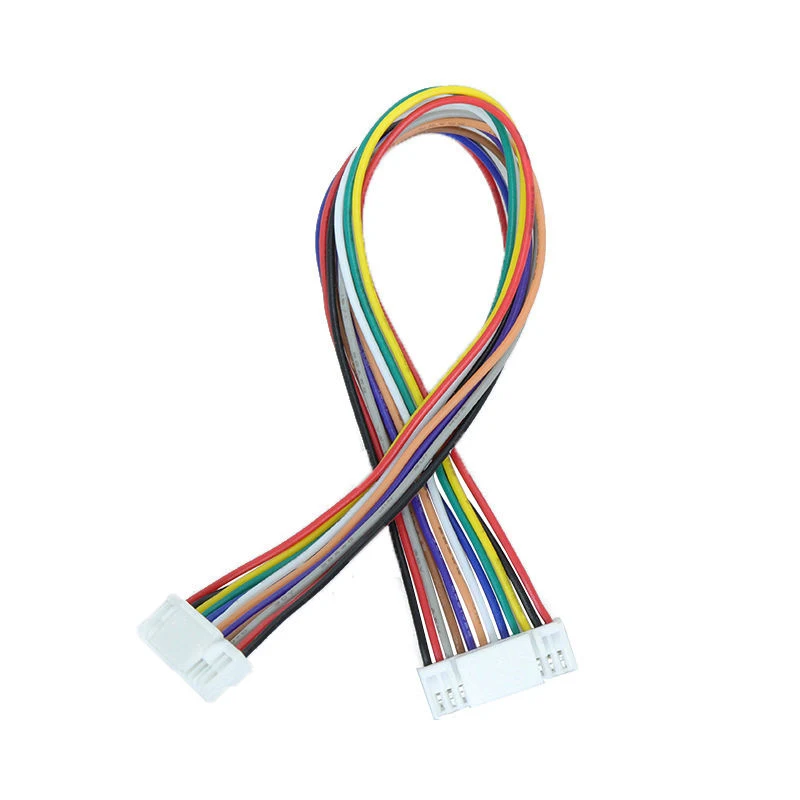
Choose the connection layout
Start with what the cable connects. Then specify the wiring and protection separately—these options can be combined, not just chosen one at a time.
A GH end with individual wires at the other end. Define the wire lengths and whether the free ends need stripping, tinning or another agreed wire-end treatment.
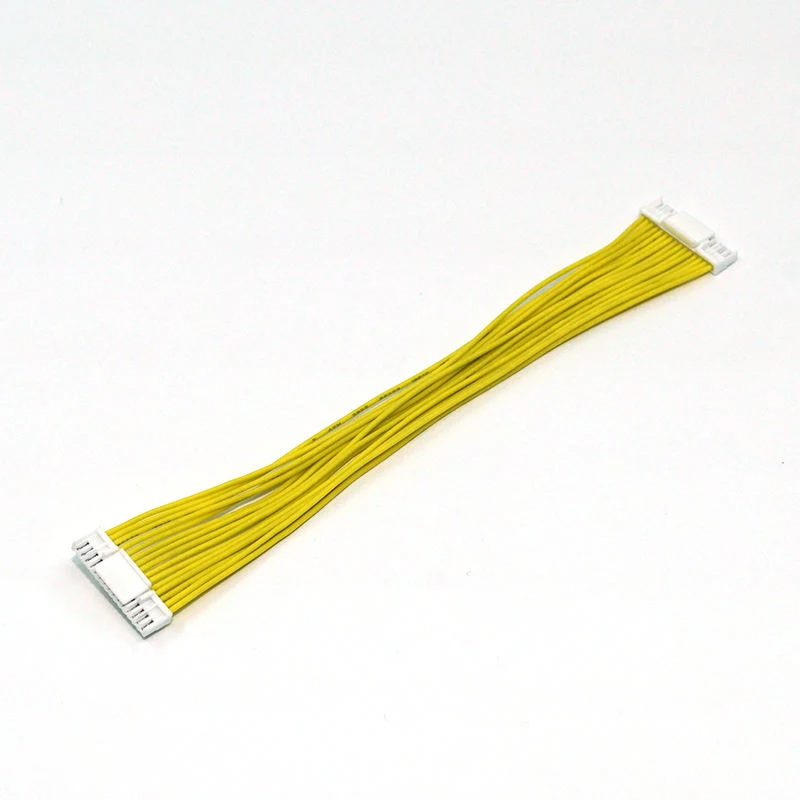
GH housings on both ends for connections between suitable board headers. Specify each end and a pin-to-pin map; do not assume matching colors mean a straight-through pinout.
A separate configuration choice
Choose exposed discrete wires or a covered bundle according to the installation. Confirm sleeve material, covered length, breakout positions and space around the latch.
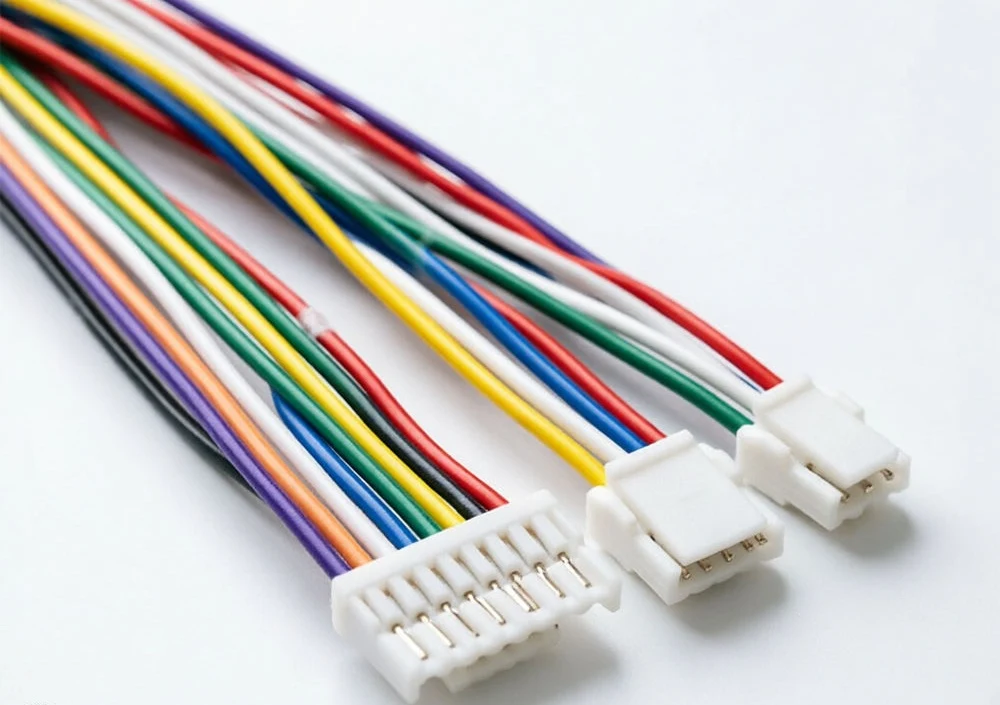
Keep individual conductors accessible for routing and termination. Specify wire colors and lengths rather than relying on the example photo.
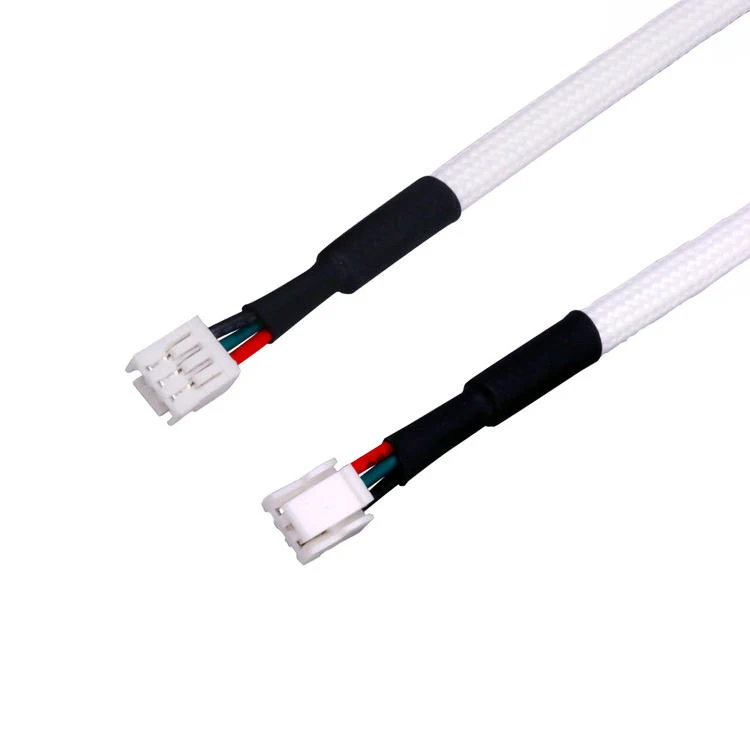
Group the wires in a braided covering. Define the sleeve coverage and exposed wire length at each connector.
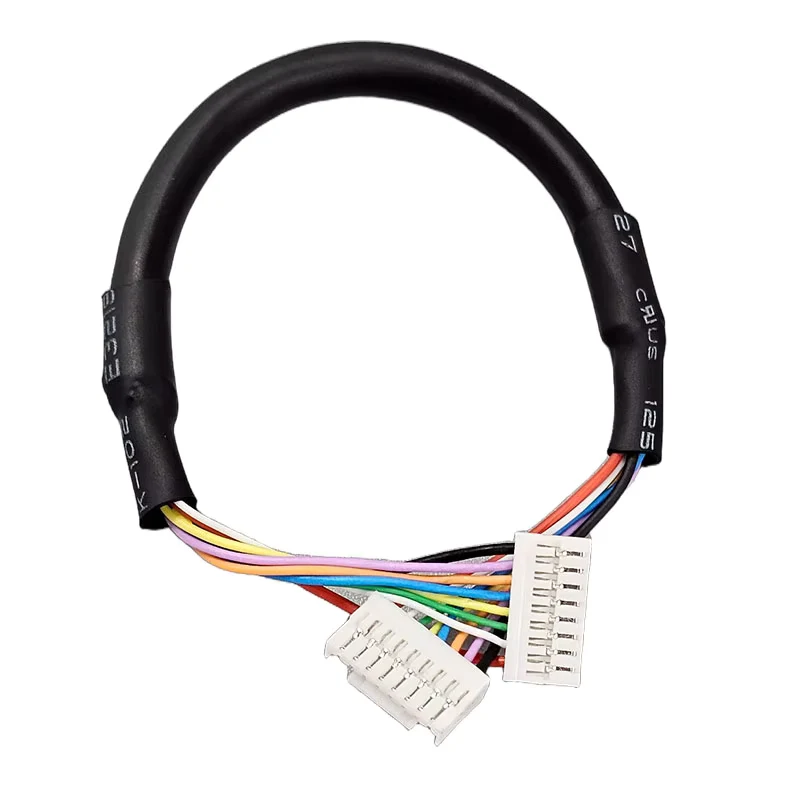
Use a covered cable section where the route calls for it. Confirm the covering material, flexibility and end treatment for the application.
Specify your assembly
That is a useful starting point, not a complete assembly specification. Add the other end, the circuit map and the length reference so the sample matches your installation.
Other lengths and position counts can be discussed. This example is not a stock or availability claim.
How to specify a cable pinout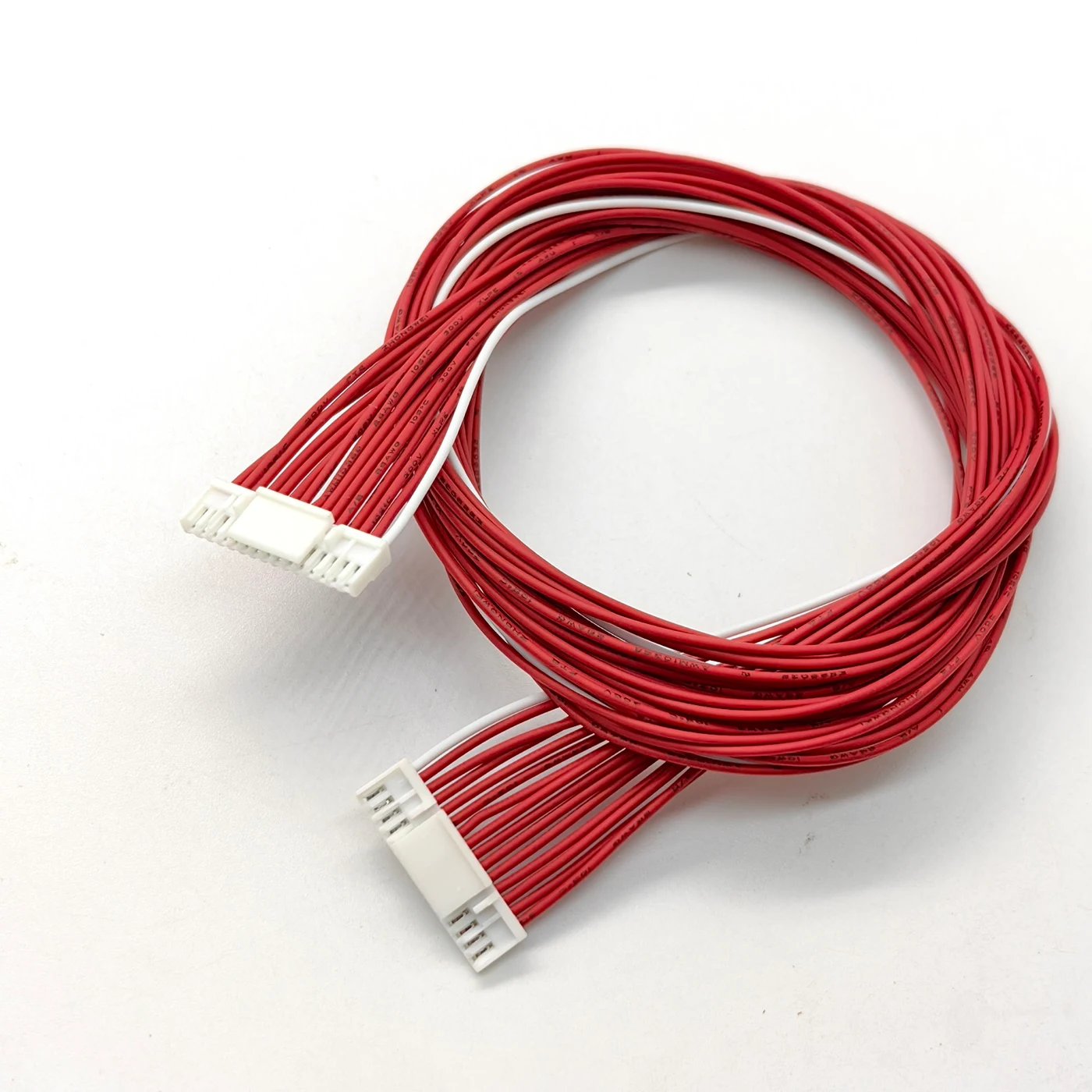
Original JST GH reference values help identify the family. They are not a blanket rating for every wire, alternative component or finished cable configuration.
| Interface | 1.25 mm pitch, secure-lock wire-to-board |
|---|---|
| Positions | 2–15 |
| Rated current | 1 A AC/DC with AWG 26 wire |
| Rated voltage | 50 V AC/DC |
| Contact reference | SSHL-002T-P0.2: AWG 30–26; insulation OD 0.76–1.0 mm |
Verify the selected part, insulation diameter and operating conditions. The complete assembly also depends on wire length, circuit loading and the other termination.
JST GH datasheet (PDF, new tab)We coordinate sourcing and finished cable assembly supply with genuine JST or compatible alternative components, according to your requirements.
The genuine-component option is for finished assemblies, not a standalone original-connector resale offer.
Read the GH sourcing guideYou do not need every detail ready to make contact. Start with what you have; resolve the remaining points before sample approval.
Send photos, mating part numbers or a sample reference. Add the desired quantity, length and original-versus-alternative preference.
Confirm the end-to-end pinout, viewing direction, wire specification, cable dimensions and any sleeve or covering requirements.
Set the sample acceptance criteria: mating fit, dimensions, continuity and absence of shorts. Include crimp or pull-test requirements where needed.
Yes. Specify a 6-position GH end, the GH housing or wire-end treatment at the other end, the pin-to-pin wiring, and where the 100 mm dimension is measured. GHR-06V-S is an original JST six-position housing reference; it does not define a complete cable assembly. We confirm the component choice and assembly details for your request.
Yes, for finished cable assemblies. Tell us which option your project requires. Genuine JST part numbers and approved alternatives should be identified in the agreed assembly specification. Appearance alone is not proof of origin, and a compatible component should not automatically inherit the original component’s specifications.
Yes. We can supply a GH housing with free wire ends or GH housings on both ends. Specify the required wire-end treatment for single-ended leads, or both mating headers and the pin-to-pin map for double-ended assemblies.
No. The original GH system is wire-to-board. A cable with GH receptacle housings at both ends connects to the appropriate board headers; those two cable housings do not mate directly with each other. Confirm the actual mating arrangement rather than relying on a male-to-female label.
No. Pitch is only one dimension. Confirm the connector family, housing and header part numbers, number of positions, keying and latch geometry. Also confirm the circuit order: the same housing can be wired differently for different devices.
No. A photo and a short description are enough to start. Include the desired length, quantity and mating connector information if available. A drawing, BOM or existing sample helps resolve details, but is not a prerequisite for the first inquiry.
A photo, connector reference or short description is enough to start. We will help clarify the assembly details for your quote.