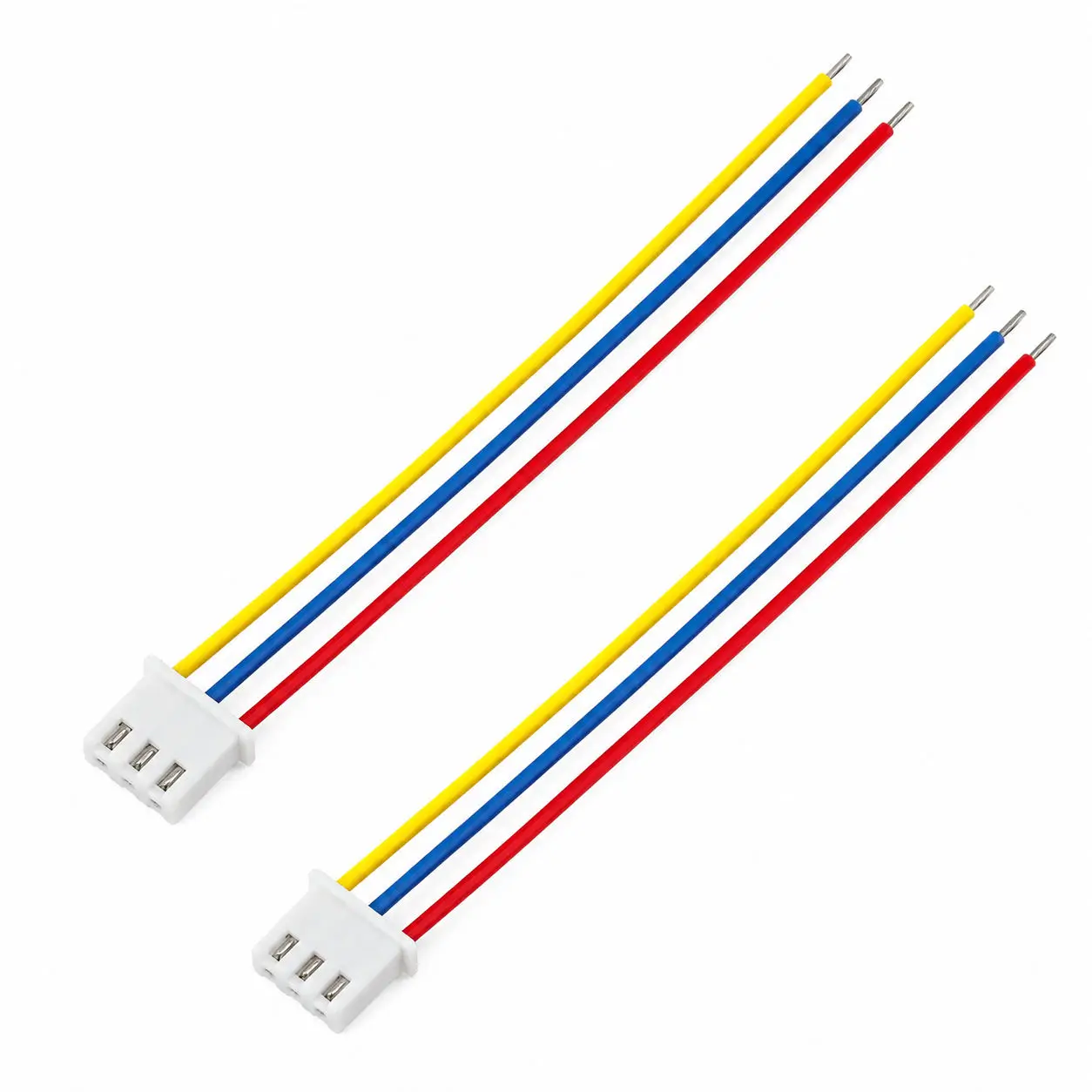
Single-ended XH leads
XH to stripped, tinned or otherwise prepared wire ends
A connector at one end and wire tails ready for the next assembly step. Customize lead lengths, wire colors and end preparation to suit the connection method.

JST XH · 2.5 mm connector family
From single-ended leads to double-ended and branched harnesses, we help define the connectors, length, pinout and wire management for your equipment. Choose individual wires, a sleeved bundle or a jacketed cable to suit the installation.
Original JST components or compatible alternatives, specified in your quotation.
No drawing yet? A connector photo and a short description are enough to start.
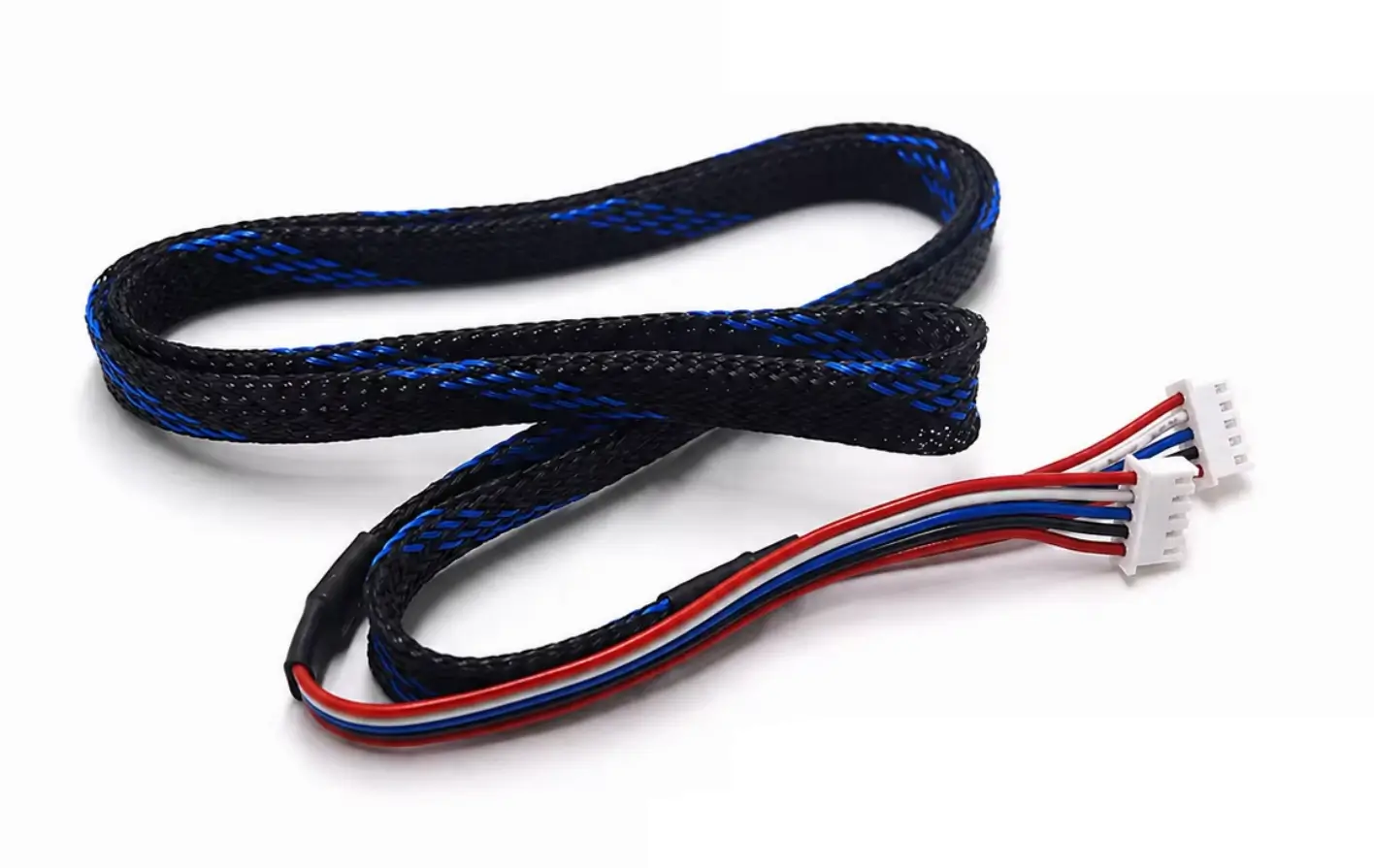
01 / Connection layouts
Choose the connection layout, then combine it with the wire-management options below. You do not need to decide every detail before contacting us.
XH to stripped, tinned or otherwise prepared wire ends
A connector at one end and wire tails ready for the next assembly step. Customize lead lengths, wire colors and end preparation to suit the connection method.
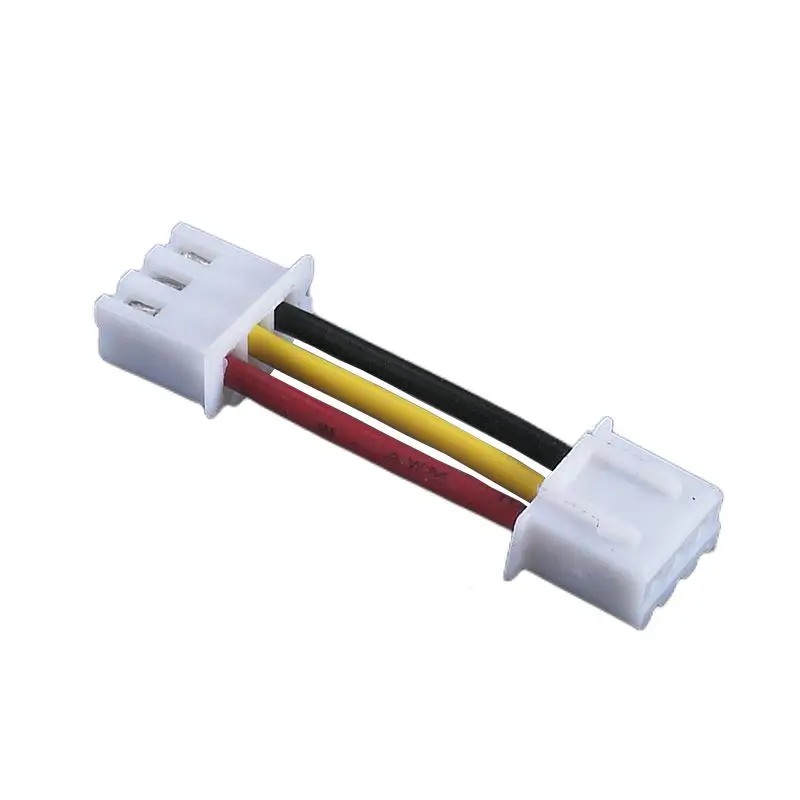
XH to XH · XH to another connector
Connect two boards, or connect an XH interface to a different connector family. Length and pin-to-pin mapping follow your equipment; two female housings are cable ends, not a mating pair.
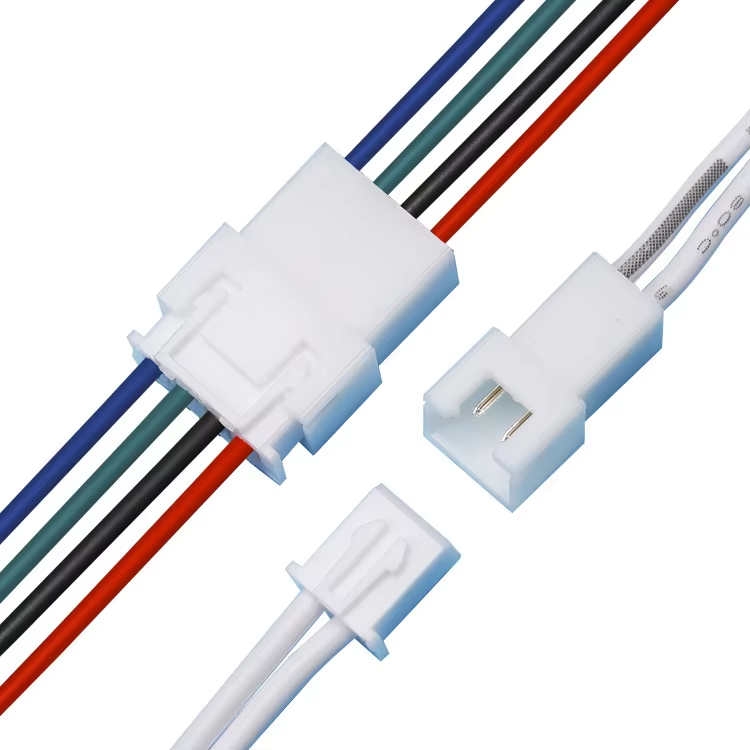
Compatible inline connection · custom extension length
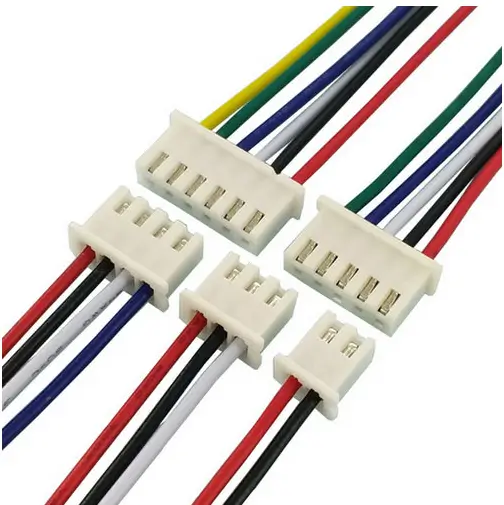
Extend an existing connection with a defined male/female interface. The inline examples use compatible alternative components—not an original JST XH wire-to-wire family. We confirm both mating ends and wire order.
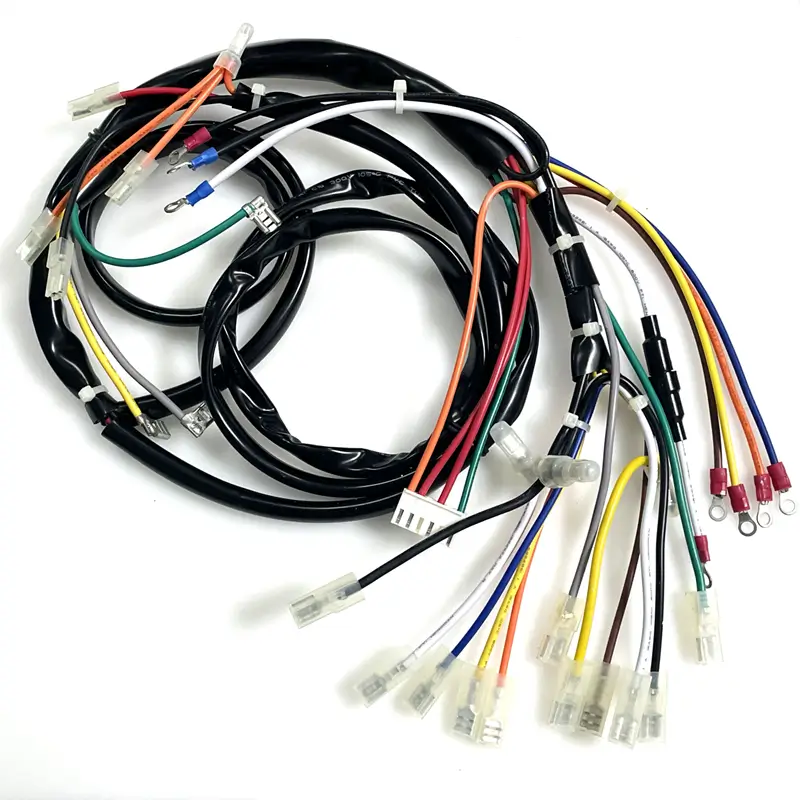
One routed harness · multiple connection points
Bring several connection points into one harness. The photo illustrates branch routing and fastening; connector types, branch lengths and circuits are specified for your XH project. A branched layout does not mean the wires are electrically paralleled.
Send the position count and the other end you need. Other counts, partially populated housings and extension lengths can also be reviewed. Exact components and populated positions are confirmed for the quotation.
These are configuration starting points, not a stock list. Wire color alone does not establish polarity.
02 / Wire management & protection
Discuss how the wires should be grouped, protected, identified and fixed in place. These options can be combined; material and installation requirements determine the final construction.
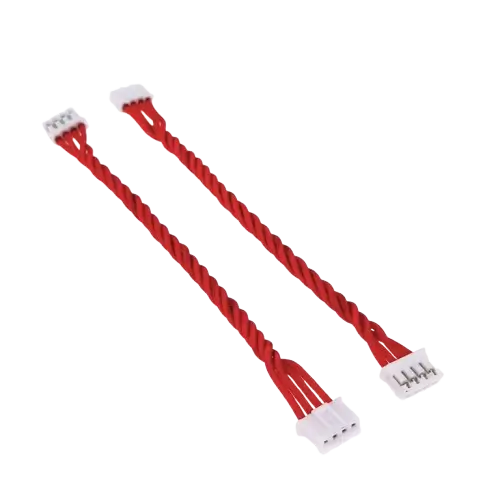
Group specified wires along the run. Define which wires are twisted together and where twisting stops near each connector.
The photo shows wire bundles, not a specified twisted-pair arrangement. Twisting alone does not establish a signal or EMC rating.
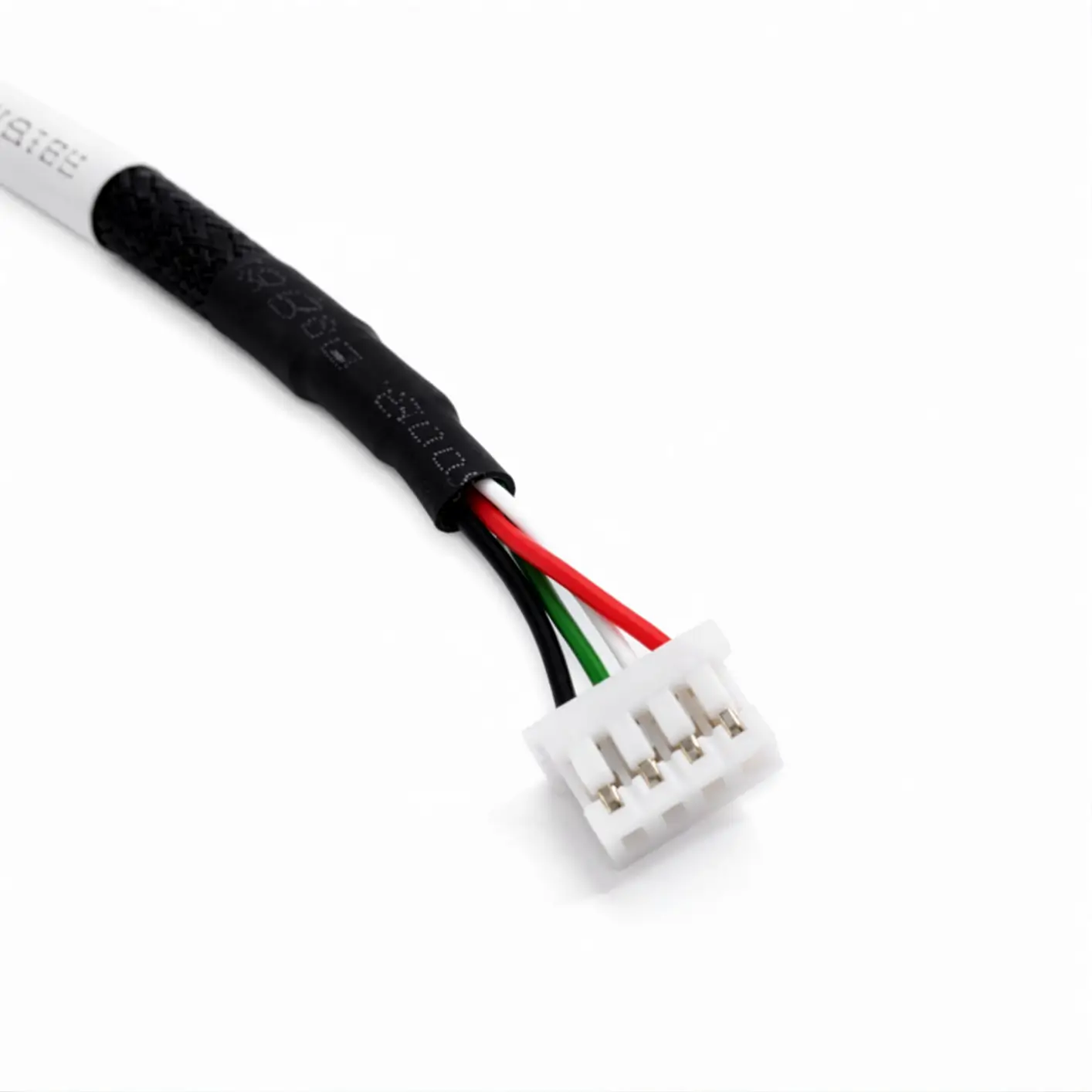
Tidy local bundles, finish sleeve ends or cover an agreed transition. Specify where it starts and ends.
Insulation, sealing and temperature properties depend on the selected tubing and assembly.
Group wires in a flexible sleeve for routing and abrasion protection. Allow space for the finished bundle diameter.
Ordinary polymer sleeving is not a metallic EMI shield.
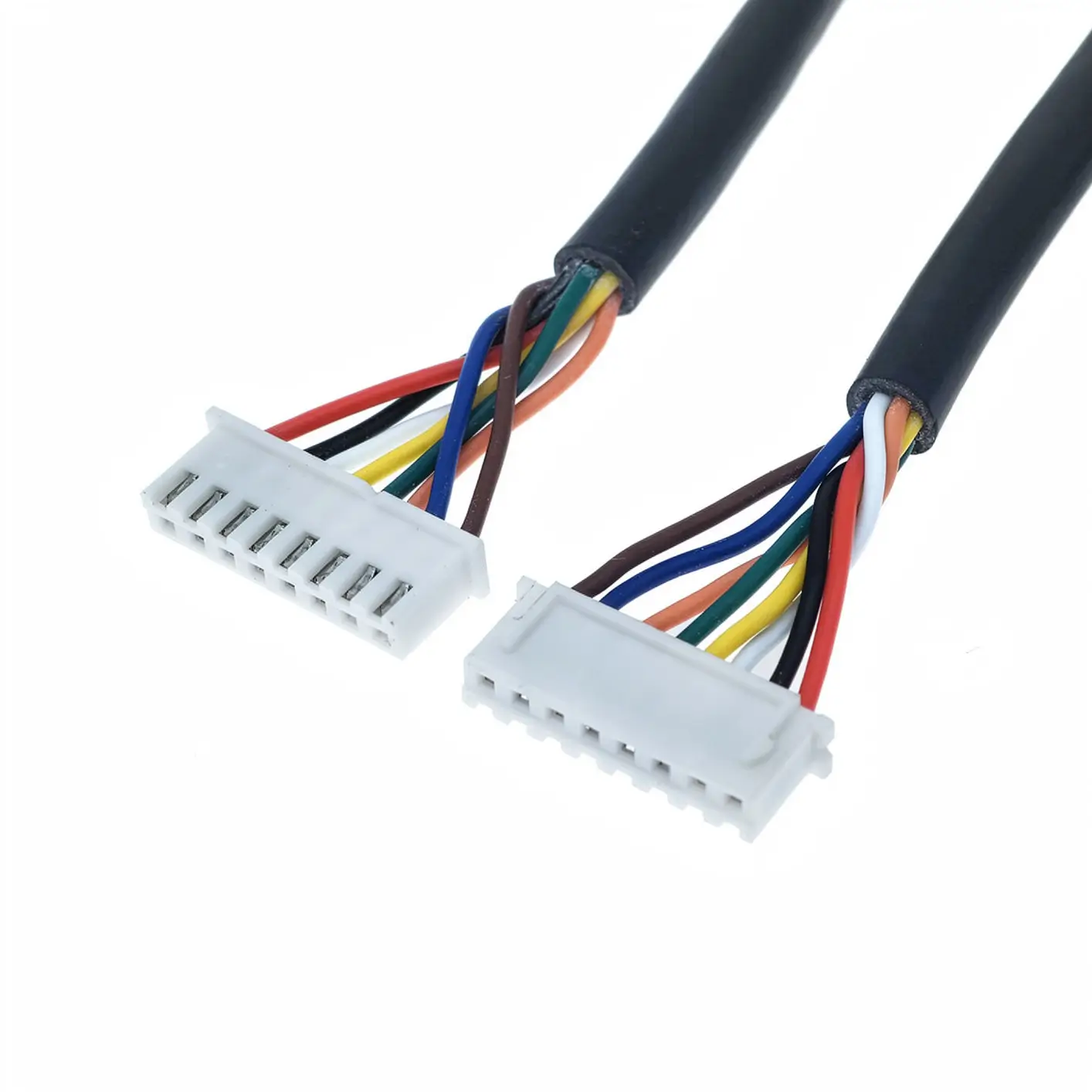
Use an outer-jacketed trunk with defined breakout lengths. For a shielded design, agree how the shield or drain wire terminates.
The photo shows a jacketed construction, not evidence of shielding. A shielded option needs separate specification review.
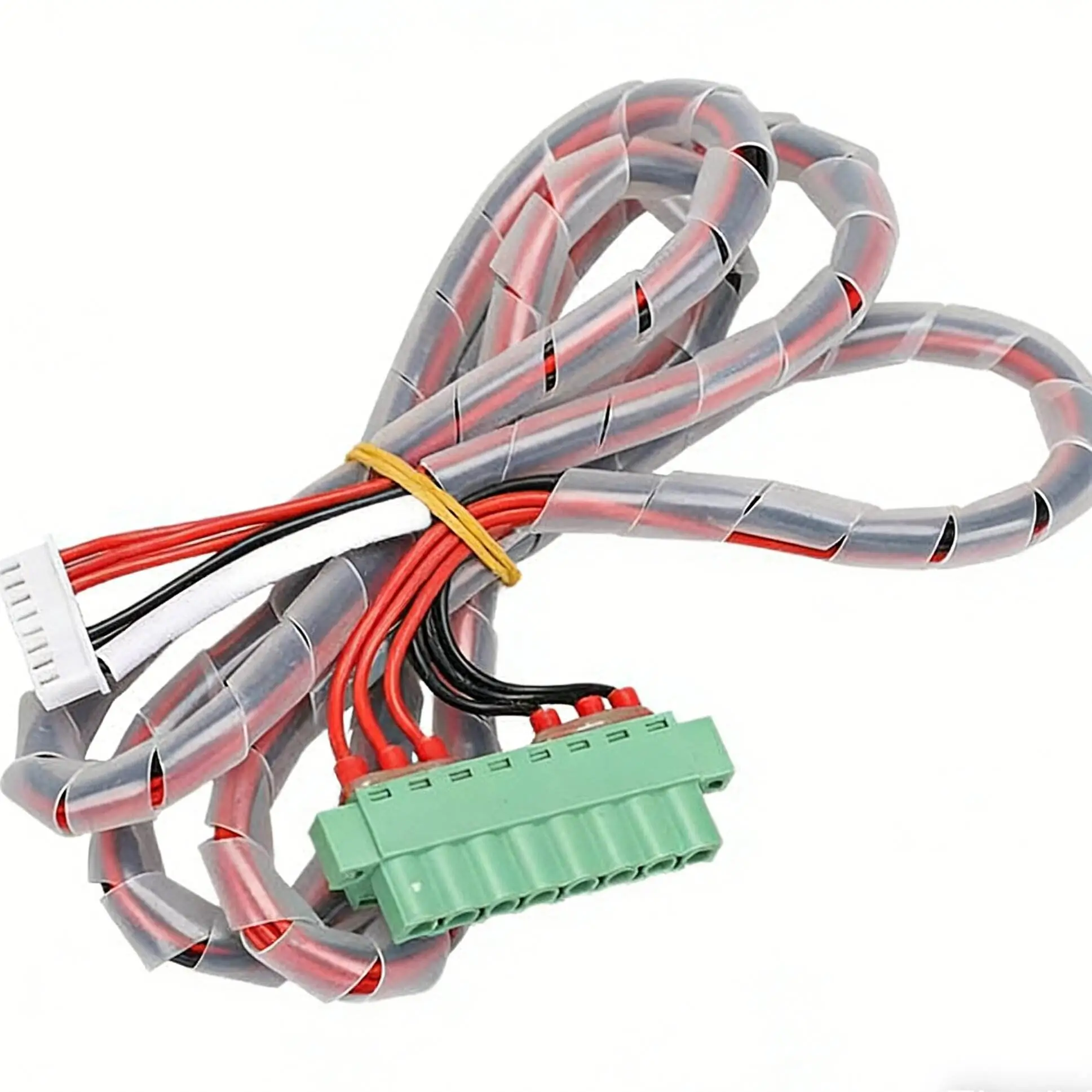
Review a protective covering suited to the route and branch exits. Check its outside diameter and the space needed to bend it.
Spiral-wrap method example; the connector family in this photo is not verified. Conduit is a separate option. Open or split coverings do not imply sealing.
Position bundles and branches, then identify the correct connection points. Agree tie locations, tape coverage and label content.
Shown: ties installed on a branched harness. Tape coverage and identification labels are agreed separately.
Not sure which method to choose? Send a photo of the installation space and describe what the cable needs to do.
Start with a photo, sketch or description plus approximate quantity and length, if known. These are review topics—not mandatory fields or a requirement to finish your design first.
Make the component choice part of the quotation, so the sample and repeat orders follow the same agreed specification.
If your design requires original JST housings and terminals, state that requirement. We can source them for cable assemblies and confirm the selected parts and availability. Original components are not offered for separate sale.
We can propose unbranded alternative components for review. Mating fit, wiring and application requirements need confirmation; similar appearance is not proof of identical performance.
The existing series page includes Zeakka alternative connector drawings. These are component references, not a finished cable drawing or an original JST specification.
Zeakka is your trading and sourcing partner. We help clarify the requirement, select suitable factories and coordinate quotations, samples and revisions.
A photo, drawing, sample reference or description. Add approximate quantity and length if known; a completed BOM is not required to contact us.
We review the component option, wiring, construction and finishing. The quotation sets out quantities, sample arrangements, any charges and lead-time assumptions.
Confirm fit, orientation and wiring before production. Every harness receives continuity and short-circuit testing to the agreed connection requirements; pull testing is sampled.
If your project needs particular reports, declarations or additional testing, tell us so the scope and available evidence can be agreed.
Yes. Send a photo or a short description of what the cable connects. Approximate length and quantity help if you know them. We can identify the remaining questions together; a finished drawing is not required for the first inquiry.
We can review those configurations and other requested position counts. Share the mating connector, populated positions, wire requirements and quantity if known. Exact original or alternative components and availability are confirmed in the quotation.
The original JST XH family is wire-to-board. The inline male/female configurations shown here use compatible alternatives. A board header is not an inline cable plug, and two female cable housings do not form a mating pair. Send photos of both ends if the interface is uncertain.
We can review them together as part of one cable design. Show where the branches leave the trunk and which wires need sleeving, tubing or identification. We review the bundle diameter, connector clearance, routing space and fixing points before agreeing the construction.
We can review a project-specific mapping and a different connector at the other end. Share the two connector references or photos and any known connections. We confirm the viewing direction and pin-to-pin mapping before the sample is made.
Send the battery or equipment connector references and the required pinout for review. A search term such as 6S, a matching housing or familiar wire colors is not enough to establish cell connections or polarity. Those details must be confirmed before any sample is connected to the equipment.
They depend on the selected parts, wire, quantity and assembly work. Tell us your expected order size. We will confirm the sample arrangement, any fees, minimum quantities and timing for that configuration; this page does not set one universal MOQ or delivery promise.
One end, two ends or several branches—start with a photo or a few lines about your project. We will help clarify the rest.